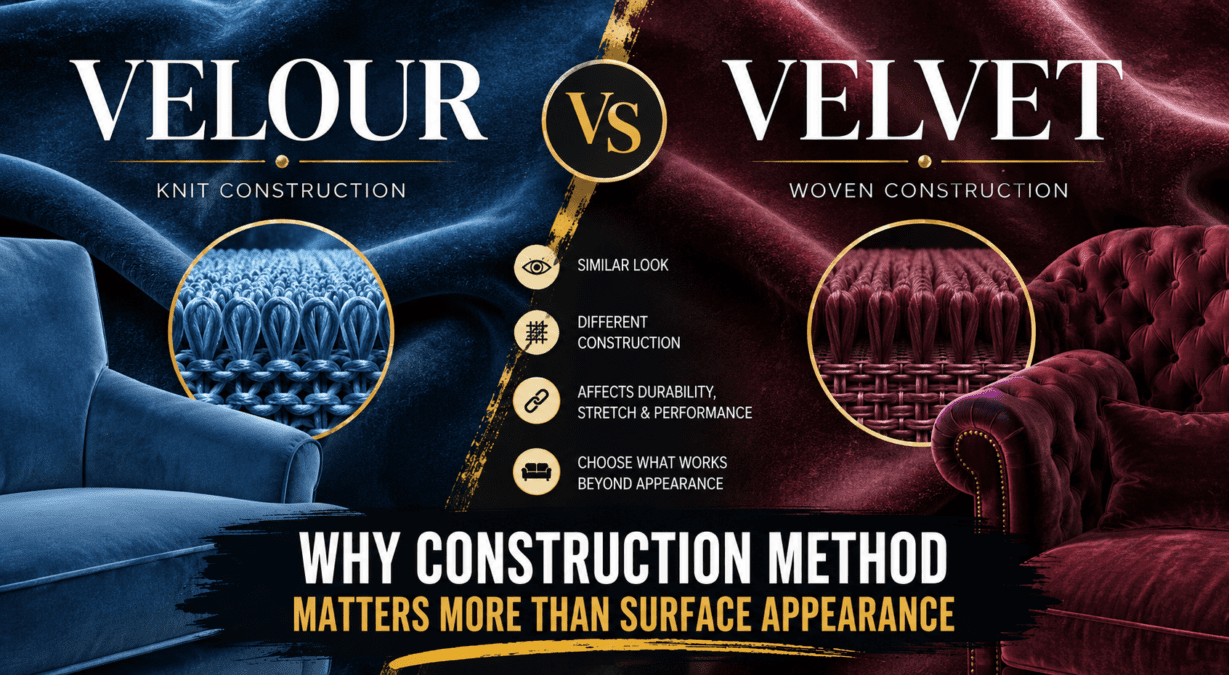

The comparison of velour vs velvet has become increasingly relevant as consumers, designers, fashion brands, and interior specialists seek fabrics that combine aesthetics, durability, comfort, and cost efficiency. At first glance, the two materials appear remarkably similar. Both feature a soft pile surface, luxurious texture, and rich visual depth that create an impression of elegance. Yet beneath that shared appearance lies a fundamentally different method of construction that influences performance in meaningful ways.
A rigorous velour vs velvet evaluation requires more than comparing softness or visual appeal. The fabrics differ in fiber composition, manufacturing processes, stretch characteristics, maintenance requirements, longevity, and commercial applications. These differences determine where each material performs best and why professionals often choose one over the other for specific projects.
The most surprising insight in the velour vs velvet debate is that perceived luxury does not always align with practical performance. Velvet is often viewed as the more prestigious textile, while velour is frequently considered a casual alternative. However, modern textile engineering has enabled velour to outperform velvet in several real-world scenarios, particularly where durability, flexibility, and affordability are priorities.
Essential Comparative Metrics
| Attribute | Velour | Velvet |
|---|---|---|
| Construction Method | Knitted pile fabric | Woven pile fabric |
| Typical Fibers | Polyester, cotton blends, synthetics | Silk, cotton, rayon, polyester |
| Stretch Capacity | Moderate to high | Minimal to low |
| Texture | Soft and plush | Dense and luxurious |
| Visual Sheen | Moderate | High depth and luster |
| Wrinkle Resistance | Generally strong | Moderate |
| Durability | High for everyday use | High when properly maintained |
| Maintenance Difficulty | Relatively easy | Often requires specialized care |
| Cost Range | Low to moderate | Moderate to premium |
| Common Uses | Sportswear, casual apparel, upholstery | Luxury fashion, formalwear, premium interiors |
| Overall Market Position | Practical luxury | Traditional luxury |
Velour is a knitted fabric with a soft raised pile designed for comfort, flexibility, and everyday functionality.
Velvet is a woven pile fabric known for exceptional depth, elegance, and a distinctive luxurious appearance.
For consumers seeking a quick answer to velour vs velvet, velvet generally offers greater visual sophistication and prestige, while velour delivers better stretch, easier maintenance, and superior practicality for daily use. The ideal choice depends less on appearance and more on intended application, durability expectations, and budget considerations.
Structural And Biological Foundations
The fundamental distinction in velour vs velvet originates from fabric construction. Velvet is traditionally produced using a weaving process that creates a dense pile surface through carefully controlled warp and weft interactions. This woven architecture contributes to velvet’s characteristic richness, dimensional depth, and reflective qualities.
Velour, by contrast, is generally knitted rather than woven. The knitted structure creates greater elasticity and flexibility while reducing manufacturing complexity. As a result, velour often feels softer and more forgiving during movement. This difference is especially noticeable in apparel applications where body motion influences comfort.
Fiber composition further shapes performance. Velvet may be produced from silk, cotton, rayon, or synthetic fibers, whereas velour is commonly manufactured from cotton-polyester blends or entirely synthetic materials. Modern production methods have narrowed quality gaps considerably, making contemporary velour vs velvet comparisons less about superiority and more about specialized performance characteristics.
The pile orientation also differs subtly. Velvet tends to possess a shorter, denser pile, creating dramatic light reflection. Velour typically features a slightly longer and more relaxed pile structure that enhances softness and comfort.
Historical Evolution And Cultural Significance
Understanding velour vs velvet also requires examining their historical development. Velvet has a centuries-long association with wealth, royalty, and social status. During the medieval and Renaissance periods, producing velvet required extraordinary craftsmanship and labor. The fabric became a symbol of power because only elite classes could afford it.
Velour emerged much later as textile manufacturing technology advanced. Industrial knitting techniques enabled producers to replicate some of velvet’s tactile qualities at a lower cost and greater scale. This democratization expanded access to plush fabrics beyond aristocratic circles.
Interestingly, cultural perceptions continue to influence purchasing decisions. Many consumers automatically associate velvet with luxury even when modern synthetic velvets cost less than premium velour fabrics. In the ongoing velour vs velvet discussion, perception frequently diverges from objective performance metrics.
Contemporary fashion and interior design increasingly prioritize functionality alongside aesthetics. Consequently, velour has gained acceptance in premium markets where durability and comfort are valued as highly as visual prestige.
Texture, Touch, And Sensory Experience
One of the most discussed aspects of velour vs velvet is tactile experience. While both fabrics are soft, they create distinctly different sensory impressions.
Velvet’s pile is dense and directional. Running a hand across the surface alters the way light reflects, producing the dramatic shading effects often associated with luxury garments and furnishings. This interaction creates depth and visual movement that few textiles can match.
Velour emphasizes comfort over dramatic visual effects. Its knitted structure contributes to a softer, more relaxed hand feel. Many people describe velour as cozy, inviting, and comfortable against the skin. This characteristic makes it particularly popular in loungewear, athletic apparel, and everyday upholstery.
Another factor in the velour vs velvet comparison involves thermal perception. Velour often feels warmer because of its plush knit structure and slightly thicker pile. Velvet may appear richer visually but can feel less insulating depending on fiber composition and pile density.
These sensory differences explain why designers frequently select the fabrics for entirely different emotional experiences despite their similar appearance.
Behavioral Patterns And Social Intelligence
Unlike comparisons involving living organisms, the concept of behavioral patterns in velour vs velvet refers to how each fabric interacts with environmental conditions and user behavior over time.
Velour demonstrates adaptive performance in active settings. It stretches with movement, recovers relatively well from compression, and resists many common forms of wear. This flexibility allows the fabric to maintain comfort during repeated use.
Velvet behaves differently. It rewards careful treatment with extraordinary visual appeal but may show pressure marks, pile crushing, or directional shading after prolonged contact. These characteristics are not necessarily flaws; rather, they are inherent aspects of the fabric’s structure.
Socially, velvet communicates formality, sophistication, and luxury. Velour often conveys comfort, accessibility, and contemporary practicality. The velour vs velvet decision therefore extends beyond physical performance into symbolic messaging and consumer psychology.
Fashion brands leverage these associations deliberately. Velvet is frequently used when exclusivity or elegance is the desired emotional outcome, while velour often supports themes of comfort, leisure, and modern versatility.
Carat vs Karat: Why Two Identical-Sounding Terms Measure Completely Different Forms of Value
Subject A: Strengths And Constraints (Velour)
Velour’s greatest strength lies in its balance of comfort, durability, and affordability. Because it is knitted, the fabric naturally accommodates movement. This makes it exceptionally suitable for garments requiring flexibility, including tracksuits, casual clothing, children’s apparel, and performance-inspired fashion.
Maintenance is another major advantage. Many modern velour fabrics are machine washable and relatively resistant to wrinkling. This convenience significantly improves user experience compared with more delicate luxury textiles.
Cost efficiency also strengthens velour’s market position. Consumers can achieve a plush, premium appearance without paying luxury-level prices. In the broader velour vs velvet comparison, this affordability contributes to velour’s popularity across numerous industries.
However, velour has limitations. Its visual depth rarely matches high-quality velvet. The pile structure can appear less refined under close inspection, particularly in lower-cost variants. Some velour fabrics may also exhibit pilling over extended periods of use.
Therefore, while velour excels in practicality, it may not always satisfy projects prioritizing prestige, heritage aesthetics, or formal elegance.
Subject B: Strengths And Constraints (Velvet)
Velvet’s primary advantage is visual sophistication. The fabric possesses a richness that has captivated designers for centuries. Its unique interaction with light creates dimensional effects that contribute to a sense of luxury and exclusivity.
Formal fashion frequently relies on velvet because it photographs exceptionally well and delivers immediate visual impact. Eveningwear, theater costumes, luxury furnishings, and high-end decorative applications all benefit from these qualities.
Another strength in the velour vs velvet analysis is longevity of aesthetic appeal. Properly maintained velvet often retains its elegant appearance for many years. Premium versions made from high-quality fibers can become treasured heirloom textiles.
Yet velvet presents practical challenges. It generally requires more careful cleaning, may be vulnerable to pile crushing, and typically costs more than comparable velour products. Certain velvet varieties also offer limited stretch, reducing comfort in movement-intensive applications.
As a result, velvet’s strengths are most evident when appearance and prestige outweigh maintenance convenience.
Performance In Fashion Applications
Fashion designers frequently evaluate velour vs velvet through the lens of garment functionality. Here, the distinction becomes particularly significant.
Velour dominates casual and athleisure categories because stretch and comfort enhance wearability. Tracksuits, hoodies, lounge sets, and children’s clothing benefit from the fabric’s adaptability. The textile supports movement without sacrificing softness.
Velvet excels in formalwear. Evening gowns, blazers, opera jackets, cocktail dresses, and luxury accessories often rely on velvet’s dramatic visual properties. The fabric creates depth that enriches color and elevates perceived quality.
Current fashion trends increasingly blend both materials into hybrid collections. Designers may use velvet for statement pieces while incorporating velour for practical companion garments. This strategy reflects growing recognition that velour vs velvet is not necessarily a competition but rather a choice between specialized tools serving different purposes.
Consumer expectations ultimately determine success. Comfort-focused buyers frequently prefer velour, while occasion-driven shoppers often gravitate toward velvet.
Interior Design And Upholstery Analysis
The velour vs velvet comparison becomes equally important in interior environments. Furniture, curtains, cushions, and decorative accents each impose unique performance demands.
Velvet upholstery creates an unmistakable luxury aesthetic. The material reflects light beautifully and contributes depth to interior color palettes. High-end hotels, boutique lounges, and luxury residences frequently utilize velvet to reinforce premium brand identity.
Velour, meanwhile, often performs better in high-traffic environments. Its flexibility and resilience can improve durability under repeated use. Families with children or pets may appreciate the practical advantages of certain modern velour upholstery fabrics.
Maintenance considerations further influence selection. Velvet may require specialized cleaning procedures to preserve pile integrity. Velour typically offers simpler upkeep and stronger resistance to everyday wear.
Therefore, the best velour vs velvet choice in interior design depends on balancing visual aspirations against operational realities.
Comparative Advantages In Real-World Scenarios
Examining practical situations reveals the true strengths of each fabric.
For everyday clothing, velour usually provides the better solution. Its flexibility, comfort, and ease of care align with modern lifestyles. Consumers seeking low-maintenance luxury often find velour more practical.
For formal events, velvet generally wins. The fabric’s visual richness creates a level of sophistication difficult to replicate with alternative materials.
For commercial upholstery, the outcome depends on usage intensity. High-traffic spaces may benefit from durable velour variants, while prestige-focused environments often favor velvet.
For budget-conscious buyers, velour frequently delivers stronger value. For luxury-focused buyers, velvet remains a benchmark of elegance.
While velvet prioritizes visual depth and prestige, velour emphasizes comfort, flexibility, and practical performance.
This distinction captures the essence of velour vs velvet more effectively than any simplistic ranking system.
Sustainability And Manufacturing Considerations
Environmental concerns have become increasingly important in textile selection. The velour vs velvet debate now includes sustainability metrics alongside traditional performance measures.
The environmental footprint of either fabric depends largely on fiber composition rather than construction method alone. Synthetic polyester versions may offer durability but create concerns regarding microplastic generation. Natural fibers such as cotton and silk introduce different sustainability considerations involving water use, land requirements, and resource intensity.
Manufacturing efficiency also matters. Knitted velour production can be less resource-intensive than certain velvet weaving processes. However, technological improvements continue to reduce waste across both sectors.
Recycled polyester velour has gained significant market share due to lower environmental impact. Similarly, recycled and responsibly sourced velvet options are becoming more widely available.
As sustainability standards evolve, future velour vs velvet evaluations may focus increasingly on supply-chain transparency and lifecycle analysis rather than traditional luxury perceptions.
Scientific And Expert Consensus (2026)
The prevailing expert consensus in 2026 rejects simplistic declarations that one fabric is universally superior. Textile specialists generally view velour vs velvet as an application-dependent comparison.
Researchers consistently identify construction method as the primary differentiator. Knitted velour offers enhanced elasticity and comfort, while woven velvet provides greater structural refinement and visual sophistication.
Industry professionals also acknowledge that advances in textile engineering have reduced historical quality gaps. High-end velour can achieve remarkable softness and durability, while modern synthetic velvets can provide luxury aesthetics at accessible price points.
Consumer satisfaction studies often reveal that users prioritize suitability over prestige. A fabric chosen for the correct application consistently outperforms a technically superior material used inappropriately.
Consequently, expert opinion favors contextual decision-making. The best fabric is not determined by tradition or reputation but by how effectively its properties align with intended use.
Final Synthesis And Verdict
The central lesson of velour vs velvet is that construction influences performance more profoundly than appearance. Although the fabrics share visual similarities, they serve distinct functional roles.
Velour offers superior flexibility, comfort, affordability, and ease of maintenance. It excels in active lifestyles, casual fashion, and practical upholstery applications. Consumers seeking everyday usability often find velour the more effective choice.
Velvet delivers unmatched visual richness, elegance, and prestige. Its woven structure creates depth and sophistication that continue to define luxury across fashion and interior design. For formal environments and statement pieces, velvet remains exceptionally compelling.
The most accurate verdict is therefore not that one fabric defeats the other. Rather, the velour vs velvet comparison demonstrates how different engineering approaches produce distinct advantages. Velvet remains the benchmark for traditional luxury, while velour represents a modern interpretation of comfort-driven luxury.
Those prioritizing elegance should generally choose velvet. Those prioritizing versatility should generally choose velour. Understanding that distinction leads to better purchasing decisions than relying solely on appearance or reputation.
Frequently Asked Questions
Is velour the same as velvet?
No. Although they look similar, they are constructed differently. Velour is typically knitted, while velvet is woven. This structural distinction affects stretch, durability, appearance, and maintenance requirements.
Which is softer in a velour vs velvet comparison?
Most people perceive velour as softer and more comfortable for everyday wear because its knitted construction provides greater flexibility. Velvet often feels denser and more luxurious but not necessarily softer.
Which fabric lasts longer, velour or velvet?
Longevity depends on use conditions and quality. Velvet can maintain a premium appearance for many years when properly cared for, while velour often performs exceptionally well in high-use environments due to its flexibility and resilience.
Is velvet more expensive than velour?
In most cases, yes. Velvet generally costs more because of its woven construction, luxury positioning, and traditional association with premium markets. However, specific pricing varies according to fiber content, manufacturing quality, and brand positioning.
Which is better for furniture upholstery?
The answer depends on the setting. Velvet is ideal for luxury-focused interiors seeking visual impact. Velour may be preferable for high-traffic spaces where durability, comfort, and ease of maintenance are priorities.