

Introduction to Guru Knowledge Base Software
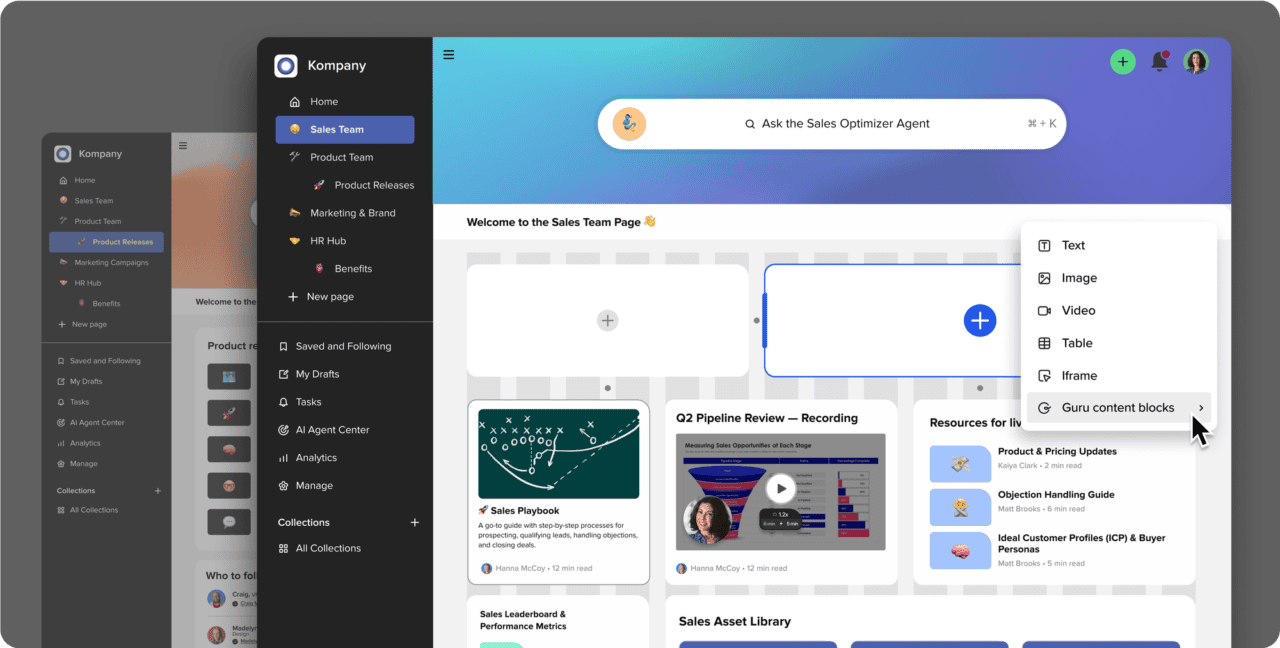
Modern businesses frequently struggle with a massive overload of information, leading to fragmented communication channels and data that remains scattered across dozens of different applications. This operational friction causes employees to waste countless hours looking for critical documents, standard operating procedures, and client history. Guru knowledge base software provides a comprehensive solution to this problem by acting as a governed, centralized platform that systematically structures, governs, and continuously improves company knowledge. By unifying disparate enterprise data apps into a singular ecosystem, it ensures that every person and automated AI tool within the organization receives answers they can completely trust without second-guessing their validity or freshness.
The platform effectively eliminates the frustrating habit of searching endlessly through old email threads, chat archives, and disconnected file repositories by bringing everything into one intuitive view. It is carefully engineered to function as a verified source of truth that scales seamlessly alongside your growing organization. This detailed review explores how its advanced architecture, robust security model, and cutting-edge artificial intelligence capabilities redefine everyday workplace productivity. Furthermore, it examines how modern teams can leverage these sophisticated tools to bridge communication gaps, accelerate onboarding times, and maintain absolute clarity across all departments.
Core Features of the Platform
The foundational strength of guru knowledge base software centers around its powerful unified knowledge index, which effortlessly connects over one hundred popular enterprise applications including Slack, Zendesk, Google Workspace, and Salesforce. This deep integration means your team can pull verified insights directly from their daily workflows without dealing with tedious tab-switching or interrupting colleagues for simple procedural updates. Information is organized cleanly into bite-sized cards grouped across boards and collections, making the administrative upkeep of corporate documentation far more systematic, collaborative, and manageable than traditional static company wikis ever allowed.
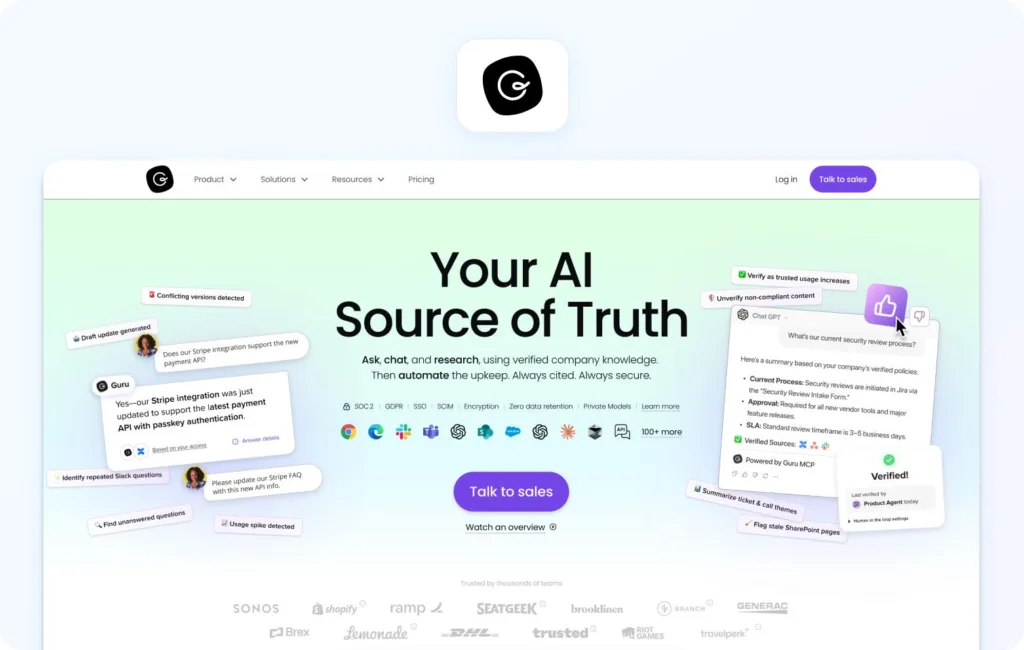
Another standout mechanism built into the platform is its automated verification engine, which proactively identifies outdated, expired, or conflicting content before it misleads staff members. When data flags as stale, the system automatically assigns responsible subject matter experts to review and re-verify the information, ensuring long-term data integrity. This built-in accountability lifecycle prevents knowledge decay and guarantees that your workforce always relies on current, highly accurate operational guidelines. By combining deep app integrations with strict verification cycles, the platform turns chaotic corporate data into an orderly, highly functional asset for every department.
Advanced AI Capabilities and Custom Agents
Taking organizational automation to an entirely new level, guru knowledge base software leverages state-of-the-art artificial intelligence to draft, update, and summarize documentation extracted directly from meetings, customer support tickets, and live chat discussions. Its advanced agentic search capabilities reason across your entire indexed ecosystem to deliver precise, citation-backed answers rather than relying on basic keyword matching that often returns irrelevant search results. Employees can ask complex procedural questions in plain natural language and receive immediate, context-aware responses accompanied by transparent source citations that build instant trust in the output.
Organizations can also build specialized custom knowledge agents configured with unique roles, distinct behavioral guidelines, and curated source materials such as restricted internal PDFs or specific historical support tickets. These custom-tailored bots integrate smoothly into standard browser extensions and everyday workspace communication tools, providing secure intelligence that drastically minimizes operational friction. By tailoring AI behavior to match specific departmental needs, companies empower their staff to solve problems faster, reduce escalation rates, and dedicate more time to high-value strategic initiatives rather than repetitive administrative lookups.
Key Use Cases and Target Audiences
Guru knowledge base software proves exceptionally valuable for internal team collaboration, serving as a dynamic, modern replacement for outdated static company wikis that quickly fall out of use. Human resources and operational departments utilize the platform to manage employee handbooks, company policies, benefits information, and step-by-step procedural runbooks in an easily searchable format. New hires can navigate these structured materials effortlessly during onboarding, dramatically reducing the time it takes for them to become fully productive, independent contributors within their respective teams and project groups.
Customer support departments also benefit immensely from the platform by enabling agents to pull instant, citation-backed answers while actively resolving client inquiries in real-time. By bridging operational communication gaps between sales, engineering, product development, and support, this unified environment keeps cross-functional teams completely synchronized. The software minimizes repetitive internal questioning, ensures uniform messaging across client-facing channels, and accelerates overall ticket resolution times, directly contributing to higher customer satisfaction scores and improved retention rates over the long term.
Pricing Tiers and Plans Overview
Evaluating the financial investment required is a critical step when adopting any enterprise software solution to ensure it aligns with your company’s budgetary constraints and growth trajectory. While the platform offers a limited permanent free tier suited for very small teams testing basic functionality, structured self-serve options start at accessible monthly per-seat pricing models with standard minimum user requirements. Custom enterprise tiers cater to larger corporations that demand advanced administrative permissions, enhanced security controls, single sign-on capabilities, and dedicated customer success managers to oversee large-scale deployments.
Investing in guru knowledge base software delivers a substantial return on investment by actively measuring time saved, minimizing the hidden costs of context-switching, and accelerating employee ramp-up phases across the business. Decision-makers must carefully weigh these recurring subscription costs against measurable productivity gains, reduced onboarding overhead, and error prevention to determine the ideal plan scale for their current operational size and future expansion goals. A well-calculated deployment ensures that the financial outlay translates directly into smoother workflows and measurable time savings for every single user.
Pros and Cons of Using the Platform
Major operational strengths of the platform include its deep native workflow integrations, robust automated content verification cycles, and powerful AI-driven search accuracy that fosters high organizational trust. Users consistently praise the seamless in-app guidance, the clean visual layout of information cards, and the impressive ability to surface critical data instantly without digging through multiple disconnected software silos. These advantages combine to create an environment where knowledge sharing feels natural, effortless, and deeply integrated into daily professional routines.
Potential drawbacks involve a slight learning curve when first configuring custom AI agents, subscription entry barriers for smaller teams due to mandatory seat minimums, and the ongoing necessity for strict editorial discipline. If internal content ownership and verification cadences are neglected by team leads, search experiences can become cluttered and chaotic as the overall volume of organizational data expands. Organizations must establish clear internal guidelines and designate dedicated content managers to maximize the long-term utility and cleanliness of their digital workspace.
Conclusion and Final Verdict
Ultimately, modern enterprises striving for operational excellence and robust internal intelligence will discover immense value in adopting this sophisticated knowledge management platform. By centralizing scattered information, automating content verification cycles, and embedding reliable insights directly into daily chat applications and ticketing systems, it successfully transforms chaotic data into a trusted corporate asset. Organizations that commit to disciplined content maintenance will achieve remarkable gains in processing speed, cross-departmental clarity, and overall team alignment.
Investing in the right tools lays a solid foundation for sustainable growth, ensuring that valuable institutional knowledge remains secure, accessible, and continuously updated for every employee. Whether your goal is to streamline customer support operations, optimize onboarding workflows, or leverage advanced AI agents, this platform provides the comprehensive infrastructure necessary to thrive in a competitive business landscape. The ultimate verdict favors widespread adoption for teams seeking a modern, intelligent approach to enterprise knowledge governance.
You may also read: Director Conduct and Commercial Impact Analysis