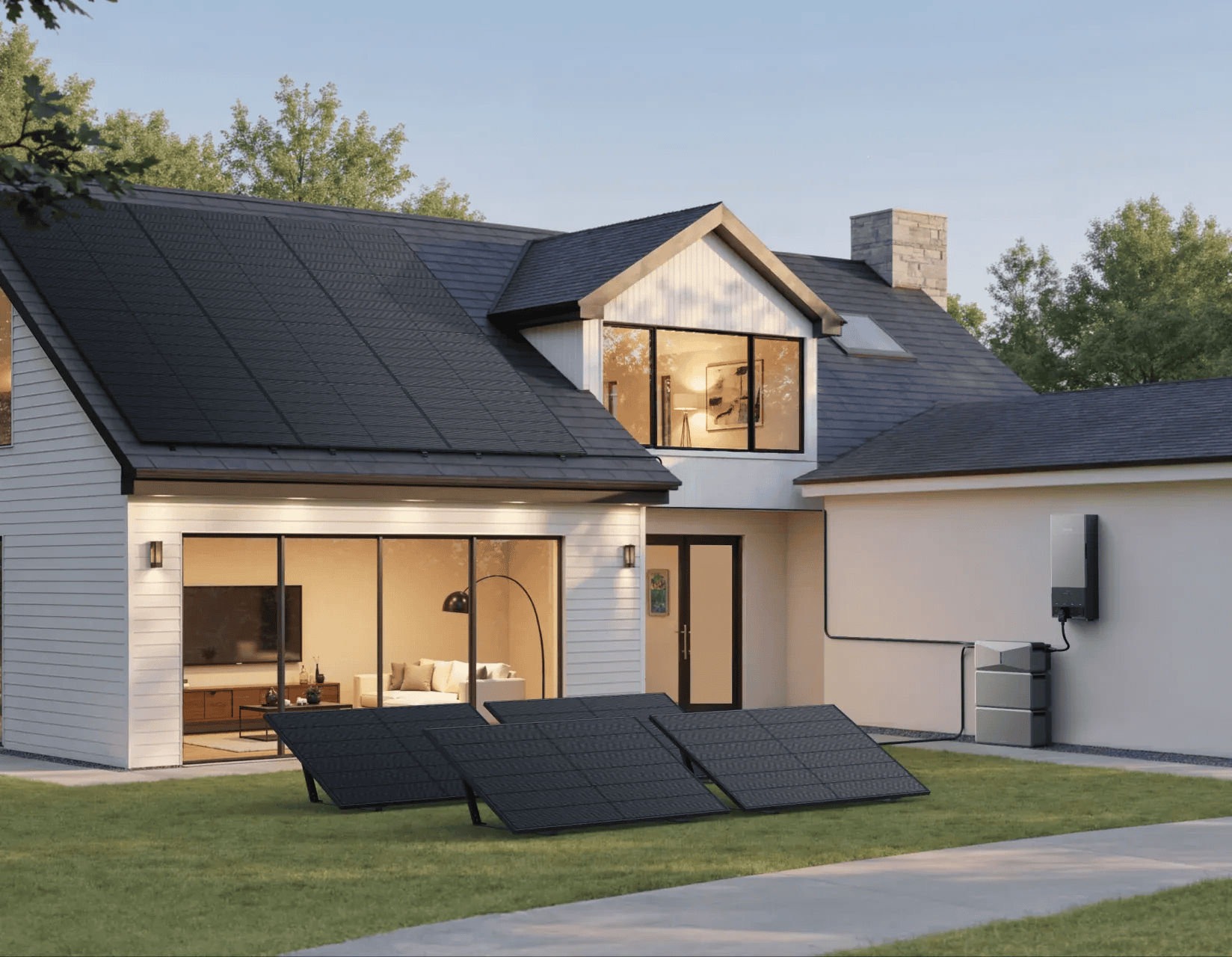

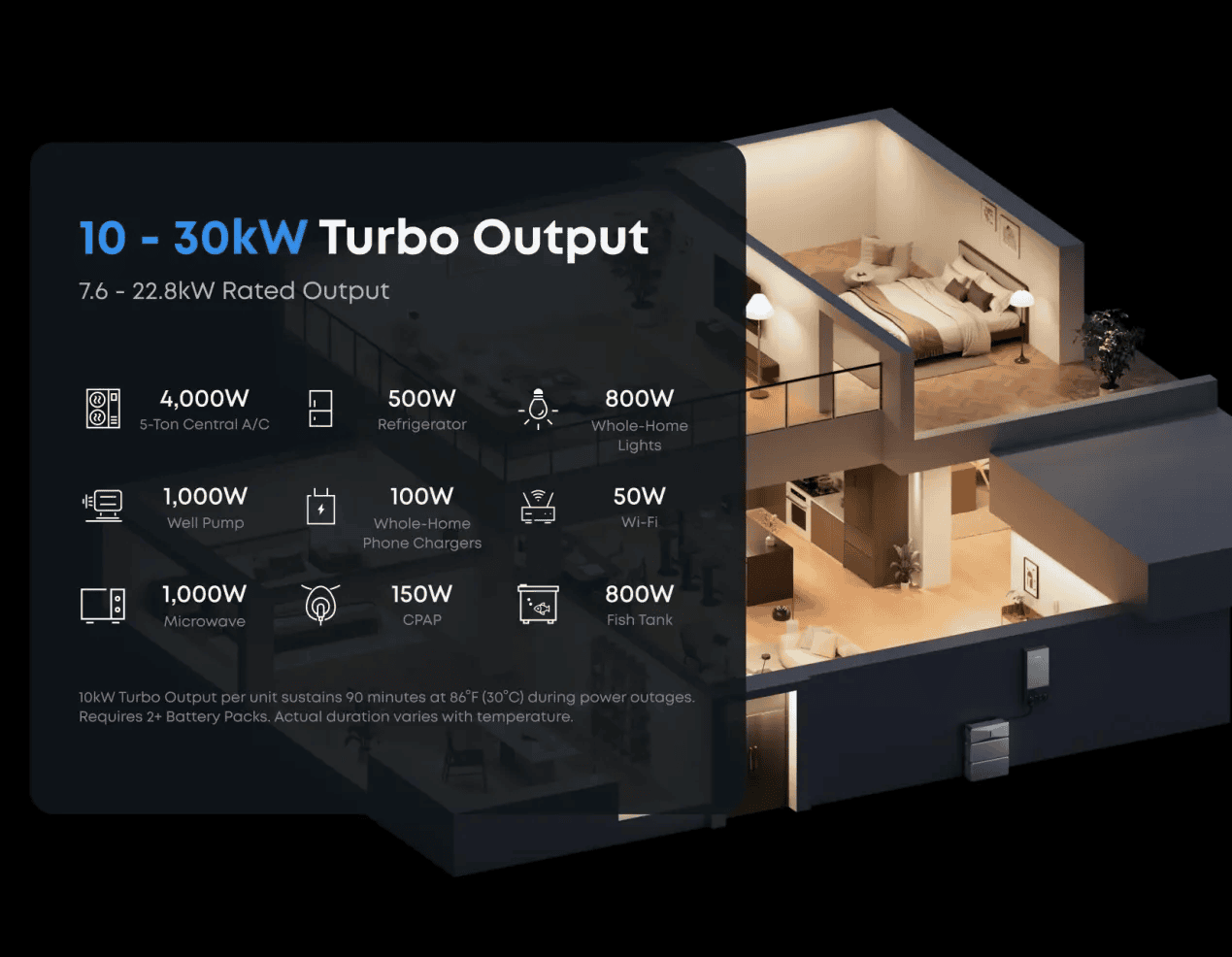
A home battery can power essential appliances such as lights, refrigerators, Wi-Fi routers, televisions and selected kitchen equipment during a blackout. Larger systems can also support demanding appliances, including central air conditioning, depending on their output ratings and electrical configuration. The key is to distinguish between appliances that consume energy continuously and those that draw substantial power for short periods. Once you understand these differences, you can decide which household functions to maintain and select a battery system that matches your priorities.
Which Household Appliances Can a Battery Power?
Essential Devices for Everyday Comfort
Lighting, internet equipment, phone chargers and televisions are usually straightforward loads to include in an outage plan. LED lights often draw relatively little power, while a router may consume only a modest amount continuously. These devices allow a household to maintain visibility, communication and access to information during an interruption. A laptop can also remain operational when its charging requirements fit within the battery system’s available output. To estimate the energy required, multiply each device’s wattage by the number of hours you expect to operate it. For example, a combined 150-watt load running for eight hours consumes 1.2 kWh. This simple calculation helps you determine how much battery capacity to reserve for everyday essentials before adding larger appliances to the home battery backup plan.
Refrigerators, Freezers and Kitchen Equipment
Refrigerators and freezers are important backup priorities because they preserve food during an outage. Their compressors cycle on and off, so their actual energy consumption differs from their rated running power multiplied by every hour of the day. Check the manufacturer’s energy information when estimating daily consumption, and account for the higher starting demand that compressor motors may require. Small kitchen appliances, such as coffee makers, microwaves and electric kettles, can also run on a suitably configured battery system. However, their heating elements often draw substantial power while operating. Running several of these appliances simultaneously increases the combined load. A practical plan identifies which kitchen devices matter most, checks their individual ratings and schedules high-power tasks to avoid unnecessary overlap.
Heating, Cooling and Other High-Demand Loads
Air conditioning, electric water heaters, electric ovens and well pumps require closer attention when selecting a backup battery. Their power demands vary considerably by model, operating conditions and starting requirements. A central air conditioner, for example, may require a significant surge to start its compressor even when its normal running demand falls within the system’s continuous output rating. The same distinction applies to pumps and other motor-driven equipment. Before connecting these appliances, compare their running wattage and starting requirements with the battery system’s specifications. A larger inverter output may allow more devices to operate together, while greater battery capacity extends the time they can run. Both factors matter when the goal is to maintain normal household comfort rather than power only a few essential devices.
How to Match Appliances to Your Backup System
Check Running Power, Starting Power and Stored Energy
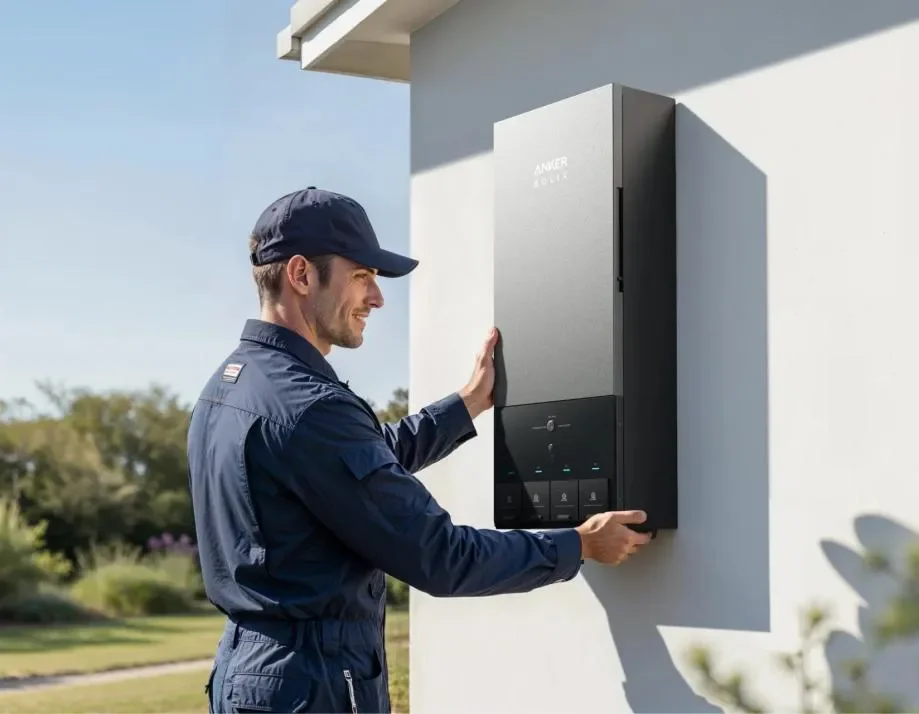
Three measurements determine whether a battery can support your appliances: continuous output, surge output and stored energy. Continuous output describes the power the system can supply during normal operation. Surge output describes its ability to accommodate brief increases, such as a motor starting. Stored energy, measured in kilowatt-hours, determines how long the system can supply a given load. The Anker SOLIX E10 Whole-Home Backup illustrates this distinction. Its configuration with one E10 power module and two B6000 batteries provides 12.288 kWh of nominal storage, 7,680 W of maximum continuous output with batteries and up to 10,000 W of turbo output for 90 minutes. These specifications describe different capabilities, so check all three when planning which appliances to run and for how long.
Understand Whole-Home Backup and Circuit Selection
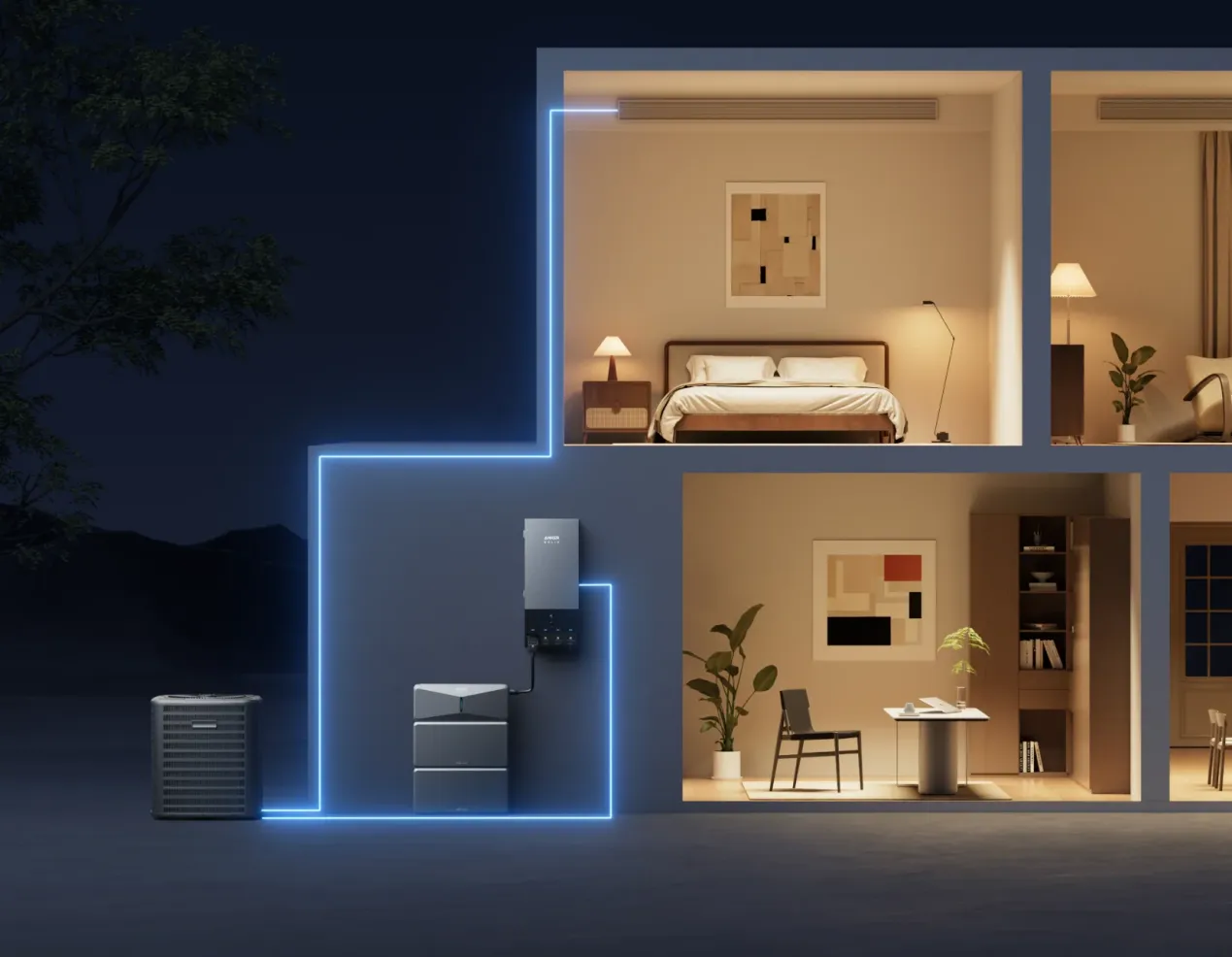
A battery system connected through a suitable whole-home electrical setup can support a broader range of circuits than a portable unit connected to individual devices. The Anker SOLIX E10 pairs with a Power Dock rated for a 200 A maximum grid connection and 160 A continuous connection. This configuration supports whole-home backup integration, subject to the installation design and the system’s operating limits. It does not mean every appliance can run simultaneously without regard to demand. Your electrician should assess the home’s circuits, appliance ratings and expected peak loads before finalizing the configuration. The Power Dock also supports automatic switchover in 20 milliseconds or less, allowing connected loads to receive backup power quickly when the grid fails. Careful circuit planning helps match the system’s capabilities to household needs.
Extend Operation With Solar Charging and More Storage
The appliances a battery can run depend not only on its initial charge but also on whether you can replenish that energy during an extended outage. Solar charging can restore stored energy during suitable daylight conditions, while additional battery capacity increases the energy available between charging periods. The Anker SOLIX E10 supports up to 9 kW of solar input per power module and can expand to 30 kWh of storage per module, with up to 90 kWh across three units. It also supports a 4.5 kW Smart Generator input. These options can suit households that want to keep refrigeration, lighting, communications and selected larger appliances running for longer periods.
Conclusion
A home battery can power a wide range of appliances, from essential lighting and communications to refrigeration and selected high-demand equipment. The right combination depends on running power, starting surges, stored energy and the duration of the outage. The Anker SOLIX E10 offers substantial output, expandable storage and multiple charging options for households planning broader backup coverage. Before choosing a system, list your priority appliances, estimate their energy requirements and consult a qualified electrician to confirm compatibility with your home’s electrical installation.