
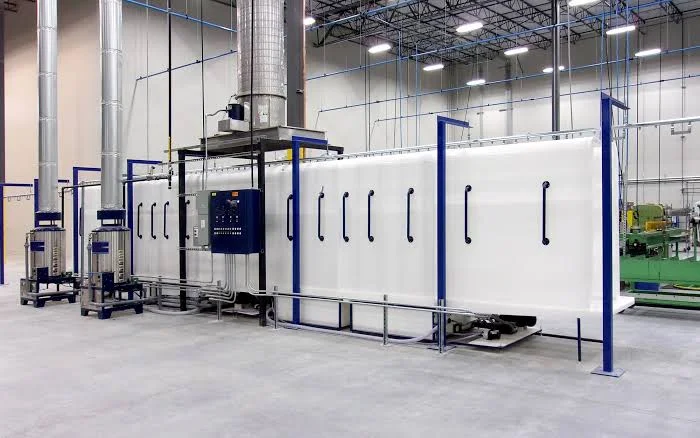

Better results from a finishing line do not always require another major equipment purchase. Facilities often gain more by tightening the way parts move, improving oven loading, documenting settings, and keeping maintenance from slipping during busy weeks. Small changes across the process can help existing powder coating equipment produce steadier quality and more useful output without adding needless complexity.
Treat the Package as One Production System
Separate machines may have different jobs, but the line performs only as well as the stages work together. A Reliant powder coating equipment package can deliver more value when pretreatment, application, curing, cooling, and material handling are scheduled around the same production target rather than operated as isolated stations. Balanced capacity keeps operators from spraying faster than the oven can accept parts or leaving expensive equipment idle while racks wait upstream.
Where Does the Line Actually Lose Time?
Bottlenecks are not always where supervisors expect them to be. Delays can come from slow color changes, crowded staging areas, awkward rack loading, oven recovery, inspection, or simply walking parts farther than necessary. Tracking a few normal shifts can show where minutes repeatedly disappear and whether the problem comes from equipment, layout, or work habits.
Measured cycle times give a shop something more useful than assumptions. Teams reviewing Reliant powder coating equipment for sale can use those numbers to decide whether an upgrade is actually needed or whether a change in sequencing, rack count, or staffing would recover capacity first. Practical improvements often cost far less than adding machinery to a process that has not yet been balanced.
Tune the Oven Around Real Loads, Not Empty-Chamber Numbers
Oven performance should be judged with the parts, carts, and racks the shop actually runs. Configured Reliant powder coating ovens may reach the controller setpoint quickly with an empty chamber, yet a dense load of steel can absorb enough heat to change recovery time and the point when the coating begins its true cure schedule. Profiling representative loads gives operators a better basis for setting batch time than relying on air temperature alone.
Can Better Racking Increase Output Without New Equipment?
Racking affects far more than how many parts fit on a cart. Poor spacing can block airflow, make gun access difficult, create weak grounding points, and force employees to handle coated parts more than necessary. Smarter rack design can improve application consistency while also allowing Reliant powder curing ovens to move heat around the load more evenly.
Thoughtful fixture changes can raise usable capacity without crowding the batch. Hooks positioned for reliable electrical contact, repeatable part orientation, and easy loading reduce wasted motion while keeping surfaces accessible to powder and heated air. Operations running a Reliant industrial powder coating oven can gain meaningful cycle consistency by standardizing the rack patterns used for heavy or awkward products instead of rebuilding the load differently each shift.
Use Process Records to Keep Good Runs Repeatable
Documentation turns a successful batch into something another operator can reproduce. Records for gun settings, powder type, rack pattern, oven setpoint, part-metal temperature, dwell time, and inspection results give Reliant powder coating systems a stable operating baseline across different shifts. Clear job recipes also make troubleshooting faster because supervisors can compare a problem run with previous batches instead of changing several settings at once and hoping one of them works.
Maintenance Planning Protects the Capacity Already Paid For
Preventive maintenance keeps small losses from becoming normal production behavior. Filters that slowly load with powder, worn door seals, loose fan belts, dirty burners, damaged hooks, or drifting probes may not stop the line immediately, but each can affect airflow, heating, grounding, or cycle time. Scheduled checks help Reliant powder coating equipment stay closer to the performance the shop originally bought.
Routine inspection becomes even more important as production volume rises. Crews should watch filter condition, burner response, fan operation, door closure, temperature sensors, gun wear items, and compressed-air quality before those issues show up as rework or longer batches. Buyers comparing a Reliant powder coating oven for sale should consider service access for the same reason: equipment that is easier to inspect is more likely to receive the attention that preserves output.
Leave Room to Upgrade the Parts That Matter Most
Upgrades work best when they solve a measured limitation rather than add features for their own sake. Manufacturers may benefit more from improved filtration, additional carts, revised controls, better material handling, or an oven modification than from replacing an entire line. Expansion decisions should follow production evidence, especially where one stage consistently limits the rest of the system. Reliant Finishing Systems can be useful after a manufacturer has identified that weak point, whether the answer is more curing room, a better-matched package component, or a practical change to part handling. Rather than restarting the whole finishing department, the business can use actual cure loads, rack movement, service history, and daily bottlenecks to decide which Reliant equipment addition would produce a measurable improvement.