

Key Takeaways
- Choose treatments based on the problem at each window, including glare, heat, privacy, or sleep disruption.
- South- and west-facing windows often benefit from stronger solar control in Tucson homes.
- Cellular shades, solar shades, blinds, shutters, and drapes serve different purposes.
- Layered treatments can provide more flexible control over daylight and nighttime privacy.
- Accurate measurements, washable materials, and safe operating systems matter as much as appearance.
In Tucson, Arizona, window treatments do much more than finish a room. They can help manage sharp daylight, late-afternoon glare, privacy, and heat near exposed glass. Whether you are choosing new shades or arranging blind repair in Tucson, AZ, start by identifying what each window needs rather than selecting a single style for the whole house.
A sun-filled living room near the Catalina Foothills may need a different solution than a street-facing bedroom in Midtown or a shaded bathroom in an older central Tucson home. The best choice balances light control, comfort, maintenance, safety, and the way the room is actually used.
Start With the Window
Before comparing colors or fabrics, assess the conditions around every opening. Note which direction it faces, when direct sun comes in, whether it looks onto a sidewalk or a neighboring property, and whether glare falls on a television, computer monitor, or artwork. Access matters too. A window behind a sofa or above a stair landing may call for a simpler control system than one beside a frequently used patio door. If existing blinds are jammed, sagging, or hard to operate, a quick search for blinds repair near me may show that fixing them is more practical than replacing them, especially when the fit and placement already work well.
Account for Tucson Sunlight
Tucson’s clear, dry conditions can make direct sunlight feel intense indoors. West-facing windows can be difficult during the late afternoon, while south-facing glass may receive substantial sun throughout the year. Watch each room at several times of day before committing to a treatment. A pleasant breakfast nook at 9 a.m. can become a glare-heavy space by late afternoon.
If worn slats, tangled cords, or damaged tilt mechanisms are the main issue, addressing these problems directly may be more practical than replacing an entire set of coverings that otherwise fit the room.
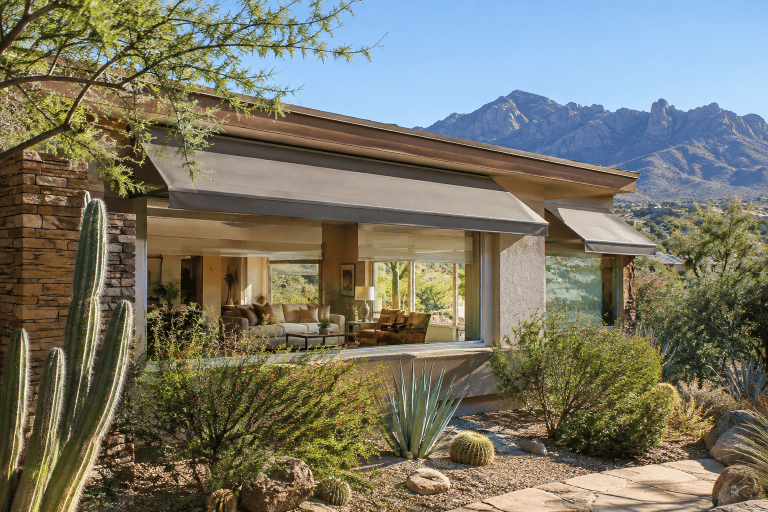
Exterior shading can also play a role in a broader comfort plan. Awnings on south- or west-facing windows can reduce summer solar heat gain, according to Tucson Electric Power’s residential guidance. Interior shades still help with glare and privacy, but stopping sunlight before it reaches the glass can be especially useful on highly exposed walls.
Compare Common Window Treatment Options
Cellular Shades
Cellular shades are often chosen for bedrooms and rooms that feel uncomfortable near the glass. Their honeycomb-shaped construction can add an insulating layer, and they are available in light-filtering and room-darkening versions. They suit homeowners who want a clean look with fewer hard surfaces to dust.
Solar Shades
Solar shades can reduce glare while retaining some daytime visibility. They are useful in home offices, living rooms, and media spaces where sunlight on screens is a recurring issue. Because visibility through the fabric can also mean reduced nighttime privacy, they are frequently paired with drapery panels or another privacy layer.
Wood, Faux Wood, and Vertical Blinds
Blinds offer adjustable control because the slats can be tilted as the sun moves. Faux wood is a practical option for busy areas and can be easier to maintain than natural wood in rooms exposed to everyday splashes or fingerprints. Vertical blinds can work well on wide sliding glass doors, where horizontal products may be less convenient.
Shutters and Drapes
Shutters provide controlled light and a built-in aesthetic, particularly in front rooms and street-facing spaces. Drapes add softness and can improve room darkening when layered over shades or blinds. For either choice, check trim depth, wall clearance, and the space needed for panels or louvers to operate fully.
Match the Treatment to the Room
- Bedrooms: Prioritize nighttime privacy, room darkening, and quiet operation.
- Living rooms: Focus on glare reduction, daylight, views, and protection for furnishings.
- Home offices: Choose adjustable coverage that limits screen glare without making the room feel closed in.
- Kitchens: Favor durable, easy-clean materials that will not interfere with cabinets or work areas.
- Bathrooms: Select privacy-focused treatments made for moisture-prone spaces.
- Patio doors: Consider vertical blinds, sliding panels, or other options that maintain easy passage to the patio.
Use Window Coverings for Comfort and Energy Control
Window coverings work best as one part of a Tucson home’s overall heat-management strategy. Weatherstripping, well-maintained cooling equipment, shade from landscaping, and suitable window glass all matter too. The U.S. Department of Energy explains that the solar heat gain coefficient measures how much solar heat a window transmits, and lower values are generally useful where cooling demand is a priority.
Build a simple daily routine around the close west-facing treatments before direct afternoon light hits the glass. Use light-filtering coverings when you want daylight without full exposure. Open treatments during cooler periods when natural light is welcome, and close them at night when privacy or a more insulated feeling is the priority.
Decide if Motorized Controls Make Sense
Motorized shades can be helpful for tall windows, large glass walls, hard-to-reach openings, and rooms that receive predictable afternoon sun. Timers and app controls can make routine adjustments easier, while manual cordless options offer a simpler approach for accessible windows. Before choosing automation, consider battery access, power availability, operating noise, and compatibility with existing smart-home equipment.
Measure and Plan the Installation
Precise measurements affect privacy, appearance, and the extent to which a treatment blocks light. Measure width at the top, middle, and bottom, then measure height on both sides and through the center. For inside mounts, account for the narrowest width and confirm that the frame has enough depth. For outside mounts, check trim, handles, furniture, cabinets, and door swing before ordering.
Professional measuring is especially worthwhile for arched windows, bay windows, skylights, very wide openings, and groups of windows that should align visually. A small gap may not seem important during installation, but it can become noticeable when the afternoon sun is pouring through it.
Plan for Cleaning, Repairs, and Safety
Dust can settle quickly on slats, fabric folds, tracks, and hardware in a desert environment. Use a soft duster or vacuum brush attachment as appropriate, and follow the manufacturer’s care instructions before using water or cleaning products. Periodically inspect brackets, cords, chains, and mounting hardware so a minor issue does not become a failed treatment.
Loose brackets, damaged slats, and worn operating parts may be repairable. Replacement may make more sense when materials are severely faded, mechanisms repeatedly fail, or the treatment lacks safer cordless or secured controls for a home with children or pets.
Use a Simple Buying Checklist
- What is the main problem at this window?
- Which direction does it face, and when is sunlight strongest?
- How much daytime and nighttime privacy is needed?
- Does the room need glare reduction or near-total darkness?
- Can the material handle dust, moisture, and daily use?
- Will doors, handles, cabinets, and furniture still work normally?
- Is a cordless or motorized option useful for this location?
- Can damaged parts be repaired without replacing everything?
Conclusion
The right window treatment for a Tucson home solves a practical problem before it serves as decoration. By evaluating sunlight, privacy, room function, cleaning needs, and installation details one window at a time, homeowners can create spaces that feel calmer, more comfortable, and better prepared for Arizona’s bright desert days.