
The debate surrounding seltzer vs sparkling water has grown significantly as consumers become more health-conscious and beverage companies expand their product offerings. What once appeared to be a simple distinction between two types of carbonated water has evolved into a broader discussion involving mineral composition, taste perception, hydration, nutrition, manufacturing methods, and consumer behavior.
Understanding seltzer vs sparkling water requires more than identifying bubbles in a bottle. While both beverages are carbonated and often marketed as healthier alternatives to sugary soft drinks, they originate from different production methods and possess distinct characteristics that influence flavor, texture, and consumer preference.
The most surprising insight in the seltzer vs sparkling water discussion is that the difference is not primarily about carbonation. Instead, the key distinction lies in mineral content and source characteristics. Those minerals influence everything from mouthfeel and taste complexity to brand positioning and consumer loyalty. What appears to be a subtle variation often creates a noticeably different drinking experience.
Quick Definitions
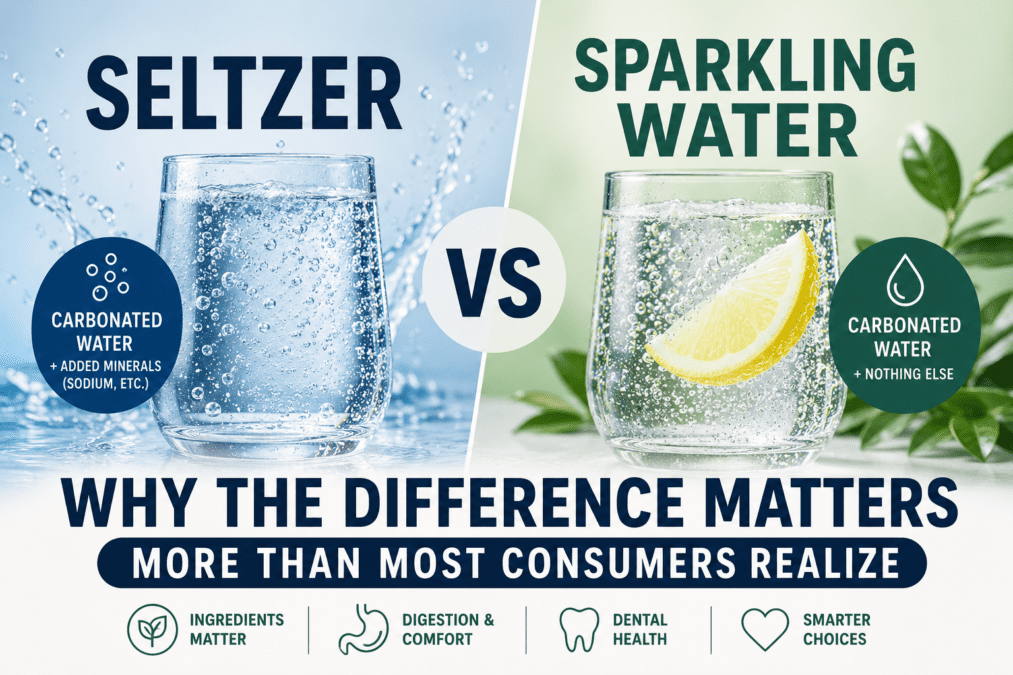
Seltzer is plain water that has been artificially carbonated by adding carbon dioxide gas under pressure.
Sparkling water is water containing carbonation that may naturally occur from mineral springs or be added later, often retaining naturally occurring minerals.
While both beverages contain bubbles, seltzer vs sparkling water differs mainly because sparkling water typically contains minerals that contribute flavor, whereas seltzer is generally neutral in taste.
Direct Answer
When comparing seltzer vs sparkling water, the primary difference is mineral content. Seltzer is usually purified water with added carbonation and little to no mineral presence. Sparkling water often contains naturally occurring minerals such as calcium, magnesium, sodium, or bicarbonate, giving it a more complex taste profile. Both are generally calorie-free and hydrating, but their sensory characteristics and production methods differ significantly.
Comparative Metrics Overview
| Attribute | Seltzer | Sparkling Water |
|---|---|---|
| Primary Source | Purified water | Natural spring or purified water |
| Carbonation Method | Artificially added | Natural, added, or both |
| Mineral Content | Very low | Usually moderate |
| Taste Complexity | Neutral | Mineral-rich and distinctive |
| Mouthfeel | Sharp and crisp | Smooth to moderately complex |
| Calories | Typically zero | Typically zero |
| Hydration Value | Excellent | Excellent |
| Mixology Use | Highly common | Moderately common |
| Natural Mineral Benefits | Minimal | Potentially present |
| Flavor Influence | Carbonation only | Minerals plus carbonation |
| Consumer Positioning | Refreshment-focused | Premium and wellness-oriented |
Structural And Biological Foundations
A meaningful analysis of seltzer vs sparkling water begins with understanding their physical composition. Carbonation occurs when carbon dioxide dissolves into water under pressure, creating carbonic acid. This mild acid produces the tingling sensation associated with all carbonated beverages.
The distinction emerges from what accompanies that carbonation. Seltzer typically starts as purified or filtered water. Carbon dioxide is injected mechanically, producing a beverage that emphasizes crispness rather than mineral character. The result is a clean and relatively uniform sensory experience.
Sparkling water follows a different path. Many varieties originate from underground sources where water interacts with geological formations for years or even centuries. During that process, minerals dissolve into the water. Calcium, magnesium, bicarbonate, potassium, and sodium can all become part of the final composition. These dissolved minerals alter flavor perception, texture, and even the way carbonation feels on the palate.
Therefore, the fundamental science behind seltzer vs sparkling water is not merely about bubbles but about the chemical environment surrounding those bubbles.
Behavioral Patterns And Consumer Preferences
Consumer behavior reveals fascinating insights into seltzer vs sparkling water preferences. Beverage researchers frequently observe that purchasing decisions are influenced as much by identity and lifestyle signaling as by taste.
Seltzer consumers often prioritize versatility. The neutral profile makes it suitable for hydration, flavored beverage consumption, and cocktail preparation. Many people view it as a direct replacement for soda because it delivers carbonation without sugar or calories.
Sparkling water consumers frequently seek a more sophisticated sensory experience. Mineral-rich varieties offer subtle flavor notes that enthusiasts learn to recognize. Similar to coffee or wine appreciation, repeated exposure can increase sensitivity to mineral differences among brands.
Interestingly, blind taste tests often demonstrate that participants can distinguish sparkling water from seltzer even when they struggle to explain why. The explanation usually lies in dissolved minerals that influence mouthfeel and aftertaste.
The modern seltzer vs sparkling water conversation therefore reflects not only product characteristics but also evolving consumer values regarding wellness, authenticity, and premium experiences.
Historical Development Of Carbonated Waters
The history of seltzer vs sparkling water reveals how two seemingly similar beverages emerged from different traditions.
Natural sparkling mineral waters have been consumed for centuries. Ancient civilizations often considered bubbling spring waters special because the naturally occurring carbonation seemed unusual and refreshing. European spa culture helped establish sparkling mineral water as a premium product associated with health and wellness.
Seltzer has a different origin. The term traces back to Selters, a region known for mineral water, but modern seltzer eventually evolved into artificially carbonated water manufactured on a large scale. Technological advances in carbonation enabled producers to replicate the refreshing qualities of naturally sparkling beverages without relying on specific geographic sources.
As industrial food production expanded, seltzer became accessible and affordable. Sparkling water retained a stronger connection to natural sources and premium positioning.
Understanding this historical divergence helps explain why seltzer vs sparkling water remains relevant despite their apparent similarities.
Taste, Texture, And Sensory Experience
Taste differences represent one of the most practical aspects of seltzer vs sparkling water.
Seltzer is generally characterized by a clean, straightforward flavor profile. Because it contains few minerals, consumers primarily experience the sensation of carbonation. This simplicity appeals to those who want refreshment without additional flavor influences.
Sparkling water offers greater complexity. Mineral composition can introduce subtle salty, earthy, alkaline, or slightly metallic notes. These characteristics may sound undesirable in theory, but they often contribute positively to overall flavor balance.
Texture also differs significantly. Mineral-rich sparkling waters frequently feel smoother and more rounded. Seltzers often deliver sharper carbonation and a more immediate sensory impact.
Professional tasters commonly describe sparkling water as having structure, whereas seltzer emphasizes crispness. This distinction explains why many consumers develop strong preferences when evaluating seltzer vs sparkling water side by side.
Nutritional And Health Considerations
Health-conscious consumers frequently investigate seltzer vs sparkling water from a nutritional perspective.
The good news is that both beverages are generally excellent alternatives to sugar-sweetened drinks. Most varieties contain zero calories, no added sugars, and no significant fat content. Both can support daily hydration goals.
The mineral content of sparkling water occasionally provides small amounts of beneficial nutrients. Calcium supports bone health, magnesium contributes to muscle and nerve function, and bicarbonate may influence acid-base balance. However, these contributions are usually modest and should not replace a balanced diet.
One common concern involves dental health. Carbonated water contains carbonic acid, making it slightly acidic. Research consistently shows that plain carbonated waters are substantially less damaging to teeth than sugary sodas. The risk remains relatively low when consumed as part of normal dietary habits.
Consequently, the health comparison in seltzer vs sparkling water often ends in a practical tie, with minor advantages varying according to specific mineral profiles.
Subject A: Strengths And Constraints
Strengths of Seltzer
Seltzer offers remarkable versatility. Its neutral flavor profile makes it adaptable across numerous contexts, including hydration, flavored beverages, and cocktail mixers.
Another advantage is consistency. Because most seltzer begins with purified water and follows standardized carbonation processes, consumers can expect predictable flavor and texture.
Cost efficiency also contributes to its popularity. Large-scale production allows many brands to offer affordable options without sacrificing quality.
The simplicity of seltzer appeals to consumers seeking a direct replacement for sugary carbonated drinks. Many individuals transitioning away from soda find the crisp carbonation satisfying.
Constraints of Seltzer
The same neutrality that makes seltzer versatile can also limit its appeal. Some consumers perceive it as lacking depth or character.
Without minerals, flavor complexity remains minimal. Enthusiasts seeking distinctive taste experiences may find seltzer less engaging than mineral-rich alternatives.
In the broader seltzer vs sparkling water discussion, seltzer excels in functionality but sometimes falls short in sensory sophistication.
Subject B: Strengths And Constraints
Strengths of Sparkling Water
Sparkling water’s greatest strength lies in its complexity. Mineral content creates unique flavor signatures that vary by source and geological history.
Many consumers associate sparkling water with premium quality and authenticity. Natural origins can enhance perceived value and brand prestige.
The presence of minerals also contributes to nuanced mouthfeel. This characteristic often leads consumers to describe sparkling water as smoother, richer, or more refined.
For food pairing, mineral-rich sparkling waters can complement meals in ways similar to wine or specialty beverages.
Constraints of Sparkling Water
Complexity can become a disadvantage for some consumers. Individuals accustomed to neutral beverages may find mineral flavors unfamiliar or distracting.
Price is another consideration. Premium sparkling waters often cost more than standard seltzers.
Source-dependent variability means flavor consistency can differ between brands. What one consumer views as distinctive another may view as inconsistent.
These factors shape the ongoing seltzer vs sparkling water debate among both casual consumers and beverage enthusiasts.
Environmental And Sustainability Considerations
Environmental factors increasingly influence purchasing decisions in the seltzer vs sparkling water market.
Packaging represents a major concern. Both beverage categories often rely on aluminum cans, glass bottles, or plastic containers. Environmental impact depends largely on recycling infrastructure and consumer behavior rather than beverage type alone.
Transportation can significantly affect sustainability. Sparkling waters sourced from distant regions may require extensive shipping, increasing carbon emissions. Locally produced seltzers may sometimes offer logistical advantages.
Home carbonation systems have introduced another variable. Consumers can create seltzer at home, reducing packaging waste and transportation requirements.
However, natural mineral water producers argue that preserving unique geological resources provides cultural and environmental value beyond simple beverage production.
As sustainability becomes more important, the future of seltzer vs sparkling water may depend increasingly on packaging innovation and supply-chain efficiency.
Comparative Advantages In Real-World Scenarios
Evaluating seltzer vs sparkling water requires examining practical use cases rather than abstract characteristics alone.
For cocktail preparation, seltzer generally holds an advantage. Its neutral profile allows spirits, juices, and flavorings to remain the focal point. Bartenders often prefer predictable carbonation without mineral interference.
For fine dining, sparkling water frequently excels. Mineral complexity can complement food and elevate the dining experience. Certain mineral profiles pair particularly well with specific cuisines.
For daily hydration, both perform effectively. Personal preference becomes the deciding factor rather than physiological differences.
For soda replacement, seltzer often proves more accessible because its clean flavor resembles the carbonation-focused experience many former soda drinkers seek.
For sensory exploration, sparkling water offers greater variety. Different mineral compositions create opportunities for comparative tasting and appreciation.
These practical distinctions demonstrate why seltzer vs sparkling water remains an important consumer choice rather than a purely academic comparison.
Scientific And Expert Consensus (2026)
The scientific consensus surrounding seltzer vs sparkling water has become increasingly clear.
Researchers generally agree that both beverages provide effective hydration comparable to still water. Concerns that carbonation significantly impairs hydration have not been supported by current evidence.
Nutrition experts also broadly agree that replacing sugary beverages with either seltzer or sparkling water can contribute positively to dietary quality.
The main scientific distinction remains mineral composition. Sparkling water can provide small quantities of minerals, while seltzer typically contributes negligible amounts.
Experts emphasize that neither beverage should be viewed as a miracle health product. Their value lies primarily in offering enjoyable hydration without the sugar, calories, and metabolic concerns associated with many soft drinks.
The consensus therefore suggests that the seltzer vs sparkling water choice is largely driven by taste preferences, usage scenarios, and individual priorities rather than major health differences.
Market Trends And Future Evolution
Market trends offer additional perspective on seltzer vs sparkling water.
Consumer demand for healthier beverages continues to grow globally. This trend has fueled innovation across both categories, including flavored products, functional ingredients, and premium positioning strategies.
Seltzer brands increasingly emphasize flavor innovation and convenience. Sparkling water producers focus more heavily on source authenticity, mineral composition, and premium experiences.
The distinction between categories may continue to blur as manufacturers experiment with hybrid products combining elements of both traditions.
Nevertheless, consumer education has improved dramatically. More buyers now understand the fundamental differences in mineral content and production methods, making informed choices based on personal preferences rather than marketing alone.
Final Synthesis And Verdict
The comparison of seltzer vs sparkling water reveals a more nuanced distinction than many consumers initially assume. Both beverages share carbonation, hydration benefits, and low-calorie profiles, yet their differences extend into chemistry, sensory experience, cultural positioning, and practical use.
Seltzer excels through simplicity, versatility, affordability, and neutrality. It serves as an outstanding everyday beverage and an effective substitute for sugary soft drinks.
Sparkling water distinguishes itself through mineral complexity, unique flavor profiles, and a more premium sensory experience. Its appeal extends beyond hydration into culinary and lifestyle contexts.
If the goal is pure refreshment and flexibility, seltzer often emerges as the stronger choice. If the goal is taste exploration and mineral character, sparkling water generally offers greater depth.
Ultimately, the winner in seltzer vs sparkling water depends less on objective superiority and more on context. The most important conclusion is that both options represent healthier alternatives to many traditional soft drinks. Rather than competing for dominance, they fulfill different roles within modern beverage culture.
Frequently Asked Questions
Is seltzer the same as sparkling water?
No. The primary distinction in seltzer vs sparkling water is mineral content. Seltzer is usually purified water with added carbonation, while sparkling water often contains naturally occurring minerals that influence taste and texture.
Which is healthier: seltzer or sparkling water?
For most people, both are similarly healthy. Sparkling water may provide small amounts of minerals, but the difference is generally modest. Both support hydration and typically contain no sugar or calories.
Why does sparkling water taste different from seltzer?
Minerals are the main reason. Calcium, magnesium, sodium, and bicarbonate alter flavor perception and mouthfeel, giving sparkling water a more complex taste profile than seltzer.
Is sparkling water better for hydration than seltzer?
Current evidence indicates that both beverages hydrate effectively. In the seltzer vs sparkling water comparison, hydration performance is essentially equivalent for healthy individuals.