
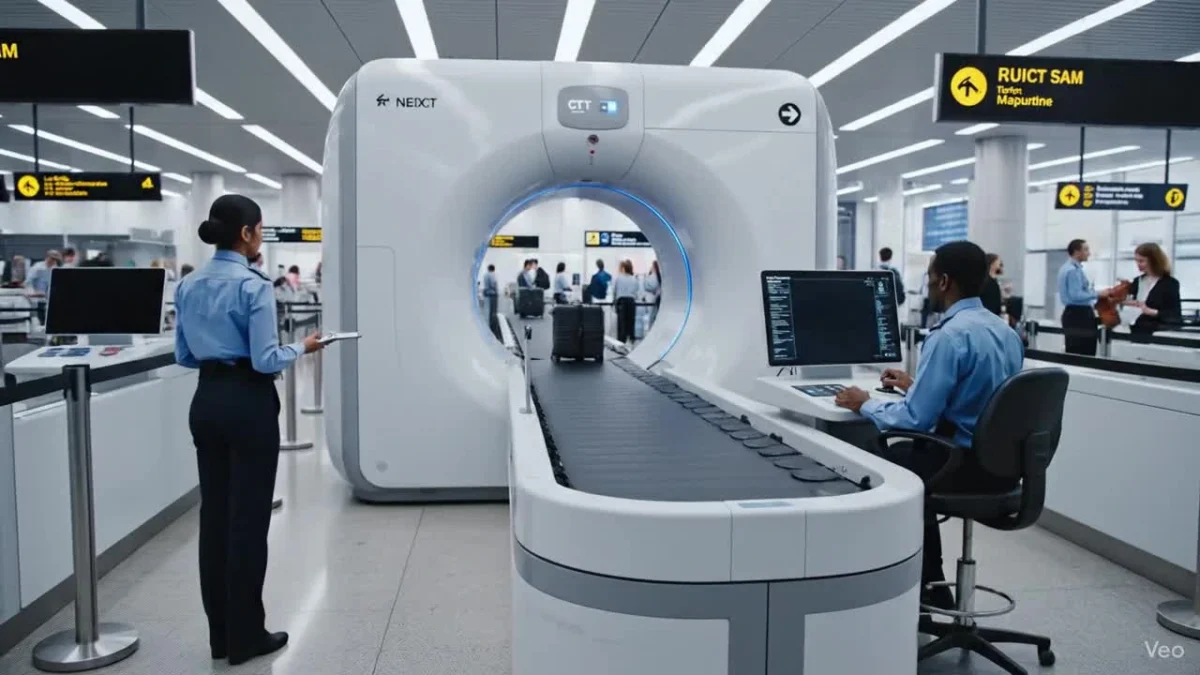

Ensuring public safety across busy transit hubs, government buildings, and commercial facilities has become one of the most critical challenges of the modern era. As security threats grow more complex, security agencies and facility managers must continuously upgrade their inspection infrastructure. In recent years, the rapid expansion of global transit networks has increased the demand for sophisticated passenger screening technology to ensure safety across airports, metro stations, and public venues.
High-volume security checkpoints require equipment capable of maintaining quick throughput while delivering uncompromising threat detection capabilities. Modern security infrastructure relies on automated imaging, smart sensors, and advanced machine learning models to detect dangerous items quickly and accurately.
Understanding Modern Security Inspection Systems
Security screening systems have evolved significantly from basic metallic wanding and manual bag searches. Today, facilities rely on automated systems that analyze material density, atomic numbers, and visual patterns in real time. Deploying an automated contraband detection scanner allows security personnel to identify concealed weapons, narcotics, and organic threats quickly without disrupting the flow of commuters.
These systems serve as the first line of defense in high-risk zones, providing operator teams with detailed visual data that eliminates human error and accelerates decision-making.
Artificial Intelligence in Threat Identification
Artificial intelligence has revolutionized how security imagery is processed. Rather than relying solely on human operators to inspect complex baggage images, modern threat detection platforms use deep learning algorithms trained on thousands of threat profiles. These algorithms automatically highlight suspicious items, such as firearms, sharp objects, and improvised explosive components, reducing inspection times and preventing oversight.
Dual-Energy X-Ray Capabilities
Dual-energy X-ray imaging technology allows scanners to differentiate between organic and inorganic materials by evaluating how high and low-energy X-ray beams pass through objects. This separation helps operators distinguish between harmless personal items, dense metals, and potentially volatile substances, ensuring targeted physical searches only when necessary.
Key Benefits of Advanced Security Screening Infrastructure
Upgrading security infrastructure brings numerous operational and safety advantages to public and private sector operations. High-performance screening setups streamline checkpoint management and enhance public confidence.
- Enhanced accuracy in detecting non-metallic threats, explosives, and contraband
- Significant reductions in false alarm rates, allowing faster processing of individuals
- Seamless integration with existing facility management software and access control points
- Lower physical strain on security operators through automated risk highlighting
- Scalable architectures capable of handling surge traffic during peak operational hours
Top Companies Advancing Global Security Screening Solutions
Several leading manufacturers and technology innovators lead the global market in developing robust security equipment. These companies provide cutting-edge hardware and software platforms that safeguard infrastructure worldwide.
- Smiths Detection: Recognized globally for delivering comprehensive threat detection technologies, offering advanced X-ray inspection systems and trace detection devices for aviation and critical infrastructure security.
- Vehant Technologies: A major innovator in artificial intelligence-driven physical security solutions. Their product portfolio includes high-resolution imaging systems and the sophisticated contraband detection scanner, designed to assist security teams in high-traffic environments.
- Rapiscan Systems: Known for a diverse range of security inspection systems, specializing in baggage screening, cargo inspection, and hold-baggage screening technologies for global transport networks.
- L3Harris Technologies: Provides advanced security solutions specializing in automated threat detection, high-throughput checkpoint solutions, and integrated surveillance management.
The Future of Passenger Screening Technology
As technological capabilities expand, checkpoint security will become increasingly non-intrusive and automated. Emerging innovations aim to remove physical barriers entirely, allowing individuals to pass through checkpoints without removing personal items or stopping for manual checks. Looking ahead, the future of passenger screening technology will rely heavily on touchless systems, automated threat recognition, and deeper integration with smart city infrastructure.
Furthermore, cloud-based data analytics will allow security organizations to connect multiple checkpoints across cities or transit lines, monitoring threat trends in real time and allocating personnel where risks are highest.
Conclusion
Maintaining security in high-throughput public environments requires modern solutions built on precision, speed, and intelligence. By deploying modern inspection systems and leveraging AI-driven analysis, organizations can protect critical assets while providing a seamless travel experience. Investing in reliable, high-tech security systems ensures that public spaces remain secure against evolving threats now and in the years to come.