
Best Empanada Peruana Near Me: How to Spot a Great One
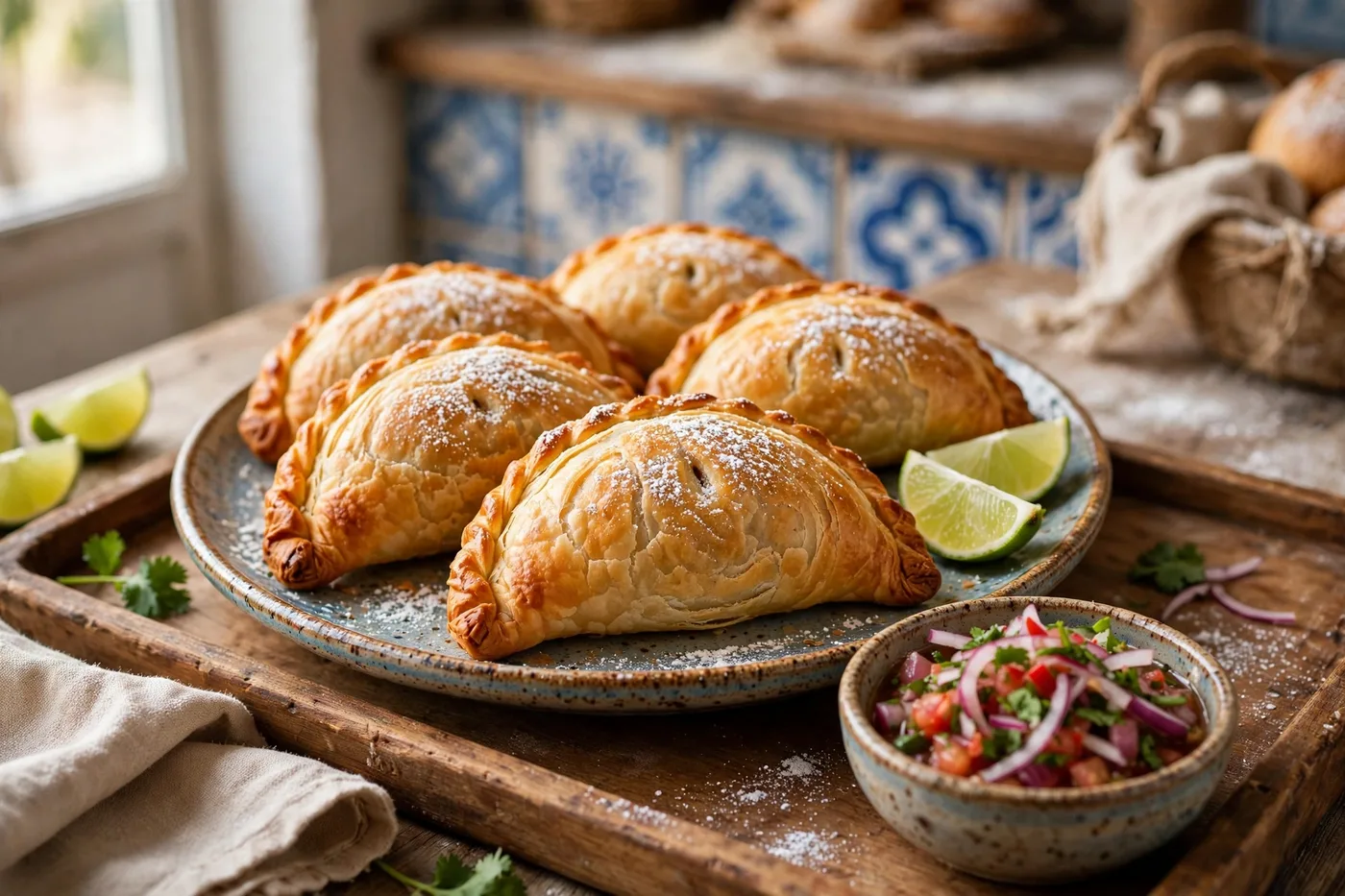
The best empanada peruana near me is a big, buttery baked turnover filled with beef, onion and ají panca, a whole olive, a piece of hard-boiled egg and a few raisins, that comes out of the oven dusted with powdered sugar and gets a squeeze of lime, exactly like the ones in every Lima bakery. If you are searching for the best empanada peruana near me, start with Peruvian bakeries and restaurants, because the dish is a bakery food first and a restaurant food second, and the best ones are made fresh in the morning and sold warm. This guide explains what makes a Peruvian empanada different from every other empanada, what a great one tastes like, where to find one, and how to eat it the way people do in Lima.
What Makes a Peruvian Empanada Peruvian?
A Peruvian empanada is a baked turnover made from lightly sweetened wheat dough, filled with a savoury mixture, most often chopped beef and Peruvian chiles, sealed with a crimped edge, and served warm with lime and powdered sugar. Four things make it Peruvian, and they are all worth knowing before you order. The first is the ají panca filling: the beef cooks in an aderezo of onion, garlic, cumin and ají panca, the smoky, mild red chile behind many Peruvian stews. The second is the egg, olive and raisin in every one: a quarter of a hard-boiled egg and a whole purple botija olive go into each empanada, and the raisins sweeten the beef. The third is the soft, buttery dough, which is richer and more tender than an Argentine dough, closer to a short pastry, and the empanadas are large, so one is a snack and two are a meal. The fourth is the powdered sugar and lime: a light dusting of sugar goes on after baking, and a lime wedge is served on the side to squeeze into the filling.
The two chiles are the real signature. Ají amarillo gives a fruity, moderate heat, while ají panca adds a deep red colour and a smoky, almost dried-fruit flavour. Together they give the filling a flavour profile that is distinctly Andean, and it is the reason a Peruvian empanada tastes different from an Argentine or Chilean one even when the ingredients look similar on paper. The raisin is non-negotiable too: the sweet-savoury interplay is built into the filling itself before the sugar even arrives, and the powdered sugar on top is not a mistake, it is the thing that makes the whole dish work.
The Classic Beef Filling: Ají Panca, Egg, Olive and Raisin
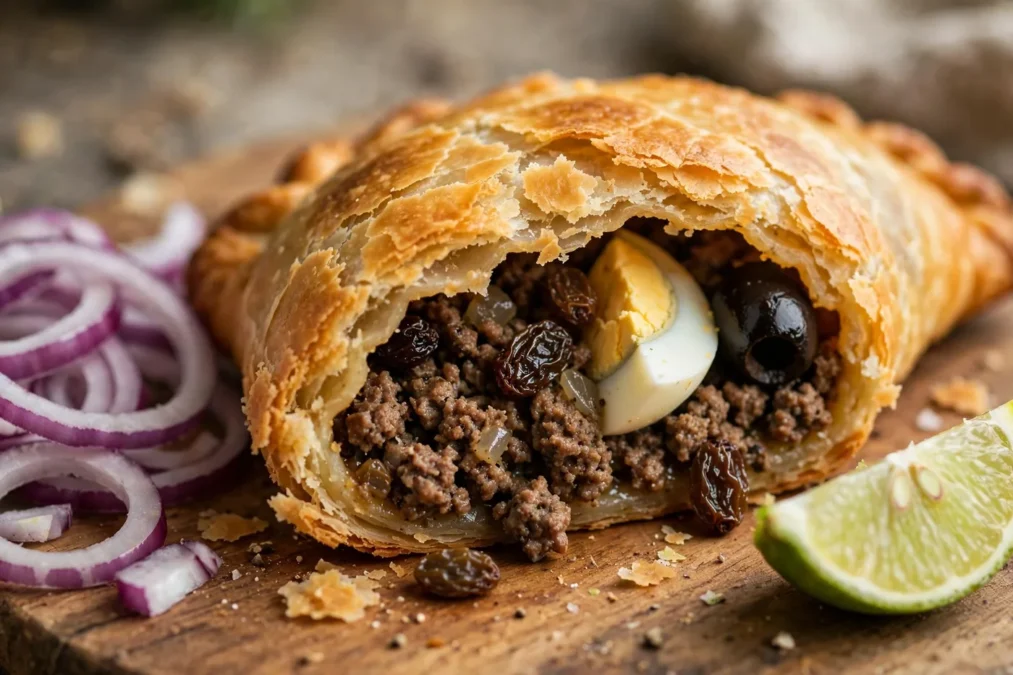
The classic is the empanada de carne, and it is the standard by which Peruvians judge a bakery. The beef is traditionally chopped rather than ground, although many bakeries use ground beef as a shortcut, and it cooks in the aderezo until it is tender and well seasoned with cumin, garlic and the two ají pastes. The filling should be moist but not wet, because a wet filling makes the dough soggy, and it should be savoury with a gentle heat, not fiery, because the ají panca is smoky and mild rather than hot. When you bite into a good empanada de carne, you should taste the beef first, then the cumin and the chile, then the sweetness of the raisin, and then the salt of the olive.
The egg, olive and raisin are not garnishes, they are part of the structure of the dish. Each empanada gets a quarter of a hard-boiled egg and a whole olive, and the raisins are mixed through the filling, so that every bite has a little of everything. A bakery that leaves out the egg or the olive is cutting corners, and a bakery that uses a green olive instead of a botija or Kalamata olive is not necessarily wrong, but it is not the Lima standard. The best empanada peruana near me will have all three, and the filling will be generous, because a skimpy filling is the first sign of a bakery that does not respect the dish.
The Dough, the Sugar and the Lime: The Three Signatures
The dough is what separates a Peruvian empanada from every other empanada in the world, and it is the first thing to judge. Lima bakeries use a tender dough made with butter and shortening or lard, a spoonful of sugar and an egg yolk, and it is richer and more tender than an Argentine dough, closer to a short pastry. The pastry should be golden and flaky, with a deep sheen from an egg wash, and it should be soft enough to bite through easily without shattering. A dough that is tough, dry or pale has been made with too little butter or baked at the wrong temperature, and it will not do the filling justice.
The powdered sugar is the second signature, and it is the one that surprises people who have never had a Peruvian empanada before. A light dusting of sugar goes on after baking, and it sounds wrong and it tastes right: the savory beef filling gets a faint sweetness from the sugar dusting on the pastry that creates a contrast you do not find anywhere else in the empanada world. The lime is the third signature, and it is essential: a wedge of lime is served on the side, and you squeeze it into the filling before you eat, because the acidity cuts through the richness of the pastry and the sweetness of the sugar. A bakery that serves a Peruvian empanada without sugar and lime is not serving a Peruvian empanada, whatever the menu says.
Where to Find the Best Empanada Peruana Near Me
The most reliable place to find the best empanada peruana near me is a Peruvian bakery, because the empanada is a bakery food, and it is made fresh in the morning and sold warm. In cities with a Peruvian community, there is usually at least one bakery that makes empanadas daily, and the best ones sell out by midday, so it is worth going early. A bakery that makes its own dough is a good sign, because the dough is the hardest part to get right, and a bakery that buys ready-made dough will never match the real thing. Ask whether the empanadas are baked in-house, what fillings they offer, and whether they serve them with lime and powdered sugar.
Peruvian restaurants are the second option, and they are often the easiest place to try a single empanada without buying a box. A restaurant that serves a good lomo saltado or ají de gallina will usually make a good empanada too, because the kitchen already has the ají pastes and the technique. Latin American food markets and delis are the third option, and they sometimes stock frozen Peruvian empanadas, which are a reasonable fallback, but they are never as good as a fresh one from a bakery. If you find a bakery you love, go back to it, because the best empanadas come from bakers who make them every day, not from places that make them as an afterthought. If you also like Latin grilled dishes, see our guide to Best Provoleta Near Me.
The Other Fillings Worth Trying
Most Peruvian bakeries offer at least three or four fillings, and they are all worth trying once you have had the classic beef. The chicken version, de pollo, uses shredded chicken in the same aderezo, with ají amarillo instead of panca, and it keeps the egg and olive, making it milder and slightly brighter than the beef. The ají de gallina version uses leftover ají de gallina, chilled until firm, and it is very creamy, so it is best for people who want something richer. The lomo saltado version uses chopped lomo saltado without the fries, drained well, and it is a modern café favourite. The cheese version, de queso, uses fresh cheese with a little onion, and it is simple, salty and rich, making it a good choice for vegetarians and children.
If you only have room for one, order the carne, because it is the standard by which Peruvians judge a bakery. But if you are going back, try the chicken and the cheese, because they show whether the bakery understands the whole range of the dish. Coastal versions tend to be brighter and tangier, with more onion and a squeeze of lime in the filling itself, while Andean versions are often heartier, with thicker dough, more spice, and sometimes additional ingredients like potato or hard-boiled egg. The differences are a reminder that Peruvian food is regional, and the best empanada peruana near me is the one that matches the style you like.
Peruvian vs Argentine vs Chilean: How to Tell Them Apart
The three beef empanadas share ingredients, so it helps to know how to tell them apart. The Peruvian empanada has ground or chopped beef with ají panca and cumin, plus egg, a whole olive and raisins, in a soft butter dough, baked, with powdered sugar and lime. The Argentine empanada has beef with onion, paprika and cumin, plus egg, green olive and sometimes raisins, in a thinner dough, baked or fried in the northwest, with a braided repulgue edge. The Chilean empanada de pino has beef and a lot of onion, plus egg, black olive and raisins, in a large, rectangular shape, baked, with no sugar. The differences are in the dough, the chiles and the finish, and they are easy to spot once you know them.
The powdered sugar is the quickest way to tell a Peruvian empanada from the others: if it has sugar on top, it is Peruvian. The lime is the second clue, and the soft, buttery dough is the third. A bakery that sells a Peruvian empanada without any of these is either not Peruvian or not trying, and it is worth asking the seller what makes their empanada Peruvian. A good baker will be happy to explain, because the differences are a point of pride, and the conversation is part of the experience. Knowing the differences also helps you order with confidence, because you will know exactly what you are getting.
How to Eat One the Lima Way
Eating a Peruvian empanada the Lima way is simple, but it matters, because the sugar and the lime are not decorations, they are part of the dish. Hold the empanada in your hand, squeeze the lime wedge into the filling through the top or the side, and take a bite while it is still warm. The lime should hit the filling first, cutting through the richness of the pastry and the sweetness of the sugar, and the flavours should balance: savoury beef, smoky chile, sweet raisin, salty olive, tangy lime and the faint sweetness of the sugar on the pastry. Eat it over a plate, because the filling is generous and it will drip, and do not be embarrassed about the mess, because a good empanada is meant to be a little messy.
One empanada is a snack, two are a meal, and the best time to eat one is in the morning, fresh from the bakery, with a coffee. In Lima, empanadas are a breakfast food as much as a snack, and they are eaten on the way to work, at a market stall, or at a bakery counter. If you buy a box to take home, eat them the same day, because the pastry is at its best fresh, and a reheated empanada is never quite the same. If you must reheat one, use an oven, not a microwave, because the oven keeps the pastry crisp while the microwave makes it soggy.
Conclusion
The best empanada peruana near me is a big, buttery, baked turnover with a proper ají panca filling, a whole olive, a piece of egg and a few raisins, dusted with powdered sugar and served with a lime wedge. Start your search with Peruvian bakeries, go early, and judge what you buy by the dough, the generosity of the filling and the presence of the sugar and the lime. If you only have room for one, order the carne, because it is the standard by which Peruvians judge a bakery, and if you go back, try the chicken and the cheese. A great Peruvian empanada is worth the search, and once you have tasted a good one, you will understand why people in Lima eat them every morning. If you find a bakery you love, go back to it, because the best empanadas come from bakers who make them every day.
What is a Peruvian empanada?
A Peruvian empanada is a baked turnover made from lightly sweetened wheat dough, filled with a savoury mixture, most often chopped beef and Peruvian chiles, sealed with a crimped edge, and served warm with lime and powdered sugar. The classic filling is beef cooked with ají panca and cumin, plus a quarter of a hard-boiled egg, a whole botija olive and raisins in every empanada.
What is the difference between a Peruvian empanada and an Argentine empanada?
A Peruvian empanada has a soft, buttery dough, a filling with ají panca and ají amarillo, and it is served dusted with powdered sugar and with a lime wedge. An Argentine empanada has a thinner dough, a filling with paprika and cumin, a green olive, and a braided repulgue edge, and it is never served with sugar. The powdered sugar is the quickest way to tell them apart.
Where can I buy Peruvian empanadas near me?
The best empanada peruana near me is usually found at a Peruvian bakery, because the empanada is a bakery food made fresh in the morning and sold warm. Peruvian restaurants are the second option, and Latin American food markets sometimes stock frozen ones. Go early, because the best bakeries sell out by midday, and ask whether the empanadas are baked in-house.
What fillings do Peruvian empanadas have?
The classic filling is beef, called de carne, cooked with ají panca, cumin, onion and garlic, plus egg, olive and raisins. Other common fillings include chicken (de pollo), ají de gallina, lomo saltado and cheese (de queso). If you only have room for one, order the carne, because it is the standard by which Peruvians judge a bakery.
Why is there powdered sugar on a Peruvian empanada?
The powdered sugar is a traditional part of the Peruvian empanada, not a mistake. A light dusting goes on after baking, and it gives the savoury beef filling a faint sweetness that creates a contrast you do not find in other empanadas. The lime wedge served on the side balances it: the acidity cuts through the richness of the pastry and the sweetness of the sugar.
How many Peruvian empanadas should I order?
One Peruvian empanada is a snack and two are a meal, because the empanadas are large and the dough is rich and buttery. If you are buying for a group, order a mix of fillings, and eat them the same day while they are fresh, because a reheated empanada is never quite as good as a fresh one.