
You connect a computer to a pair of powered speakers, or a TV to an external amplifier, and there it is: a low, steady hum under every news bulletin and video call. Turning up the volume only makes it harder to ignore. The cable usually gets the blame first. Sometimes that is fair. Often the real problem is the way two pieces of equipment are tied together electrically.
Why RCA connections pick up noise
An RCA lead is an unbalanced connection. It has a centre conductor for the signal and an outer shield that serves as the return path. That shield does two jobs at once, and this is the weak point. When two mains-powered devices sit at slightly different electrical potentials, a small current can flow between them along the shield. The shield has resistance, so that current creates a small voltage, which is added to your signal. Jensen Transformers' application note on interfacing calls this common impedance coupling. Many people know it simply as a ground loop. Audio engineer Bill Whitlock has explained that the noise voltage is directly proportional to shield resistance. A cable with a heavier, lower resistance shield can therefore reduce hum, even though it may not remove it. Level matters too. Consumer line level is nominally -10 dBV, or about 0.316 V rms, while professional equipment commonly uses +4 dBu, about 1.23 V rms. A weaker signal leaves less margin above any unwanted voltage.
Diagnose by sound first
| What you hear | Likely area to check |
|---|---|
| Steady low hum | Ground loop between mains-powered devices |
| Harsher buzz | Interference from power supplies, dimmers or nearby electronics |
| Crackle when the plug moves | Loose fit, damaged conductor or dirty contact |
| One channel missing | Broken lead, wrong socket or faulty channel |
| Hiss that follows the volume knob | Gain settings or the source itself |
These are starting points rather than proof. The test below narrows things down.
The 10 minute isolation test
Switch equipment off or turn the volume fully down before plugging or unplugging anything.
- Disconnect the source from the amplifier or powered speakers. If the noise remains, look at the amplifier, speakers or their power supply.
- Reconnect one source at a time. Note which one brings the noise back.
- Swap the left and right plugs at one end. If the fault changes sides, it comes from the cable or source side.
- Try a different, shorter lead. A change points to the original cable.
- Move the lead away from power cords and adapters.
- Unplug other connections such as a TV antenna, cable box or charger, one by one. Any of them can complete a loop.
- Run a laptop on battery for a moment. If the hum stops, the charger path is involved.
Fixes, from cheapest to most involved
Tidy the routing. Keep signal leads apart from power cables. Where they must cross, cross them at a right angle.
Shorten the run. A long coil of spare cable behind a desk serves no purpose and adds both shield resistance and opportunity for pickup.
Share a power point. Plugging connected equipment into the same properly rated outlet strip can reduce differences in ground potential. Do not overload it.
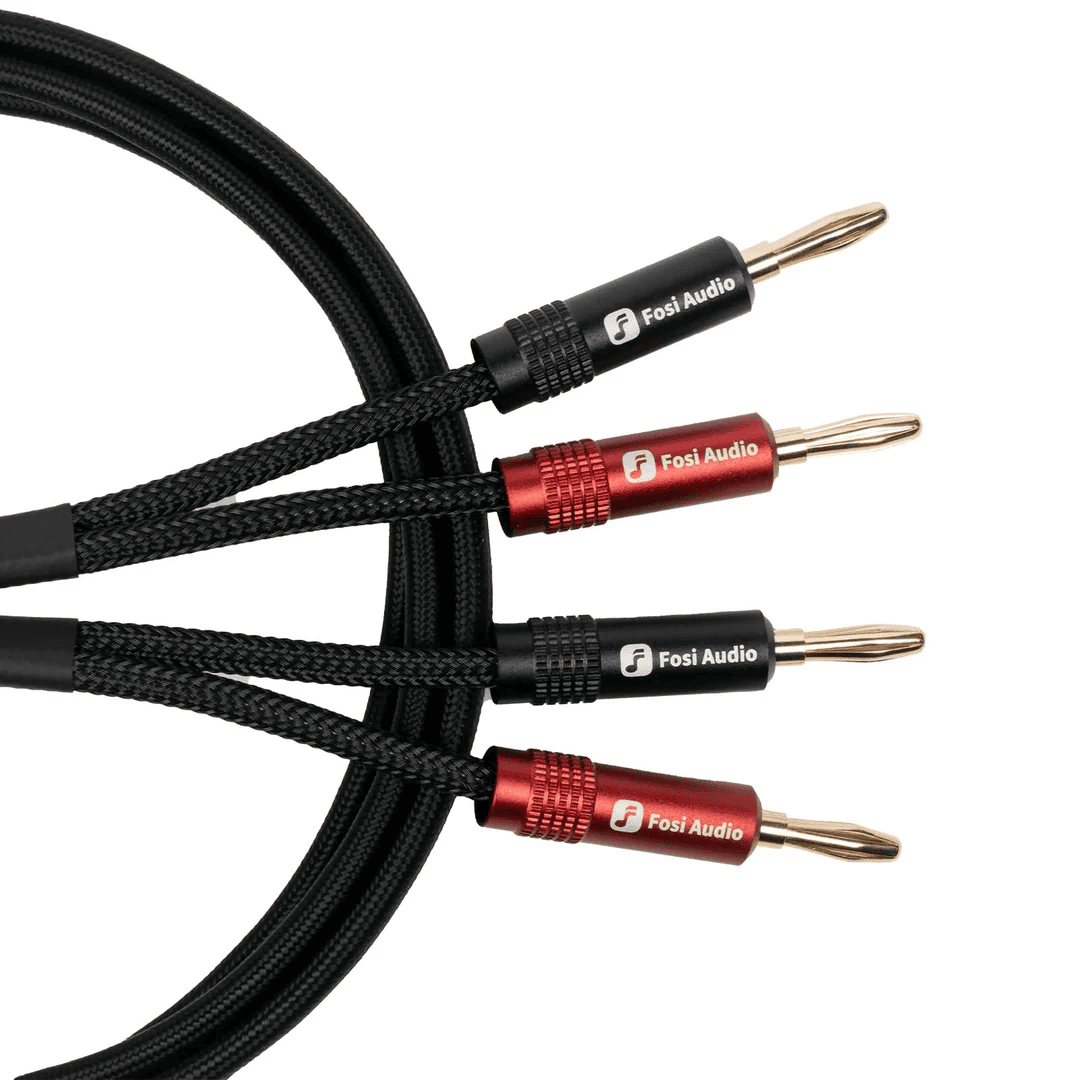
Replace damaged or poorly shielded leads. When shopping for rca cables, look for a stated shield construction, a firm plug fit and the shortest length that reaches comfortably.
Add a ground isolator. A transformer based audio isolator placed in the signal path can block the current that flows between devices. Quality varies, so test it and keep the right to return it.
One thing never to do
Do not cut off or tape over the earth pin of a power plug. Jensen's guidance is blunt on this point: never defeat the safety ground of equipment with a three pin cord. A fault could place dangerous voltage on every connected metal case. Hum is an annoyance. Electric shock is far worse. If you suspect a wiring fault in the building, call a qualified electrician.
Quick questions
Will gold plated plugs stop hum? Gold plating helps resist corrosion. It does not break a ground loop.
Does a more expensive cable always fix noise? No. If the cause is a difference between two devices, price alone will not remove it. Shield resistance, length and isolation matter more.
Why does the hum appear only when the TV is connected? The TV may bring in a second ground route through its power cord or antenna lead. Test by disconnecting the antenna with the equipment turned down.
Work through the steps in order and write down what changes the noise. A quiet system is usually found by elimination, not by replacing everything at once.