
Best Ajo Blanco Near Me: Where to Find Spain’s Chilled White Soup
If you are searching for the best ajo blanco near me, the short answer is to look for a Spanish or Andalusian restaurant that makes its soup fresh each day from almonds, garlic, bread, olive oil and sherry vinegar, and serves it ice cold with green grapes and toasted almonds on top. Ajo blanco is one of Spain’s oldest soups, a chilled white soup from Andalusia that predates the tomato-based gazpacho most people know, and its flavour is creamy, nutty and gently garlicky rather than sharp or acidic. This guide explains what the soup should taste like, where to find it, what it should cost, and how to tell a real ajo blanco from a pale imitation.
What Is Ajo Blanco and Where Does It Come From?
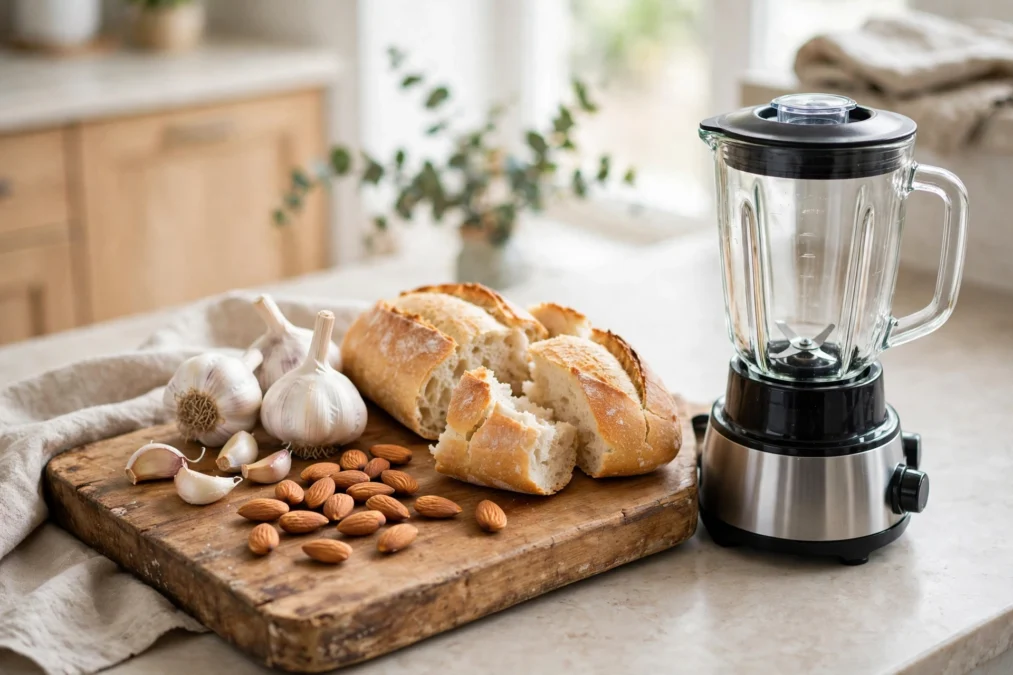
Ajo blanco is a chilled soup from Andalusia in southern Spain, made from blanched almonds, garlic, stale white bread, olive oil, sherry vinegar and cold water, all blended together until smooth and creamy. Its name means white garlic in Spanish, and it is one of the oldest soups in Spanish cooking, with roots that go back to the time before tomatoes and peppers arrived from the Americas. Because it contains no tomato, it is sometimes called white gazpacho, although it is a distinct dish with its own history and flavour, and it was a staple food for farm workers in Andalusia long before it appeared on restaurant menus.
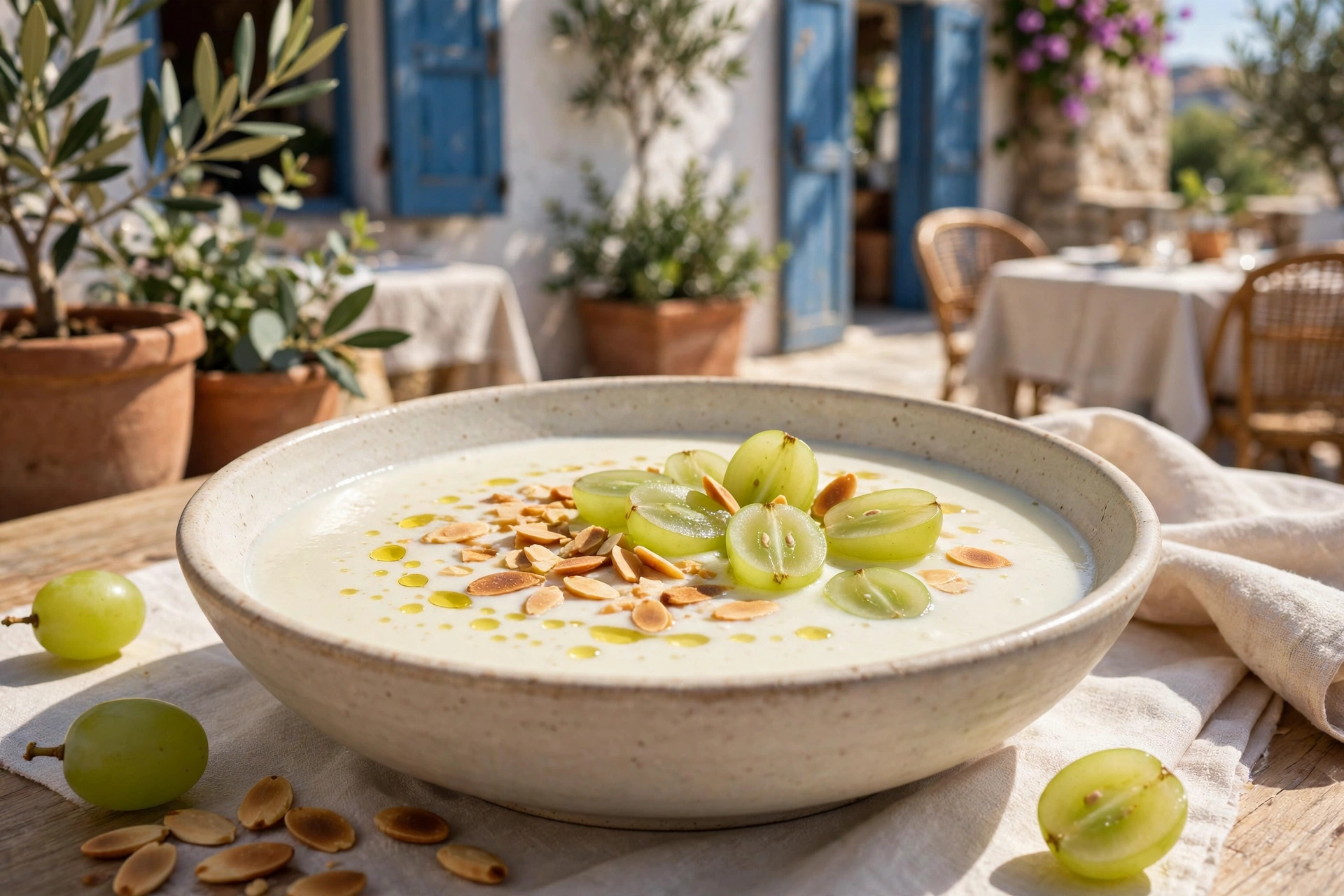
The soup is traditionally served cold, garnished with green grapes and slivers of toasted almond, and it is at its best in warm weather, when its cool creaminess is most refreshing. The almonds give it body and a gentle nutty sweetness, the garlic gives it a warm background note, and the sherry vinegar adds just enough acidity to keep it bright. A good ajo blanco should be smooth and silky, with no graininess from the almonds and no harsh bite from the garlic, and it should taste of all its ingredients in balance rather than of any single one. It is a dish that rewards patience, because the soup needs time to chill and for the flavours to settle.
What Does a Good Bowl of Ajo Blanco Taste Like?
A good bowl of ajo blanco tastes creamy and nutty first, with the almonds giving it a smooth richness that is quite different from a cream-based soup. The garlic should be present but gentle, warming the back of the throat rather than stinging it, and the sherry vinegar should add a light acidity that lifts the whole soup. The olive oil, which is emulsified into the soup as it is blended, gives it a silky texture and a faint fruitiness, and the bread thickens it just enough to coat a spoon without making it heavy. The overall impression should be cool, smooth and refreshing, with a flavour that is subtle rather than bold.
The garnish is part of the experience, because the green grapes add bursts of sweetness and acidity, and the toasted almonds add crunch and a deeper nutty flavour. Some restaurants add a drizzle of good olive oil on top, a few drops of sherry vinegar, or a scattering of chopped chives, and all of these are welcome touches. The soup should be served properly cold, ideally in a chilled bowl, because warmth dulls its flavour and makes the garlic taste harsher. A bowl that arrives lukewarm or at room temperature is a sign that the kitchen does not take the dish seriously, and a soup that tastes grainy or bitter has either been blended badly or made with too much garlic.
Where Can I Find the Best Ajo Blanco Near Me?
The best ajo blanco near me is usually found in a Spanish restaurant, and the most reliable way to find one is to search maps and review sites for Spanish restaurants in your area and then look for reviews that mention ajo blanco by name. Look for places where reviewers describe the soup as creamy, refreshing and properly cold, and pay attention to photographs of the actual bowl rather than stock images. A restaurant that is proud of its ajo blanco will usually list it as a starter or a first course, often as a seasonal special in the warmer months, and it will be available most days rather than only on special occasions.
Andalusian restaurants are the best bet of all, because ajo blanco comes from Andalusia and a kitchen from that region is most likely to make it properly. Tapas bars are another good source, because the soup is often served as a small starter alongside other tapas, and a tapas bar that makes its own ajo blanco is a sign of a kitchen that cooks from scratch. Spanish food markets and delicatessens sometimes sell the soup ready-made, and some will make it to order if you ask. If there is no Spanish restaurant near you, some Mediterranean restaurants serve their own version, but you should check that it is made from almonds and garlic rather than simply being a white soup with a Spanish name.
How Do You Spot Authentic Ajo Blanco?
An authentic ajo blanco gives itself away in several ways before you even taste it. The menu should list the dish by its proper name, ajo blanco, and it should describe it as a chilled almond and garlic soup, often mentioning the grapes and toasted almonds that garnish it. The restaurant should also serve other Spanish dishes such as gazpacho, tortilla espanola and patatas bravas, because a kitchen that cooks the full range of Spanish food is far more likely to make its ajo blanco properly. If the menu is mostly generic Mediterranean food with one token Spanish soup, the ajo blanco may be made from a bought-in base rather than from scratch.
The texture of the soup is the clearest test once the bowl arrives, because a real ajo blanco should be completely smooth and silky, with no graininess and no separation. The colour should be a pale ivory white, not grey or yellow, and the soup should be served cold in a chilled bowl. The garnish should include green grapes, which are traditional, and toasted almonds, which add crunch and flavour. A good sign is a restaurant that makes its soup fresh each day and tells you so on the menu, because ajo blanco is at its best when it is freshly blended and properly chilled. Another good sign is a dining room where Spanish families are eating, because regulars are the toughest critics a restaurant can have.
How Much Does Ajo Blanco Cost Near Me?
The price of ajo blanco depends on where you live and whether you are ordering it as a starter in a restaurant or buying it ready-made, but as a guide, a bowl in a Spanish restaurant in the UK typically costs about the same as a standard starter at a casual Spanish restaurant. Prices are higher in London and other large cities, where rents and wages push menu prices up, and lower in smaller towns where a family-run restaurant can keep costs down. A takeaway portion is often a little cheaper than eating in, although delivery apps add their own fees on top of the menu price, so the total can end up similar.
What matters more than the exact price is whether the soup is made properly, and the best way to judge value is to look at the quality of the almonds and olive oil rather than the size of the bowl alone. A soup that costs a little more but uses good Marcona almonds and a proper extra virgin olive oil is better value than a cheaper bowl made from ordinary almonds and a bland oil. Some restaurants offer ajo blanco as part of a set lunch menu, which can be a good way to try it alongside other dishes at a lower overall price. If you are feeding a family, ask whether the restaurant sells the soup by the litre, because some Spanish delicatessens do, and it works out cheaper than ordering individual bowls.
Can I Get Ajo Blanco as Takeaway or Delivery?
Yes, ajo blanco works well as takeaway, and many Spanish restaurants offer it for collection or through delivery apps. The soup travels well because it is served cold anyway, so there is no risk of it arriving lukewarm, and the flavour actually improves as it sits for a little while and the garlic mellows. If you are ordering for delivery, choose a restaurant that packs the garnish separately, because the grapes and toasted almonds stay crisper that way, and check the reviews for comments about packaging, because a good container keeps the soup cold without leaking.
Collection is often the better option if you live near the restaurant, because you can pick the soup up at its best and eat it straight away. Some restaurants sell the soup in larger containers for collection, which is worth asking about if you are ordering for a family meal or a summer gathering. Delivery apps usually show the soup with a photo and a description, so look for a listing that names ajo blanco and shows a real photograph of the bowl. If the listing is vague or uses a stock photo, the restaurant may not take the dish seriously, and you may be better off ordering from somewhere that presents it properly.
What Should I Order With Ajo Blanco?
Ajo blanco is usually served as a starter, so it pairs well with a main course that follows it, and the classic combination is to follow it with a grilled fish or a meat dish. A plate of jamon iberico or a selection of Spanish cheeses makes a good sharing starter alongside the soup, and a basket of good bread is essential for mopping up the last of it. A glass of dry sherry or a cold Spanish white wine such as Albariño is the traditional drink pairing, and both work well because their acidity matches the vinegar in the soup. If you prefer something non-alcoholic, a sparkling water with lemon or a fresh orange juice is a refreshing choice.
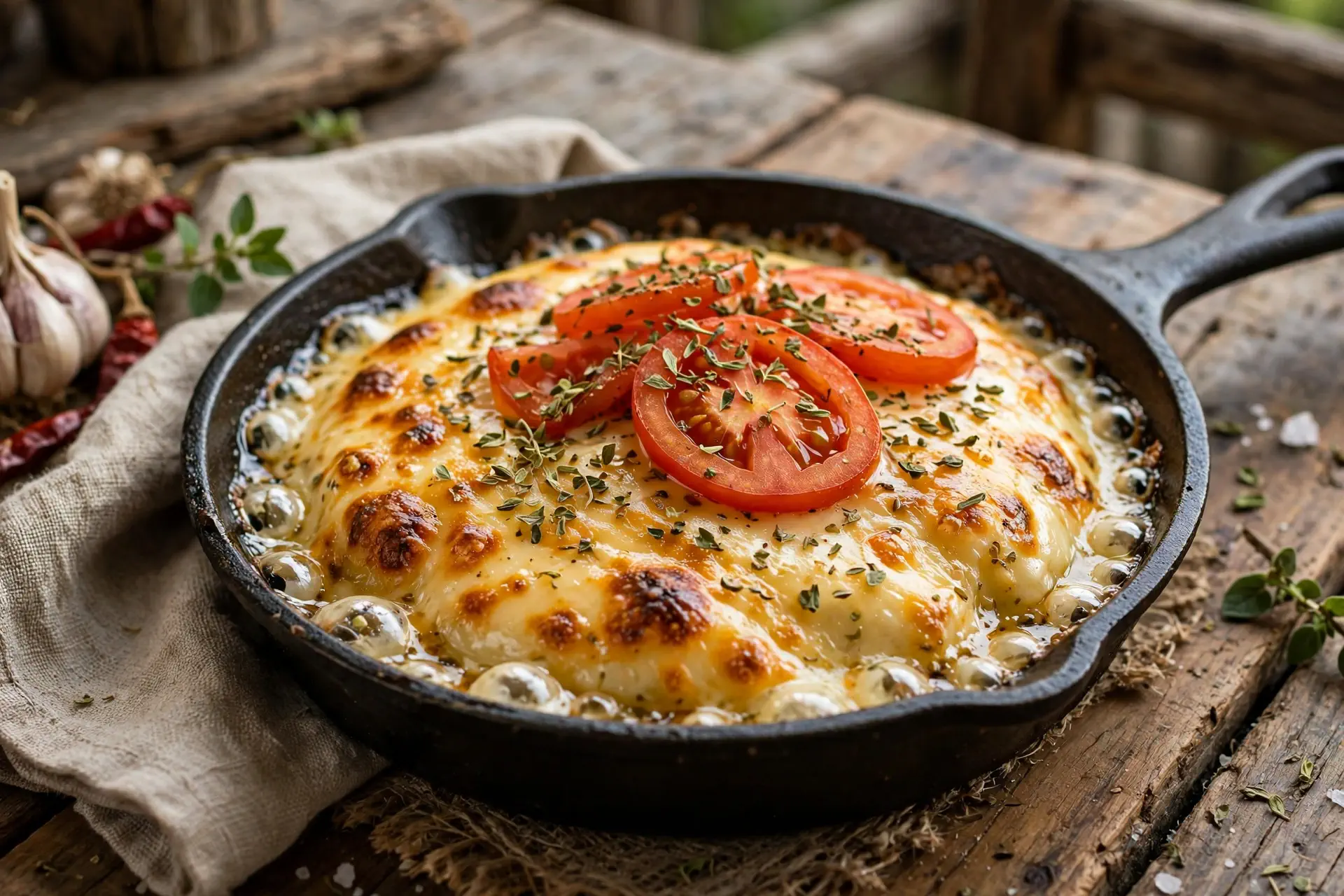
For a full Spanish meal, follow the soup with a main course such as a seafood paella, a grilled sea bass or a slow-cooked pork dish, and finish with a dessert such as crema catalana or a slice of Santiago cake. If you are eating tapas-style, order the soup alongside patatas bravas, gambas al ajillo and a tortilla, so that everyone at the table can share. If you enjoy trying other international dishes, you may also like grilled provoleta, and our guide to the Best Provoleta Near Me explains where to find that dish and what to look for in a good version.
How Is Ajo Blanco Different From Gazpacho?
Ajo blanco is often called white gazpacho, but it is a different dish from the red gazpacho most people know, and the differences are worth understanding. The most important difference is the base, because ajo blanco is made from almonds, garlic, bread and olive oil, while red gazpacho is made from tomatoes, peppers, cucumber and onion. Ajo blanco is older than red gazpacho, because it was made in Andalusia before tomatoes arrived from the Americas, while red gazpacho only became possible after the tomato was introduced to Spain. The two soups are related in the sense that both are chilled, blended and served cold, but they taste completely different.
The flavour is another clear difference, because ajo blanco is creamy, nutty and gently garlicky, while red gazpacho is bright, acidic and vegetal, with the sharpness of tomato and vinegar. Ajo blanco is garnished with green grapes and toasted almonds, while red gazpacho is usually garnished with chopped tomato, pepper, onion and croutons. Both soups are refreshing in warm weather, and both are worth trying, but if you want the older and more unusual of the two, look for the pale white soup with grapes on top, because that is the ajo blanco that Andalusian farm workers were eating centuries before the tomato arrived.
Conclusion
Finding the best ajo blanco near me comes down to looking for a Spanish kitchen that makes its soup fresh each day from good almonds, proper garlic and a fine olive oil, and serves it ice cold with green grapes and toasted almonds. The best bowls are smooth, creamy and refreshing, with the garlic gentle rather than harsh and the vinegar bright rather than sharp. Whether you eat in a restaurant, order takeaway or make it yourself, the dish rewards attention to detail, and once you have tasted a properly made ajo blanco, you will understand why it has survived for centuries. Try a well-reviewed Spanish restaurant near you, order the ajo blanco with a glass of dry sherry, and judge it by the smoothness of the soup, the sweetness of the grapes and the crunch of the almonds.
Is Ajo Blanco Vegan?
Yes, ajo blanco is vegan in its classic form, because it is made entirely from plant ingredients: almonds, garlic, bread, olive oil, sherry vinegar and water, garnished with grapes and almonds. It contains no dairy, egg or meat, which makes it one of the most naturally vegan dishes in Spanish cooking. However, you should always check with the restaurant, because some kitchens may use a chicken stock instead of water, or a bread that contains milk or egg. If you are vegan, tell the restaurant when you order so they can confirm that their version is suitable for you.
What Grapes Go With Ajo Blanco?
Green grapes are the traditional garnish for ajo blanco, and they are chosen because their sweetness and acidity balance the creamy soup. The grapes are usually halved and scattered on top of the soup just before serving, so they stay fresh and juicy. White seedless grapes are the most common choice, although some restaurants use a sweet green grape such as Thompson seedless. Red grapes are not traditional, because their flavour is different and their colour would change the look of the dish. If you are making the soup at home, choose firm, sweet green grapes and cut them in half so they sit neatly on the surface.
Can I Make Ajo Blanco at Home?
Yes, you can make ajo blanco at home, and it is one of the easiest Spanish soups to prepare because it needs no cooking at all. The key step is to blanch the almonds in boiling water for a minute, then slip off their skins, because the skins would make the soup bitter and grey. Blend the blanched almonds with garlic, stale white bread soaked in water, olive oil, sherry vinegar and cold water until the soup is completely smooth, then season with salt and chill it for at least two hours. Serve it ice cold with halved green grapes and slivers of toasted almond on top, and a drizzle of good olive oil if you like.
Is Ajo Blanco the Same as White Gazpacho?
Ajo blanco is often called white gazpacho, and the two names refer to the same dish, but the name can be confusing because it suggests that the soup is simply a white version of red gazpacho. In fact, ajo blanco is older than red gazpacho and has its own distinct recipe, made from almonds and garlic rather than tomatoes and peppers. The name white gazpacho is used because both soups are chilled, blended and served cold, and because ajo blanco looks like a pale version of the more familiar soup. When you see white gazpacho on a menu, you are almost certainly looking at ajo blanco, and it should be made from almonds, garlic, bread and olive oil.
How Long Does Ajo Blanco Keep in the Fridge?
Ajo blanco keeps well in the fridge for two to three days, stored in a sealed container, and its flavour often improves after the first day as the garlic mellows. Keep the garnish separate and add the grapes and toasted almonds just before serving, because the almonds will go soft if they sit in the soup. Stir the soup well before serving, because the olive oil can separate slightly as it chills, and taste it again before you serve it, because the seasoning may need a little more salt or vinegar after a day in the fridge. Do not freeze the soup, because freezing changes its texture and makes it grainy when thawed.