
Best Hallaca Near Me: Where to Find Venezuela’s Christmas Tamale
The best hallaca near me is the one made by a Venezuelan bakery or home cook who treats it as a Christmas ritual, not a shortcut: golden annatto-coloured corn dough spread thin on a plantain leaf, a slow-simmered meat stew called guiso, and the classic sweet-and-salty garnishes of olives, raisins and capers folded inside before the whole parcel is tied and boiled. If you are searching for the best hallaca near me, start with Latin American bakeries, Venezuelan restaurants and community food groups in December, because most Venezuelan families only make hallacas in the Christmas season, and the best ones sell out fast. This guide explains what a great hallaca tastes like, where to find one, what a fair price looks like, and how to tell a lovingly made hallaca from a disappointing one.
What Is a Hallaca, Exactly?
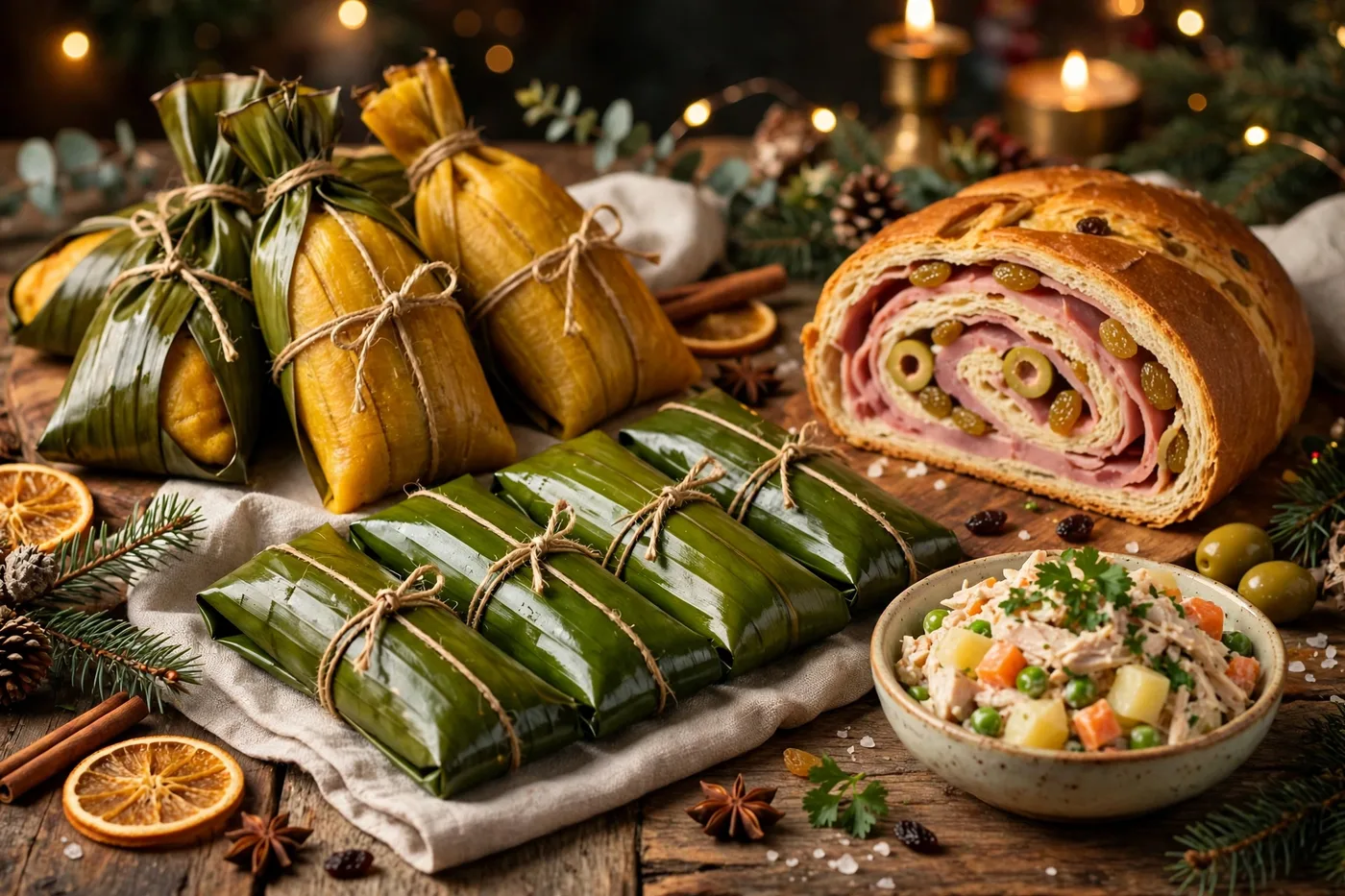
A hallaca is a traditional Venezuelan dish made from corn dough stuffed with a stew of beef, pork or chicken, plus raisins, capers and olives, then folded in a plantain leaf, tied with string and boiled. It is often described as a national dish of Venezuela, and it is the centrepiece of the plato navideño, the Venezuelan Christmas plate, where it sits beside a slice of pan de jamón, a scoop of ensalada de gallina and a serving of pernil. The dish has indigenous roots, with raisins, capers, olives and sometimes bits of bacon added by settlers from the Iberian peninsula from the 16th century onwards, and one popular legend says it was invented by enslaved people during the colonial era who used leftover meat from their masters’ Christmas Eve meals to make their own festive dish.
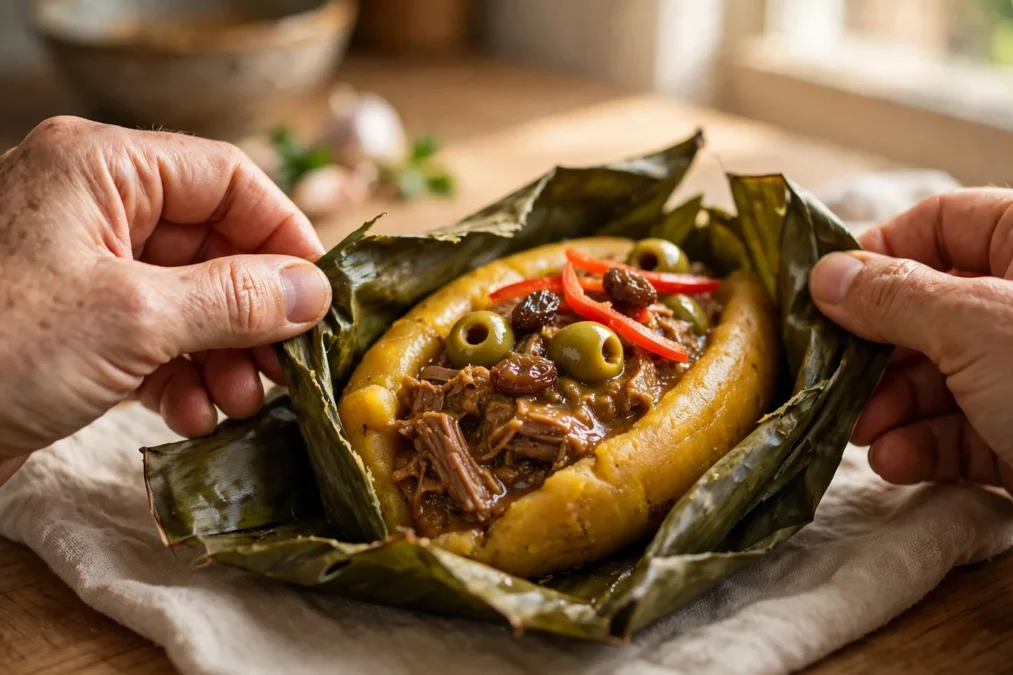
The hallaca looks at first glance like a flat, rectangular tamal, but its character is entirely its own. The corn dough is made from precooked white corn flour, usually Harina P.A.N., kneaded with broth and coloured a deep gold with annatto, known as onoto in Venezuela. The filling, called guiso, is a stew of pork, beef and often chicken that simmers for hours with peppers, onion, garlic and wine, and before the leaf is folded the cook adds the adornos, the garnishes of green olives, raisins, capers, strips of red pepper and onion rings. That sweet-and-salty combination is what makes a hallaca taste like Christmas, and it is the reason Venezuelans abroad will drive for hours in December to find one.
What Makes a Great Hallaca?
The dough is the first thing a good hallaca gets right, and it is also the easiest place for a careless cook to go wrong. A great hallaca has dough that is thin, tender and evenly spread across the leaf, about a quarter of an inch thick, with a soft, almost creamy texture and a warm golden colour from the annatto. The dough should be seasoned with broth, not plain water, so it tastes savoury on its own, and it should hold together when you cut into the parcel without being gummy or dry. If the dough is thick, pale or crumbly, the cook has rushed it, and no amount of good filling can rescue the result.
The guiso is where the cook’s skill really shows, because a proper stew takes time and cannot be hurried. The meat should be tender enough to pull apart with a fork, and the sauce should be rich and well seasoned with cumin, oregano, garlic and a little sweetness from panela, the raw cane sugar that balances the salt of the capers and olives. A great hallaca also gets its adornos right: whole green olives, plump raisins, capers and bright strips of pepper and onion, placed so that every bite has a little of everything. When you open a good hallaca, the filling should look generous and colourful, not sparse, and the aroma should be warm, savoury and faintly sweet all at once.
Where to Find the Best Hallaca Near Me
The most reliable place to find the best hallaca near me is a Venezuelan or broader Latin American bakery, especially in the weeks before Christmas. Many Latin bakeries take hallaca orders by the dozen from late November onwards, and the best ones sell out, so it is worth calling ahead or joining their WhatsApp or social media lists early in December. A bakery that makes hallacas all year is rare, but one that makes them only in December is usually a good sign, because it means the dish is being made as a seasonal special rather than a frozen afterthought. Ask whether the hallacas are made in-house, how many come in a dozen, and whether they offer chicken, pork or vegetarian versions.
Venezuelan restaurants are the second-best option, and they are often the easiest place to try a single hallaca without committing to a dozen. A restaurant that serves a plato navideño in December is almost certain to make its hallacas properly, because the whole plate depends on them, and the dish will usually come with pernil and pan de jamón on the side. Home cooks are the third route, and in many cities they are the best one of all: Venezuelan community groups on social media are full of families selling hallacas by the dozen from their own kitchens in December, often with a choice of fillings and a waiting list. Buying from a home cook is also the closest you will get to the way hallacas taste in Venezuela, where the dish is a family project made in batches of dozens. If you also like Latin grilled dishes, see our guide to Best Provoleta Near Me.
How Much Does a Hallaca Cost?
Prices vary a lot by city, and they move with the cost of meat, plantain leaves and labour, so treat any number here as a guide rather than a fixed price. In the United States, a single hallaca from a bakery or restaurant usually costs somewhere in the range of a few dollars to the price of a small lunch, while a dozen ordered in advance from a home cook or bakery typically works out cheaper per piece. In the United Kingdom, where Venezuelan food is scarcer, expect to pay more, and expect to order further ahead, because the cooks are fewer and the demand in December is high. The price is worth paying when the hallaca is made properly, because a dozen hallacas is a genuine piece of work: the guiso simmers for hours, the dough is mixed by hand, and each parcel is assembled, folded, tied and boiled individually.
When you compare prices, ask what is included and how the hallacas are sold. Some sellers offer them fresh, ready to eat the same day, while others sell them frozen, which is perfectly fine because hallacas freeze very well and are traditionally made in large batches and frozen for the Christmas season. A frozen dozen is often the better value, and it lets you keep hallacas on hand through December. Be wary of any seller who cannot tell you what is in the filling, or who offers hallacas at a price that seems too low to cover the ingredients, because the meat, olives, capers and plantain leaves are not cheap, and a very cheap hallaca usually means a thin filling.
Hallaca vs Tamal: What Is the Difference?
People often confuse hallacas with tamales, and the two dishes do look alike from the outside, but they are different in ways that matter once you taste them. A hallaca uses precooked corn flour coloured with annatto and a stewed meat filling topped with olives, raisins and capers, while a Mexican tamal typically uses masa harina, a different corn flour, with a filling that is usually simpler and wrapped in a corn husk rather than a plantain leaf. The hallaca is also flatter and more rectangular, and it is boiled rather than steamed, which gives the dough a softer, more delicate texture. The flavour is different too: the hallaca’s sweet-and-salty mix of raisins, olives and capers is distinctive, and it is the reason the dish tastes like Christmas to Venezuelans.
The confusion is understandable, because both dishes come from the same broad tradition of corn dough wrapped in leaves, and both are festive foods in their own countries. But if a restaurant sells you something labelled a hallaca that is wrapped in a corn husk, filled only with plain shredded meat and missing the olives and raisins, it is not a hallaca, whatever the menu says. Knowing the difference helps you judge what you are buying, and it helps you explain to the seller exactly what you want. A good Venezuelan cook will be happy to talk about the difference, because it is a point of pride.
Regional Styles Worth Knowing About
Hallacas change from region to region in Venezuela, and knowing the variations helps you find the style you like best. In the east of the country, you may find hallacas filled with fish and boiled egg, while in the central and plains regions, cooked chickpeas often appear in the filling. In the Andes, hallacas are heartier, filled with chickpeas, potatoes and pickled vegetables alongside the classic meat stew, and the meat filling there is sometimes a guiso crudo, meaning it is not pre-cooked before the parcel is assembled. In Aruba and Curaçao, the same dish is called ayaca or ayaka, made with pork and chicken stew, capers, raisins, cashew nuts, bell pepper, pickled baby onions, prunes and olives, with a dough of white cornmeal.
There are vegetarian hallacas too, made with black beans or tofu instead of meat, and they are a genuine part of the tradition rather than a modern invention. If you are vegetarian, ask whether the cook makes a bean version, and check whether the dough is made with vegetable broth rather than chicken broth. The regional differences are a reminder that there is no single correct hallaca, only a family of related dishes, and the best hallaca near me is the one whose style matches your taste. Trying a few different versions in December is half the fun of the season.
How to Store, Reheat and Serve Hallacas
Hallacas are one of the most freezer-friendly dishes in the world, which is why Venezuelan families make them by the dozen and freeze them for the whole Christmas season. Fresh hallacas will keep in the fridge for a few days, but if you buy a dozen, freeze what you will not eat within two or three days, keeping them in their plantain leaves and tied with string. To reheat a frozen hallaca, boil it in water for about an hour, or steam it until it is hot all the way through, and do not unwrap it before reheating, because the leaf keeps the dough moist. A microwaved hallaca is possible in a hurry, but it is never as good as a boiled one, because the dough dries out.
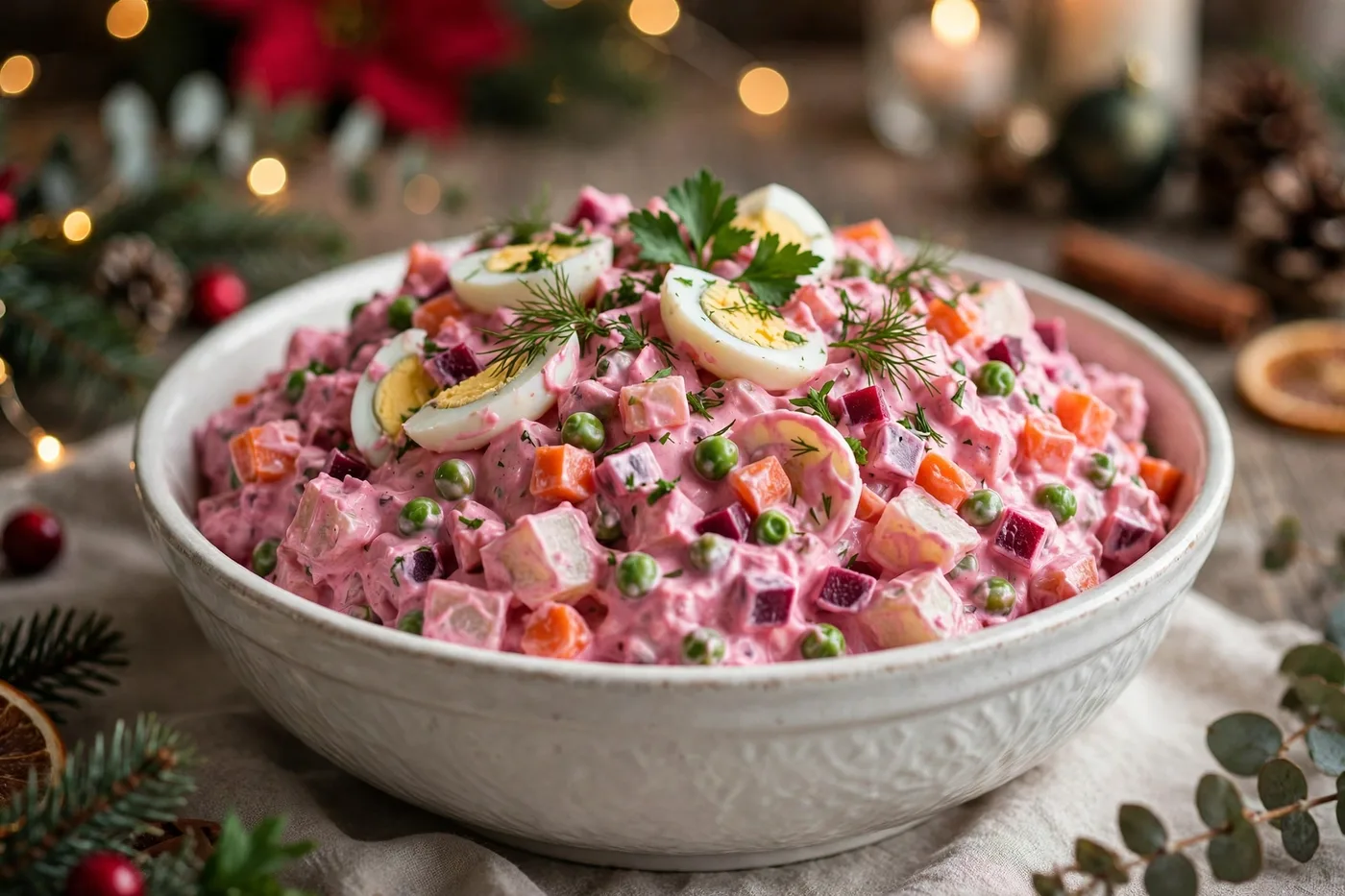
Serve a hallaca on its own or as part of a plato navideño, with pernil, pan de jamón and ensalada de gallina if you can get them. Open the leaf at the table, fold it back like a present, and eat the hallaca with a fork, straight from the leaf. A cold drink and a little hot sauce on the side are traditional, and the dish is best eaten slowly, because the flavours are layered and the sweet-and-salty balance is the whole point. If you have bought a dozen, share them, because hallacas are a communal food, made to be given away as much as eaten.
Conclusion
The best hallaca near me is not a brand or a chain, it is a cook who makes the dish the slow way, in December, with a proper guiso, a thin golden dough and the full set of adornos. Start your search with Venezuelan bakeries and restaurants, check community groups for home cooks, and order early, because the best hallacas sell out. Judge what you buy by the dough, the generosity of the filling and the balance of sweet and salty, and do not be afraid to ask questions about what is inside. A great hallaca is worth the search, and once you have tasted a good one, you will understand why Venezuelans treat it as the taste of Christmas itself. If you have found a hallaca you love, go back to the same cook next year, because the best hallacas come from people, not from menus.
How do I find the best hallaca near me?
The best hallaca near me is usually found at a Venezuelan or Latin American bakery, a Venezuelan restaurant serving a plato navideño in December, or a home cook selling by the dozen through community groups. Call ahead in late November or early December, ask whether the hallacas are made in-house, and order early, because the best sellers run out before Christmas.
How much does a hallaca cost?
Prices vary by city and by seller, and they move with the cost of meat and plantain leaves. A single hallaca from a bakery or restaurant usually costs about the same as a small lunch, while a dozen ordered in advance from a home cook or bakery works out cheaper per piece. In the United Kingdom, where Venezuelan food is scarcer, expect to pay more and to order further ahead.
What is the difference between a hallaca and a tamal?
A hallaca uses precooked corn flour coloured with annatto and a stewed meat filling topped with olives, raisins and capers, wrapped in a plantain leaf and boiled. A Mexican tamal usually uses masa harina, a simpler filling, and a corn husk wrapper, and it is steamed. The hallaca’s sweet-and-salty flavour is distinctive, and it is flatter and more rectangular than most tamales.
Can you freeze hallacas?
Yes, hallacas freeze very well, and freezing them is part of the tradition, because Venezuelan families make them by the dozen and freeze them for the Christmas season. Keep them in their plantain leaves, tied with string, and reheat a frozen hallaca by boiling it in water for about an hour, or steaming it until it is hot all the way through.
Are there vegetarian hallacas?
Yes, there are vegetarian hallacas made with black beans or tofu instead of meat, and they are a genuine part of the tradition. Ask the cook whether the dough is made with vegetable broth rather than chicken broth, and whether the filling still includes the classic olives, raisins and capers.
What do you serve with a hallaca?
A hallaca is the centrepiece of the plato navideño, the Venezuelan Christmas plate, where it is served with a slice of pan de jamón, a scoop of ensalada de gallina and a serving of pernil. On its own, a hallaca is a complete meal, and it is traditionally eaten with a cold drink and a little hot sauce on the side.