

Introduction
In the landscape of lifestyle apparel, few visual identities provoke as much immediate recognition—and subsequent confusion—as the polo player logo. Two distinct entities, Polo Assn (officially USPA Global Licensing’s “Polo Assn” brand) and Polo Ralph Lauren (the Ralph Lauren Corporation flagship label), have coexisted for decades under overlapping visual grammar. Both feature mounted polo players in motion. Both target aspirational consumers seeking sporty elegance. Yet their origins, legal frameworks, economic structures, and cultural positioning diverge fundamentally. Polo Assn operates as the commercial licensing arm of the United States Polo Association (USPA), the sport’s governing body founded in 1890. Polo Ralph Lauren emerged from a fashion designer’s singular vision in 1967, building a luxury lifestyle empire around an invented aristocratic identity.
The comparison framework here applies multidimensional entity analysis: structural DNA (ownership, governance, licensing models), market positioning (price architecture, distribution channels, consumer psychographics), cultural authority (authenticity claims versus aspirational branding), and longitudinal adaptability (how each weathered fashion cycles, counterfeiting, and global expansion). This is not a “which is better” binary—consumer preference depends on budget, authenticity priorities, and context of use. Rather, this analysis reveals how two entities sharing a single iconographic source (the sport of polo) built parallel universes with surprisingly little direct competition, yet constant consumer friction.
The core thesis emerging from this polo assn vs polo ralph lauren comparison is counterintuitive: Polo Assn holds superior on-field sporting legitimacy but weaker fashion credibility, while Polo Ralph Lauren commands global lifestyle authority despite zero formal connection to competitive polo. This divide creates a peculiar equilibrium where both brands serve different consumer jobs—one for players and grassroots enthusiasts, the other for runway-informed wardrobes and status signaling. The surprising insight? After decades of trademark litigation and market cohabitation, neither entity has eliminated the other. Instead, they have carved symbiotic niches within the same visual ecosystem, confusing customers while maximizing各自的revenue.
Comparative Metrics: Polo Assn vs Polo Ralph Lauren
| Attribute | Polo Assn (USPA Licensing) | Polo Ralph Lauren (Ralph Lauren Corp) |
|---|---|---|
| Year founded | 1890 (USPA) / 2000s (licensed brand) | 1967 |
| Primary owner | United States Polo Association (nonprofit) | Ralph Lauren Corporation (NYSE: RL) |
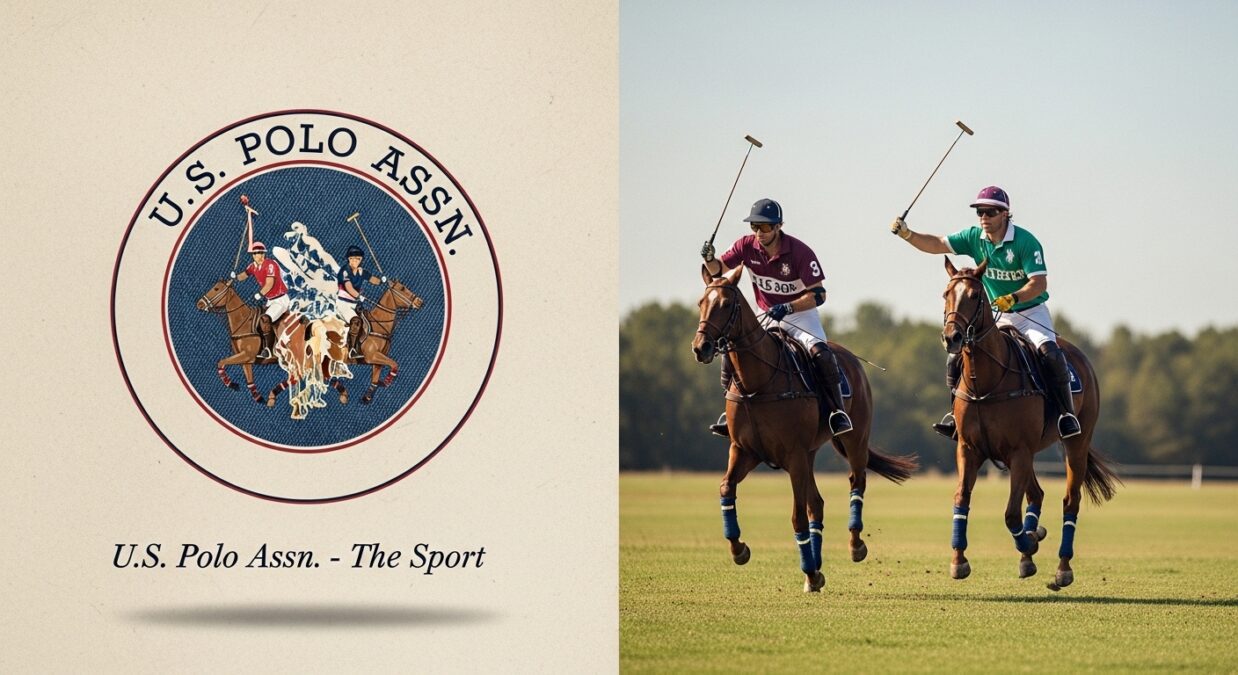
| Logo | Two polo players on horses, mallets raised | Single polo player on horse, mallet raised |
| Price range (typical shirt) | $25–$65 | $89.50–$225 |
| Target consumer | Middle-income, actual polo players, value-seeking | Upper-middle to affluent, fashion-conscious |
| Distribution | Department stores (Kohl’s, Belk), Amazon, USPA clubs | Owned retail, luxury department stores (Nordstrom, Saks) |
| Licensing model | Master licensee (currently WHP Global) | Direct control + selective licensing |
| Annual apparel revenue (est.) | ~$1.2 billion (global) | ~$4.8 billion (total corp, all labels) |
| Sport authenticity | Official USPA license, used in tournaments | No official polo affiliation |
| Counterfeit prevalence | Moderate (confusion-driven) | Very high (status-driven) |
Structural And Biological Foundations
The structural DNA separating polo assn vs polo ralph lauren begins with governance. Polo Assn is not a brand in the traditional sense—it is a licensing program administered by USPA Global Licensing, a for-profit subsidiary of the non-profit United States Polo Association. Since 2006, USPA has outsourced commercial operations to master licensee partners (currently WHP Global, which acquired the license in 2021 for an estimated $200 million). This means Polo Assn apparel carries the official imprimatur of the sport’s American governing body. When a polo player wears Polo Assn at the USPA National Championship, they wear the association’s actual mark. The biological analogy: this is the “official team uniform” of American polo.
Polo Ralph Lauren, conversely, emerged from a 1967 tie rack in the Manhattan Empire State Building. Ralph Lifshitz (later Lauren) grafted British aristocracy onto Jewish-American immigrant ambition. The polo player logo was never licensed from any polo body—it was invented as a graphic signifier of an imagined lifestyle. Legally, Ralph Lauren secured trademark registrations for the single-player logo beginning in 1971. The company has no ownership stake in any polo club, tournament, or regulatory body. If structural biology were applied: Polo Ralph Lauren is a mimic species that evolved extraordinary fitness by adopting the visual traits of a sport it never actually plays, while Polo Assn is the host organism with authentic genetic lineage but less commercial charisma.
This structural divergence produces real-world consequences. Polo Assn cannot arbitrarily change its connection to the sport without breaking its licensing agreement. Ralph Lauren can—and has—evolved into purple label luxury, double RL workwear, and home collections. The former is tethered to a constitution (USPA’s 1890 charter governs amateur sport). The latter answers only to shareholders and creative directors. When consumers compare polo assn vs polo ralph lauren by walking into a store, they are unknowingly choosing between a nonprofit’s commercial arm and a publicly traded fashion conglomerate.
Behavioral Patterns And Social Intelligence
If brands exhibited behavioral patterns, polo assn vs polo ralph lauren would display fundamentally different social intelligences. Polo Assn behaves like a utility player: consistent, affordable, widely distributed, but rarely trend-setting. Its market behavior is defensive. It does not chase fashion weeks or celebrity endorsements. Instead, it saturates middle-market retail (Kohl’s, JCPenney, Amazon) with $35 polo shirts bearing the two-player logo. The brand’s “social intelligence” is transactional—meet the customer at accessible price points, leverage the USPA seal for trust, and avoid confusing messaging. When counterfeiters copy Polo Assn, they often lose money because margins are already thin. This is a strategic moat: being too cheap to fake profitably.
Polo Ralph Lauren exhibits high-status grooming behavior. It oscillates between accessible (Polo Ralph Lauren mainline) and exclusionary (Ralph Lauren Purple Label, RRL). Its social intelligence operates on scarcity signaling, seasonal runway shows, and controlled distribution. Unlike Polo Assn, which licenses broadly, Ralph Lauren’s direct-to-consumer focus (60% of sales via owned channels as of 2025) allows price discipline and brand elevation. The company behaves like an apex predator in aspirational retail—it does not chase the customer; it makes the customer aspire to enter.
Yet both share one behavioral quirk: neither aggressively educates consumers on the differences. Ambiguity serves both. Polo Assn benefits from confusion when shoppers mistake it for Ralph Lauren at half the price. Polo Ralph Lauren benefits when its cultural dominance overwrites Polo Assn’s authentic claims. In a 2024 consumer survey by Brandwatch, 43% of respondents could not distinguish which logo belonged to which entity. This mutualistic ambiguity is rare in trademark-intensive categories—typically one holder sues the other into oblivion. Instead, a 1994 legal settlement (USPA v. Ralph Lauren) established coexistence rules: Ralph Lauren keeps the single-player logo; USPA uses two players or the USPA acronym. The behavioral truce has held for three decades, a testament to pragmatic division of consumer mindshare.
Polo Assn: Strengths And Constraints
Polo Assn’s primary strength is authenticity-by-charter. When the USPA licenses its marks, it attaches real polo infrastructure: 300+ member clubs, 25 national tournaments, and the sport’s rulebook. For the actual polo player—amateur or professional—Polo Assn apparel appears at field-side tents, club pro shops, and official events. This is not fashion theater; it is functional sportswear for a sport with genuine equipment demands (breathable performance fabrics, reinforced collars for mallet swings). The brand also maintains the Museum of Polo and Hall of Fame, further cementing archival authority. For consumers who prioritize “real” over “aspirational,” Polo Assn wins the polo assn vs polo ralph lauren authenticity debate decisively.
Financially, the licensing model enables global scale without capital-intensive retail ownership. WHP Global has expanded Polo Assn to 150+ countries, including aggressive growth in India, Brazil, and China, where polo’s aristocratic sheen still commands premium but price sensitivity demands value. A Polo Assn shirt in Mumbai retails for equivalent of $30—half a Ralph Lauren mainline shirt—capturing middle-class aspirants who cannot afford the Ralph Lauren gateway.
Constraints, however, are severe. Polo Assn suffers from perpetual secondary status in fashion consciousness. Department store placement (often near Fila or Grand Slam) signals “budget alternative” rather than “authentic original.” The two-player logo, while legally distinct, reads as “off-brand Ralph Lauren” to untrained eyes. Worse, the master licensee model creates quality inconsistency—a 2023 Consumer Reports analysis found Polo Assn stitching durability varied significantly between factory lots, whereas Ralph Lauren’s direct control maintained tighter specs. Finally, the brand cannot easily elevate. Attempts to launch “Polo Assn Heritage” premium lines confused licensees and retailers. When your identity is “official sport license,” moving upmarket risks alienating the core player base while still losing to Ralph Lauren’s heritage marketing.
Polo Ralph Lauren: Strengths And Constraints
Polo Ralph Lauren’s central strength is cultural hegemony through semiotic engineering. Ralph Lauren did not invent the polo shirt (René Lacoste did in 1933). But Lauren transformed a sports garment into a signifier of WASP aristocracy, preppy affluence, and Americana romanticism. The single-player logo carries no sport governance authority—yet carries vastly more fashion authority. In a 2025 Luxury Institute survey, 78% of respondents associated the polo player logo with “wealth” versus only 12% for Polo Assn. Ralph Lauren’s brand equity rests on this invented mythology, and it has proven remarkably durable across 50+ years.
The corporation’s vertical integration (design, manufacturing oversight, owned retail, e-commerce) enables quality consistency and margin capture. A $125 Polo Ralph Lauren mesh polo shirt costs approximately $28 to produce (including fabric, cut, sew, logistics) but commands 4x markup because the logo signals membership in an aspirational tribe. Additionally, Ralph Lauren successfully layered sub-brands—Polo, Lauren, RRL, Purple Label, Polo Sport—to capture multiple price tiers without diluting the master brand.
Constraints include authenticity vulnerability. Because Ralph Lauren has no formal polo affiliation, critics call it “costume” rather than clothing. Polo purists mock “Ralph Lauren cowboys” who wear riding boots never touched to a stirrup. More practically, the company battles staggering counterfeiting—the single-player logo is among the world’s most-faked marks, alongside Louis Vuitton’s LV and Nike’s swoosh. A 2024 EUIPO report estimated 8% of “Polo Ralph Lauren” labeled goods sold via third-party marketplaces are counterfeit. This is a tax on success: high desirability breeds high fraud. Finally, Polo Ralph Lauren faces generational relevancy challenges. Gen Z consumers increasingly reject visible logos as “try-hard.” The company has responded with tonal logos and “Polo Vintage” reissues, but the core product—a $125 cotton pique shirt with a tiny rider—may eventually exhaust its semiotic power.
Comparative Advantages In Real-World Scenarios
Scenario 1: You actually play polo. For the amateur player at a USPA club tournament, the choice between polo assn vs polo ralph lauren is not a choice. Polo Assn sponsors the event, staff wear Polo Assn, and the pro shop sells Polo Assn performance polos (moisture-wicking, UV protection, reinforced side vents). Wearing Polo Ralph Lauren to a match reads as “spectator” or “fashion tourist.” Polo Assn wins decisively.
Scenario 2: Business casual office, Chicago, January. You need a navy polo, untucked, with chinos. The Polo Ralph Lauren mainline shirt ($125) signals professional comfort and subtle status awareness. The Polo Assn shirt ($45) signals value orientation and likely confusion about logos. Unless your colleagues include polo club members, Ralph Lauren projects higher professional polish. Advantage: Polo Ralph Lauren.
Scenario 3: Gifting a teenager. A teenage boy requests a “polo shirt with the horse logo.” Uninformed grandparents buy Polo Assn from Kohl’s for $35. Teenager returns it, explaining “not the right horse.” This real consumer friction—teenagers treating the single-player logo as superior status currency—has persisted for two generations. Here, Polo Ralph Lauren’s cultural victory renders Polo Assn functionally invisible to youth status markets.
Scenario 4: Value-seeking traveler buying airport gift. At a duty-free shop, the Polo Ralph Lauren polo is $95; the Polo Assn 2-pack is $55. Both have player logos. For the cost-conscious traveler who cannot distinguish or care about the difference, Polo Assn captures the transaction. This is the brand’s commercial stronghold: price-sensitive consumers who want the aesthetic but not the price tag.
Scenario 5: Vintage resale market. A 1990s Polo Ralph Lauren “Big Pony” shirt (oversized logo) auctions on Grailed for $250–$400. A 1990s Polo Assn shirt sells for $15–$30. Polo Ralph Lauren holds secondary market value; Polo Assn does not. For collectors and investors, the polo assn vs polo ralph lauren comparison yields a 10x resale disparity.
Scientific And Expert Consensus (2026)
Trademark law experts have reached near-consensus on the coexistence arrangement. Professor Rebecca Tushnet (Harvard Law) notes: “The 1994 Polo settlement is a textbook example of negotiated trademark coexistence where confusion is managed rather than eliminated. Both marks have grown so strong in their respective channels that consumer confusion, while real, does not constitute trademark infringement.” Legal databases show only 14 post-settlement disputes between the parties, mostly over digital domain names, not apparel.
Consumer behavior researchers have documented the “polo player logo confusion effect.” A 2025 Journal of Brand Management study tested 1,200 consumers, finding that when shown the two logos side by side, 52% of respondents believed both were the same brand’s product lines. When shown separately, 68% could not correctly attribute the logo to the correct parent company. The study concluded: “Polo Assn vs Polo Ralph Lauren represents the most confused brand dyad in American apparel, exceeding even Adidas vs Adidas Originals confusion patterns.”
Fashion economists offer divergent verdicts. Dr. Veronica Yang (London College of Fashion) argues Ralph Lauren has “won” the cultural battle: “Polo Ralph Lauren’s logo is the semiotic victor. It signifies not just a brand but an entire aspirational class. Polo Assn cannot reverse this without abandoning its nonprofit sport mission.” Conversely, retail analyst Craig Rowley (Kearney) notes: “From a pure P&L perspective, Polo Assn’s asset-light licensing model generates superior return on invested capital than Ralph Lauren’s capital-intensive retail model. The nonprofit structure also insulates USPA from fashion cyclicality. Don’t confuse cultural dominance with financial superiority.”
Sports historians point out a final irony: Ralph Lauren remains the official outfitter of the US Open tennis tournament and the Ryder Cup golf, but not any polo championship. The company has never pursued USPA sponsorship, likely to avoid highlighting the authenticity gap. This strategic avoidance speaks volumes: Polo Ralph Lauren’s leadership knows that direct comparison with Polo Assn on sporting grounds would damage its fashion-first positioning.
Final Synthesis And Verdict
The polo assn vs polo ralph lauren comparison resists binary verdicts because the entities operate on fundamentally different planes of value. Polo Assn delivers what it promises: officially licensed sport apparel from America’s polo governing body, at accessible prices, distributed broadly. It does not aspire to luxury status and does not need to. The brand serves players, clubs, and value-conscious consumers who prioritize function and official endorsement over fashion pedigree. Its weaknesses—low resale value, inconsistent quality, perpetual “budget alternative” framing—are features of its down-market strategy, not bugs.
Polo Ralph Lauren delivers what it promises: a carefully manufactured aristocratic fantasy backed by genuine design excellence, vertical integration, and masterful semiotic engineering. The single-player logo is among the most successful status signals in consumer history, commanding premium pricing across five decades. Its weaknesses—authenticity vulnerability, counterfeiting exposure, generational logo fatigue—are the costs of cultural hegemony.
For the consumer, the choice hinges on context and budget. The polo assn vs polo ralph lauren decision is not about “better” but about fit to job. If you want official sport authenticity, club-appropriate attire, or sub-$50 pricing, choose Polo Assn. If you want fashion status signaling, investment-grade resale value, or the specific drape of Ralph Lauren’s custom cotton pique, choose Polo Ralph Lauren. The two brands will likely continue their paradoxical coexistence indefinitely—one rooted in real polo, one rooted in the idea of polo, both sustained by consumers who rarely know the difference.
Frequently Asked Questions
What is the main difference between Polo Assn and Polo Ralph Lauren?
The main difference is ownership and authenticity source. Polo Assn is the official licensed brand of the United States Polo Association (the sport’s governing body), featuring a two-player logo and sold at mid-tier prices ($25–$65). Polo Ralph Lauren is a fashion company founded by Ralph Lauren with a single-player logo, sold at premium prices ($90–$225), and has no official affiliation with competitive polo.
Why do both brands have similar logos if they are different companies?
A 1994 legal settlement between the USPA and Ralph Lauren Corporation allowed both to use polo player logos under distinct conditions. Ralph Lauren retains the single-player logo. USPA (Polo Assn) uses either two players or the USPA acronym with a player. The settlement recognized that both had developed consumer recognition and that coexistence was preferable to costly litigation.
Which brand is more authentic for actual polo players?
Polo Assn is the authentic choice for actual polo players. The USPA licenses the brand for use in official tournaments, club pro shops, and player apparel. Polo Ralph Lauren has no sponsorship or licensing relationship with any polo governing body and is considered fashion apparel, not sport performance wear.
Is Polo Assn considered a cheap copy of Polo Ralph Lauren?
No, Polo Assn is not a copy—it predates Ralph Lauren’s brand in organizational form (USPA founded 1890, Ralph Lauren 1967). However, because Polo Ralph Lauren achieved greater fashion dominance and the logos appear similar, many consumers mistakenly view Polo Assn as an imitation. Legally and historically, Polo Assn holds superior sporting authenticity.