
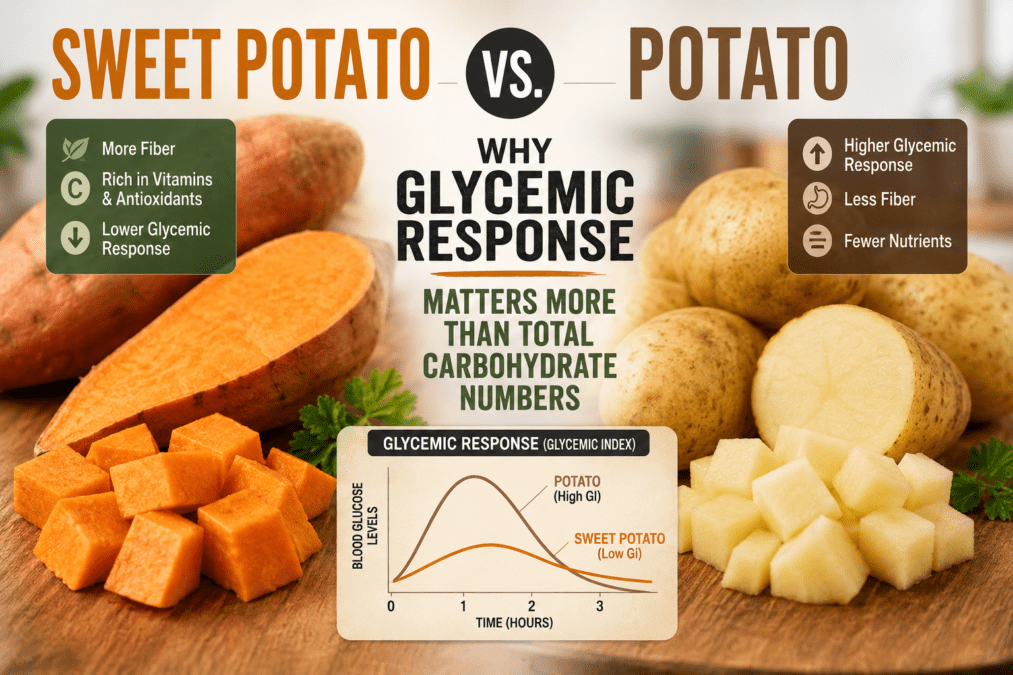

The debate surrounding carbs in sweet potato vs potato has evolved far beyond simple calorie counting. Both foods are staple carbohydrate sources across global diets, yet they differ significantly in starch composition, fiber structure, glycemic behavior, micronutrient density, and metabolic impact. Modern nutritional science no longer treats all carbohydrates equally, especially when digestion speed, insulin response, satiety, and athletic performance are considered together.
Analyzing carbs in sweet potato vs potato requires a multidimensional framework rather than a superficial comparison of carbohydrate grams per serving. White potatoes, red potatoes, russets, and sweet potatoes all contain complex carbohydrates, but the ratio of resistant starch, fiber, and rapidly digestible starch changes how the body processes them. Cooking method also dramatically alters metabolic outcomes.
The surprising insight emerging from recent nutritional research is that the healthier option is not universally fixed. In some contexts, regular potatoes outperform sweet potatoes for recovery and electrolyte replenishment, while in others sweet potatoes provide superior glycemic stability and micronutrient efficiency. The question is not simply which contains fewer carbohydrates, but which carbohydrate profile best matches physiological needs.
Essential Nutritional Comparison Table
| Metric (Per 100g Cooked) | Sweet Potato | Regular Potato |
|---|---|---|
| Total Carbohydrates | 20–21g | 17–20g |
| Dietary Fiber | 3–3.5g | 2–2.5g |
| Natural Sugars | 4–6g | 1–2g |
| Glycemic Index (Average) | 44–63 | 70–95 |
| Resistant Starch | Moderate | Higher when cooled |
| Vitamin A Content | Extremely high | Minimal |
| Potassium | 337mg | 421mg |
| Calories | 86–90 kcal | 87–93 kcal |
| Protein | 1.5–2g | 2–2.5g |
| Common Starch Type | Complex starch with more sugar conversion | Dense rapidly digestible starch |
Understanding Carbohydrates In Modern Nutrition
Carbohydrates are macronutrients converted into glucose for energy production. However, not all carbohydrate sources behave identically in digestion or metabolism. The conversation around carbs in sweet potato vs potato often ignores digestion kinetics, which may matter more than raw carbohydrate totals.
A sweet potato contains carbohydrates embedded within a fiber-rich matrix that slows glucose release. Meanwhile, many conventional potatoes contain starches that digest more rapidly, particularly when baked or mashed at high temperatures. This creates different blood sugar trajectories despite relatively similar carbohydrate quantities.
While sweet potatoes usually produce a steadier glycemic response, regular potatoes often provide faster glycogen restoration after physical activity. That distinction explains why athletes, diabetics, endurance trainers, and weight-management specialists may reach different conclusions regarding the best carbohydrate source.
In practical terms, the difference between carbs in sweet potato vs potato depends on metabolic goals, cooking preparation, insulin sensitivity, and activity level rather than simplistic assumptions about one food being universally superior.
Structural And Biological Foundations
The biological architecture of sweet potatoes differs fundamentally from that of regular potatoes. Sweet potatoes are storage roots, whereas conventional potatoes are tubers. This distinction influences starch composition, sugar development, and nutrient storage patterns.
When evaluating carbs in sweet potato vs potato, the starch profile becomes critically important. Sweet potatoes contain a greater proportion of slowly digestible carbohydrates alongside higher fiber concentrations. Their orange coloration also signals elevated beta-carotene content, which interacts with oxidative metabolism and cellular repair.
Regular potatoes, especially russet varieties, contain denser concentrations of amylopectin-rich starch. Amylopectin breaks down rapidly into glucose, often causing quicker increases in blood sugar. However, cooling cooked potatoes transforms some starch into resistant starch, which behaves more like fiber inside the digestive system.
This means preparation can substantially alter the nutritional outcome. A cooled potato salad may produce a lower glycemic response than freshly baked mashed potatoes. Similarly, steamed sweet potatoes generally preserve more stable carbohydrate release compared with fried sweet potato products.
Understanding carbs in sweet potato vs potato therefore requires examining both food biology and food chemistry after cooking.
Glycemic Response And Metabolic Behavior
One of the most important differences in carbs in sweet potato vs potato involves glycemic response. Glycemic index measures how quickly foods raise blood glucose levels after consumption. Sweet potatoes generally rank lower on the glycemic index scale than many white potato varieties.
This lower glycemic behavior results partly from fiber density and partly from the slower digestion of certain starch fractions. Blood sugar rises more gradually, insulin secretion tends to remain more controlled, and satiety signals may persist longer.
Regular potatoes, particularly highly processed or overcooked versions, can spike blood glucose rapidly. However, this characteristic is not universally negative. Athletes recovering from glycogen depletion may actually benefit from rapid carbohydrate absorption after intense training sessions.
The key insight in the carbs in sweet potato vs potato discussion is that metabolic context determines value. A sedentary office worker with insulin resistance may respond better to sweet potatoes, while a cyclist completing endurance training may recover more efficiently using conventional potatoes.
Modern nutrition increasingly recognizes that carbohydrate timing matters almost as much as carbohydrate quantity.
Fiber, Satiety, And Digestive Impact
Fiber plays a major role in determining how satisfying and metabolically stable carbohydrate foods become. Sweet potatoes generally contain more fiber than regular potatoes, especially when skins are consumed.
In the comparison of carbs in sweet potato vs potato, this extra fiber contributes to slower gastric emptying and prolonged fullness. People attempting calorie control often report reduced hunger after sweet potato-based meals because digestion occurs more gradually.
Regular potatoes still possess strong satiety potential despite lower fiber content. In fact, potatoes consistently rank high on satiety indexes because their water density and bulk trigger fullness mechanisms effectively. Boiled potatoes especially demonstrate remarkable appetite suppression relative to many refined grains.
Digestive tolerance can also vary individually. Some people process sweet potatoes more comfortably because of their fiber matrix, while others experience bloating from fermentable carbohydrate compounds. Potatoes may be easier for sensitive digestive systems when prepared simply.
The broader lesson from carbs in sweet potato vs potato is that satiety cannot be predicted solely by carbohydrate grams. Texture, water content, resistant starch formation, and digestive speed all influence fullness and metabolic regulation.
Micronutrient Density Beyond Carbohydrates
Although carbohydrate content dominates public discussion, micronutrient composition often determines long-term nutritional value. Sweet potatoes excel in beta-carotene, a precursor to vitamin A essential for vision, immune regulation, and epithelial tissue health.
A single serving can exceed daily vitamin A requirements many times over. This makes sweet potatoes nutritionally distinctive beyond the conversation about carbs in sweet potato vs potato.
Regular potatoes contribute differently. They provide significantly more potassium, an electrolyte critical for muscle contraction, hydration balance, nerve signaling, and cardiovascular function. Potatoes also contain vitamin C, vitamin B6, and useful quantities of magnesium depending on variety.
The nutritional comparison therefore becomes less about “healthy versus unhealthy” and more about functional specialization. Sweet potatoes prioritize antioxidant and carotenoid density, whereas conventional potatoes emphasize electrolyte support and rapid energy availability.
Nutritional science increasingly discourages binary thinking regarding carbohydrate foods. Different foods solve different physiological problems.
Subject A: Sweet Potato Strengths And Constraints
Sweet potatoes possess several metabolic advantages that explain their popularity in contemporary health-focused diets. Their lower average glycemic response supports more stable blood sugar regulation, making them appealing for individuals concerned about insulin sensitivity.
In the discussion around carbs in sweet potato vs potato, sweet potatoes often gain favor because they combine carbohydrates with substantial micronutrient density. High beta-carotene concentrations support immune health and oxidative stress reduction. Their fiber content also encourages digestive regularity and prolonged satiety.
Sweet potatoes adapt well to multiple dietary strategies including endurance nutrition, Mediterranean-style diets, plant-focused eating patterns, and moderate-carbohydrate meal planning. They also pair effectively with proteins and healthy fats, producing balanced glucose responses.
However, sweet potatoes are not automatically superior in every situation. Their naturally higher sugar content may surprise consumers who assume all sweetness comes without metabolic consequence. Certain cooking methods, especially roasting at very high temperatures, can raise glycemic impact significantly.
Additionally, athletes requiring rapid glycogen replenishment may find regular potatoes more efficient immediately after strenuous activity. Thus, the benefits of sweet potatoes depend heavily on dietary context and metabolic objectives.
Subject B: Regular Potato Strengths And Constraints
Regular potatoes are frequently underestimated because they became associated with highly processed fast-food products. Yet nutritionally intact potatoes remain among the most efficient whole-food carbohydrate sources available.
When evaluating carbs in sweet potato vs potato, conventional potatoes provide exceptional potassium levels, strong satiety characteristics, and efficient glycogen restoration capabilities. Their rapid digestibility can be advantageous during athletic recovery phases or high-output physical labor.
Potatoes also contain surprisingly few calories relative to their volume. Boiled or baked potatoes without excessive fats remain nutritionally dense and filling. Their versatility allows integration into diverse dietary patterns ranging from sports nutrition to traditional cultural cuisines.
The primary limitation emerges from preparation style. Deep-fried potatoes, heavily processed chips, and refined potato products dramatically alter caloric density and metabolic impact. Highly processed potato foods often create the misleading perception that all potatoes are nutritionally poor.
Another consideration involves glycemic response variability. Some individuals experience sharper glucose fluctuations after consuming potatoes, particularly refined or overcooked varieties. This explains why blood sugar management discussions often favor sweet potatoes.
Still, the broader analysis of carbs in sweet potato vs potato reveals that conventional potatoes remain highly valuable when minimally processed and strategically consumed.
Cooking Methods And Their Nutritional Consequences
Cooking transforms carbohydrate behavior more dramatically than most consumers realize. Boiling, steaming, roasting, frying, cooling, and reheating all alter starch accessibility and glycemic response.
In the context of carbs in sweet potato vs potato, cooking method can narrow or widen metabolic differences. Boiled potatoes generally produce lower glycemic responses than baked potatoes because less starch gelatinization occurs. Cooling cooked potatoes creates resistant starch through retrogradation, reducing rapid glucose release.
Sweet potatoes respond differently. Steaming often preserves their slower-digesting structure better than roasting. Frying either potato type introduces additional fats and calories while potentially increasing inflammatory compounds depending on oil quality and cooking temperature.
One overlooked factor is meal composition. Eating potatoes alongside protein, fiber, and healthy fats significantly moderates blood sugar behavior. Potatoes rarely act metabolically identical when consumed alone versus within balanced meals.
This is why simplistic internet comparisons of carbs in sweet potato vs potato frequently miss the larger physiological reality. Nutritional outcomes depend on preparation, pairing, timing, and individual metabolism.
Comparative Advantages In Real-World Scenarios
Different lifestyles produce different winners in the debate over carbs in sweet potato vs potato. For diabetic meal planning, sweet potatoes often provide more controlled glycemic behavior when consumed in moderate portions. Their fiber structure slows carbohydrate absorption and may support appetite regulation.
For endurance athletes, regular potatoes frequently deliver superior rapid glycogen restoration because of their faster digestibility and potassium density. Sports dietitians often incorporate potatoes strategically after high-volume training sessions.
Weight management introduces another layer. Sweet potatoes may reduce snacking frequency due to slower digestion, while boiled potatoes provide powerful fullness relative to calorie intake. Both can support fat-loss strategies depending on meal structure.
In pediatric nutrition, sweet potatoes contribute vitamin A critical for growth and immune function. In elderly populations, potatoes may assist hydration and electrolyte balance while remaining easy to digest.
The broader lesson from carbs in sweet potato vs potato is that nutritional superiority changes according to physiological demand. Context matters more than simplistic food rankings.
Scientific And Expert Consensus (2026)
Current nutritional consensus no longer frames sweet potatoes and regular potatoes as nutritional opposites. Instead, research increasingly emphasizes carbohydrate quality, processing level, and meal integration.
Experts examining carbs in sweet potato vs potato generally agree on several points:
- Both are nutrient-dense whole-food carbohydrate sources.
- Sweet potatoes usually provide lower glycemic variability.
- Regular potatoes offer stronger potassium density and rapid energy availability.
- Cooking method substantially alters metabolic outcomes.
- Processed potato products should not represent whole-potato nutrition.
Research in sports metabolism also shows that potatoes can perform comparably to commercial carbohydrate gels during endurance recovery when appropriately prepared. Meanwhile, sweet potatoes continue attracting attention for antioxidant support and slower glucose release.
Nutritional epidemiology increasingly indicates that minimally processed carbohydrate foods behave very differently from refined ultra-processed carbohydrate products. Whole potatoes, whether sweet or conventional, occupy a far healthier category than processed snack foods.
Thus, the modern consensus surrounding carbs in sweet potato vs potato rejects oversimplified “good carb versus bad carb” narratives.
Common Myths About Sweet Potatoes And Potatoes
A persistent myth claims sweet potatoes contain dramatically fewer carbohydrates than regular potatoes. In reality, total carbohydrate differences are relatively modest. The more meaningful distinction lies in digestion speed and glycemic behavior.
Another misconception surrounding carbs in sweet potato vs potato is that white potatoes inherently cause weight gain. Weight gain results primarily from sustained caloric surplus and heavily processed preparation methods rather than potatoes themselves.
Many consumers also assume sweet potatoes are always lower glycemic. Certain baked sweet potato preparations can actually raise glycemic index values substantially depending on cooking temperature and duration.
Conversely, cooled potatoes containing resistant starch may produce more stable blood sugar responses than expected. These nuances demonstrate why simplistic nutrition messaging often creates confusion.
Modern nutritional science increasingly favors precision over broad generalizations.
Which Option Supports Better Blood Sugar Control?
For most individuals concerned specifically about blood sugar stability, sweet potatoes generally offer advantages due to slower digestion and greater fiber density. However, portion size and cooking method remain decisive variables.
The question of carbs in sweet potato vs potato becomes particularly important for people managing insulin resistance, prediabetes, or type 2 diabetes. Sweet potatoes usually create smaller post-meal glucose spikes compared with russet potatoes prepared at high heat.
Yet potatoes are not automatically problematic. Boiled potatoes, cooled potatoes, and potatoes consumed alongside proteins and fats can moderate glucose response effectively.
Continuous glucose monitoring studies increasingly reveal significant individual variability. Some people tolerate potatoes extremely well metabolically, while others experience sharper glucose fluctuations. Personalized nutrition therefore matters more than universal assumptions.
Athletic Performance And Recovery Considerations
Athletic nutrition changes the framework entirely. During high-intensity exercise recovery, rapidly available carbohydrates can become beneficial rather than harmful.
In discussions about carbs in sweet potato vs potato, athletes often prefer potatoes because quickly digestible starch restores depleted glycogen efficiently. Potassium replacement also supports muscle function and hydration recovery.
Sweet potatoes still offer value for athletes during non-training meals because their slower digestion supports sustained energy release. Endurance athletes sometimes strategically combine both foods depending on training phase.
For example:
- Sweet potatoes may support stable pre-workout energy.
- Regular potatoes may optimize post-workout glycogen replenishment.
This dual utility highlights why sports nutrition rarely treats foods as universally superior or inferior.
Final Synthesis And Verdict
The comparison between carbs in sweet potato vs potato reveals a broader truth about modern nutrition: carbohydrate quality cannot be reduced to simple numbers. Both foods contain similar overall carbohydrate quantities, yet their metabolic effects differ due to fiber structure, starch composition, micronutrient density, and digestion speed.
Sweet potatoes generally excel in glycemic stability, fiber content, and antioxidant density. They often support appetite regulation and more gradual blood sugar behavior. Conventional potatoes provide exceptional potassium, strong satiety, and rapid glycogen restoration, making them highly valuable for athletic recovery and physically demanding lifestyles.
The real determining factor is context. Individuals prioritizing blood sugar management may benefit more consistently from sweet potatoes, while athletes or highly active individuals may gain performance advantages from regular potatoes.
Ultimately, the most evidence-based conclusion is that minimally processed versions of both foods can fit into healthy dietary patterns. The decisive variables are preparation method, portion size, metabolic health, and overall dietary structure—not simplistic carbohydrate fear.
Frequently Asked Questions
Are sweet potatoes actually lower in carbs than regular potatoes?
Not by a dramatic margin. The discussion around carbs in sweet potato vs potato often exaggerates the carbohydrate difference. Both contain similar total carbohydrate levels per serving, although sweet potatoes usually contain more fiber and produce a slower glycemic response.
Which is better for weight loss: sweet potato or potato?
Both can support weight management when minimally processed. Sweet potatoes may improve satiety through slower digestion, while boiled potatoes rank extremely high in fullness per calorie. Preparation style matters more than the potato type itself.
Why do sweet potatoes affect blood sugar differently?
Sweet potatoes generally contain more fiber and slower-digesting starch structures. These characteristics reduce the speed of glucose absorption, creating steadier insulin responses compared with many conventional potato varieties.
Can athletes benefit more from regular potatoes?
Yes. Regular potatoes often restore glycogen rapidly after intense exercise because their starches digest quickly. Their potassium content also supports hydration and muscle function, making them highly useful in sports recovery nutrition.