
A fence should give you breathing room, not close it off. It’s a surprisingly common problem – homeowners put up a tall, solid barrier around the whole yard and end up with something that feels more like a holding pen than a backyard. But privacy and openness aren’t really opposites. With a bit of thought around placement, materials, and planting, you can block the nosy views without making your yard feel like it shrank.
Strategic Fence Placement Techniques
The all-or-nothing approach is where most people go wrong. You don’t need to wall off the entire perimeter to get the privacy you’re after. Focus on the spots that actually need it – the section your neighbor’s upstairs window looks directly into, or the corner that faces a busy street. Leave the rest open. It’s a simpler solution, and the yard tends to feel much better for it.
Angling fence panels is worth considering too. A straight line along the property border isn’t always the most effective screen – sometimes a slight angle blocks the actual sightline far better than a longer run of straight fencing would. It also breaks up the visual monotony a bit.
Height variation helps as well. A fence that steps up and down along its length adds some movement to what would otherwise be a flat line. It doesn’t take much to make a yard feel more considered and less penned in. Add climbing plants or vertical garden panels along the fence face, and you’ve softened the whole thing – more texture, a bit of color, less “wall.”
Material and Design Choices
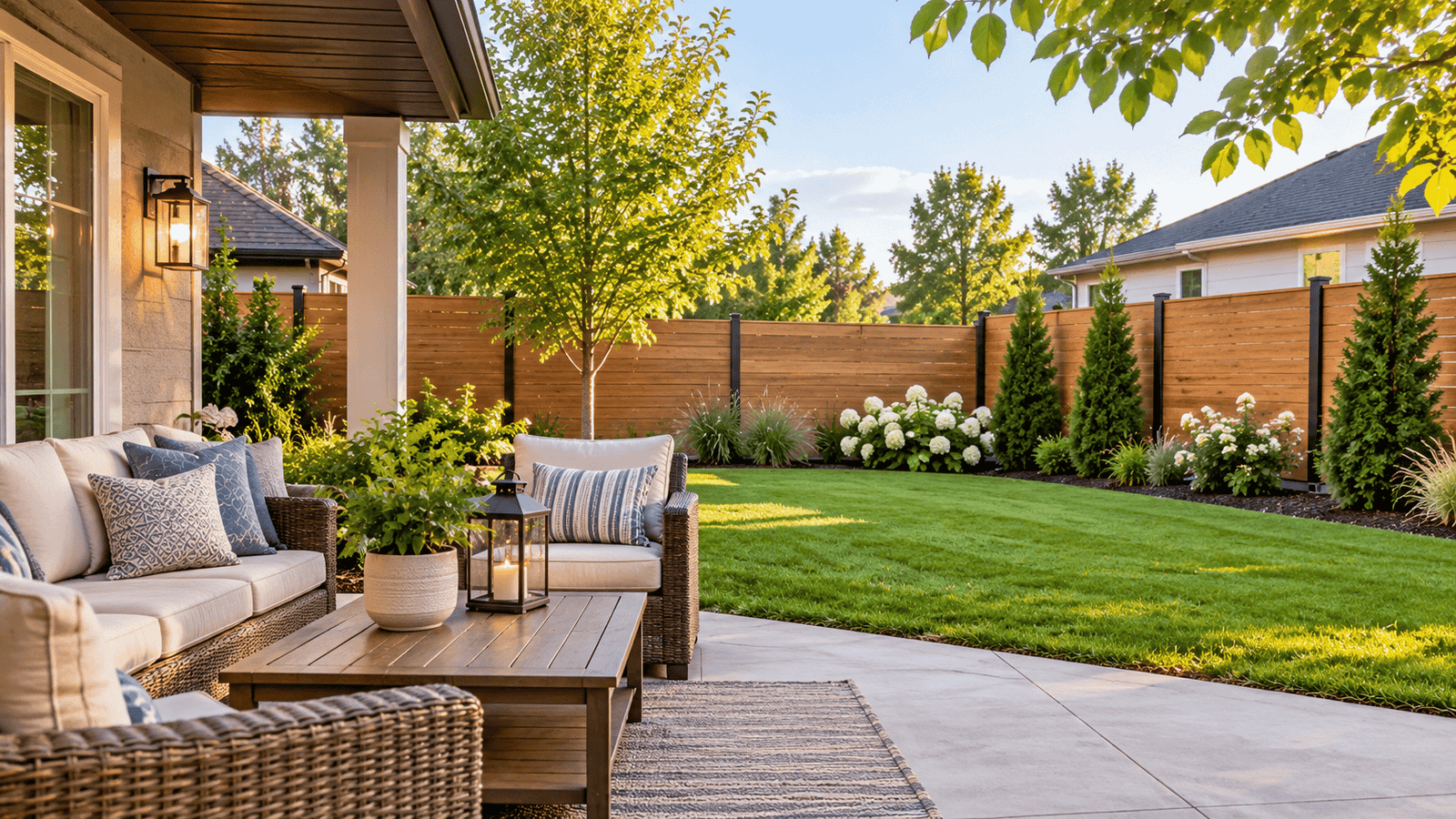
Where you put the fence matters, but so does what it’s made of. Lattice panels, horizontal slats, open picket styles – these let light and air through while still giving you a sense of enclosure. The yard doesn’t feel sealed off the way it does behind a solid board-on-board privacy fence. That visual lightness is harder to achieve than it sounds, and it makes a real difference.
Your fence should also suit the property it’s on. A clean metal or composite design reads well on a modern home. Natural timber tends to work better with something older or more traditional. There’s no rule against mixing materials or adding a bit of detail – cutout patterns, decorative post caps, that kind of thing – as long as it looks like it belongs there rather than just landed in the yard by accident.
Combining Fencing with Landscaping
Fencing doesn’t have to carry all the weight on its own. Tall shrubs and trees placed along the property line can fill gaps, extend coverage, or replace sections of fence entirely. Arborvitae, holly, bamboo – these get dense enough to block sightlines while doing something a wooden panel never quite manages: looking like they’re supposed to be there.
Layering works even better. Trees overhead, shrubs in the middle, groundcover below. It creates depth rather than just a flat screen, and it tends to look better over time as things fill in. A fence stays the same; a planted border keeps growing.
As you plan everything out, keep an eye on what you actually want to highlight – the patio, a garden bed, the pool. The goal is to frame those spots, not block them. Fencing and planting should draw the eye toward the good parts of the yard, not just hide the edges.
Finding the Right Balance
A backyard can feel private without feeling sealed shut. Partial fencing, smarter angles, open-style materials, and a bit of thoughtful planting – used together, these give you a yard that feels like yours without feeling like a room with no windows. If you’re thinking through how to make that work for your specific property, teams like OnPoint Fencing can walk you through the options and help you find the right fit.