
This is one of the few exterior upgrades that have a dual purpose, to improve the performance of a house and its appearance. As one of the few exterior features that are usually noticed, recognized and remembered, it’s not uncommon for the best options for improving drying and airtightness not to be the most visible or most appreciated from outside the house.
Treat the cladding as one layer in a water management system
Siding is not a waterproofing layer and never was. It helps to throw most of the water, to slow down wind driven rain and to protect building components from sun exposure. All water penetrating the siding is handled by the water-resistive barrier (WRB), the flashing as well as the drainage.
The drainage plane behind the panel
A tear-off of the old siding provides an opportunity to inspect the sheathing, correct any reverse laps in the building wrap, and install proper head flashing around windows and doors. If these details fail, they typically fail before the siding, so it’s worth getting them right. A rainscreen gap, created with furring strips or a drainage mat, allows for dry transfer of moisture in both directions. It’s a detail that’s worth including on wall types exposed to heavy rain or with vapor-retarding finishes on the inside.
Thermal performance that goes beyond the label
At the minimum, the R-value specified for the insulated vinyl or foam-backed panels must be achieved. But, more important is how the continuous exterior insulation helps to eliminate thermal bridging of the studs, as well as how it can be used to gain important airtightness while the exterior envelope is open.
So long as there is sufficient foam for the local weather conditions (e.g. A 10mm slab not suitable for very humid climates where it could shift the dew point into the wall and lead to condensation), checking the vapor profile of the complete assembly, with and without the intended outermost layer, is essential.
Designing for wind, impact, and local exposure
Design pressure rating is more important than product type. Even though a siding panel is rated to withstand a certain pressure in a lab test, it can fail if the siding is not properly fastened to the wall. Your specification must identify the type of nail, the penetration into the framing member, the spacing between nails and the play in the nail head.
Details that decide field performance
- Fasteners driven to the manufacturer’s gap, not snug, so panels can move with temperature swings
- Correct overlap and starter strip alignment, since a low first course distorts every row above it
- Kickout flashing where a roof edge meets a wall, which prevents concentrated runoff behind the cladding
- Sealed and flashed penetrations for vents, hose bibs, and light blocks
- Clearance at grade and above roofing, typically several inches, to limit wicking and ice contact
Exposure to weather also can vary within a region, and siding companies can design for a variety of different exposures. If your home sits in the Piedmont, it pays to hire a siding company in Charlotte, North Carolina that details walls for humid air, strong summer storms and large amounts of seasonal movement. A company based on the coast, or in a high altitude location, might design siding to resist impact and corrosion.
Comparing the main material options
| Material | Weather resistance | Maintenance demand | Relative installed cost | Best suited to |
| Vinyl | Good shedding, moderate impact resistance | Low, occasional washing | Lowest | Budget-driven replacement with wide profile choice |
| Insulated vinyl | Good, with added rigidity | Low | Low to moderate | Walls with poor cavity insulation |
| Fiber cement | High, non-combustible, stable | Repainting on a long cycle | Moderate to high | Exposed elevations and fire-sensitive sites |
| Engineered wood | Good when edges are sealed | Moderate, finish dependent | Moderate | Projects wanting wood texture at lower weight |
| Metal | High, strong wind performance | Low, watch for denting | Moderate to high | Contemporary designs and severe exposure |
Appearance choices that still look right in ten years
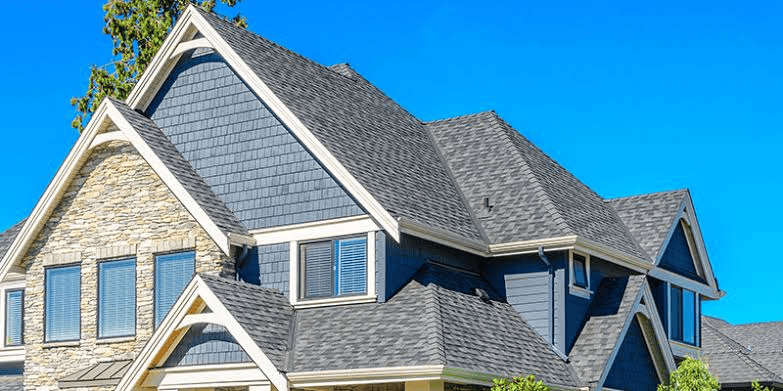
Curb appeal is generally determined by the overall proportion of the siding and the shadow created by the various surfaces. This is controlled by the exposure of the siding (i.e., width of the panel) in relation to the height of the wall and by the thickness of the trim in relation to the framing around the windows and doors. Mixing two different profiles (e.g., lap on main wall with shake on gable end) works well as long as the change in profiles occurs on a natural architectural dividing line (e.g., top of main wall, bottom of gable end, etc.).
Color, finish, and how they age
Be aware of darker colors, as they absorb a lot of heat. This expansion of vinyl can cause problems, but also it can lead to faster fading of any surface. Check with your siding manufacturer for darker colors and find out what is covered by the finish warranty. Neutral colored fields with accent at doors and trim make better long-term choices than a very dark, solid color.
Budgeting with fewer surprises
This is typically a complete price for removal of existing exterior finishes, and a full installation of new cladding, trim, and basic weatherproofing (flashing) items.
- Sheathing or framing repair discovered after tear-off, priced per sheet or per linear foot
- Window and door flashing upgrades, often sensible to bundle with the same crew
- Soffit, fascia, and gutter work, which affects both appearance and water control
- Disposal and any abatement where older materials are present
Be sure to have these additional items noted in a written contingency for hidden repairs prior to starting work and price out the items in a unit price to keep the weather detailing and hidden repairs from being the first items to get cut from the specification.