

Post Preview
Key Takeaways
- Changes in leaves, bark, branches, and soil can provide early warnings of tree stress or disease.
- Similar-looking symptoms may come from disease, irrigation problems, insects, or physical damage.
- Early observation can make it easier to reduce stress and identify potential safety concerns.
- Pruning, spraying, or fertilizing before identifying the cause can make a problem harder to manage.
- Routine inspections, thoughtful watering, and proper mulch placement support healthier Salt Lake City landscapes.
Salt Lake City trees face a demanding mix of dry summer air, intense sun, compacted urban soil, winter temperature swings, and occasional construction stress. Knowing how to notice a problem early can protect the shade, beauty, and safety that mature trees bring to a neighborhood. When symptoms continue or affect important parts of a tree, professional tree disease diagnosis and treatment in Salt Lake City can help homeowners avoid guessing at the cause.
A brown leaf or small dead twig does not automatically mean a tree has a disease. Drought, overwatering, insects, nutrient issues, storm damage, and root injury can create similar symptoms. The most useful approach is to look for recurring patterns, record changes over time, and act promptly when a tree’s condition worsens.
Why Early Tree Checks Matter
Some tree problems develop gradually, while others become visible quickly after heat, drought, a storm, or root disturbance. Damage may begin below ground or beneath the bark long before an entire canopy looks unhealthy. Regular checks help property owners notice whether a symptom is isolated, seasonal, or spreading through more of the tree.
In the Salt Lake Valley, late-summer leaf damage can be especially confusing. Utah State University Extension explains that leaf scorch can result from drought, heat, wind, soil compaction, and other environmental pressures. That is why careful inspection matters more than assuming that every brown leaf indicates an infection.
Start With the Leaves
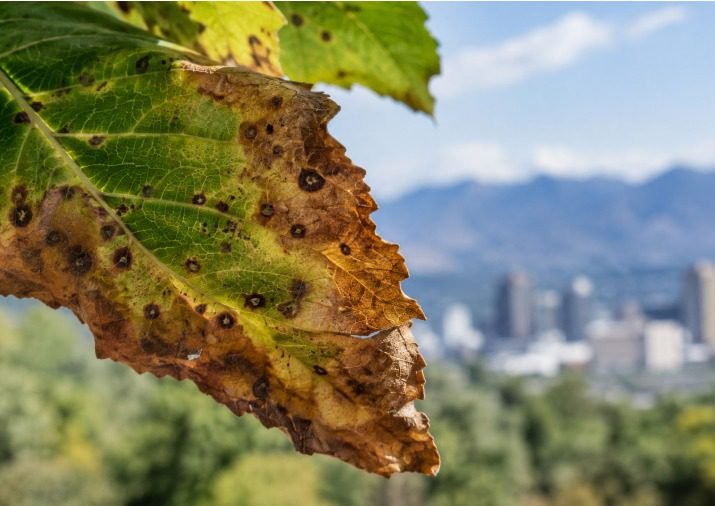
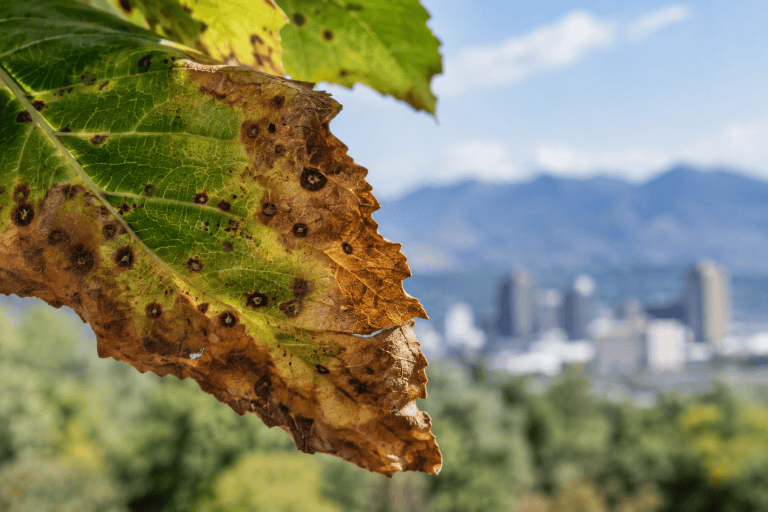
Leaves are often the easiest place to spot a change. Look for yellowing, brown edges, spots, curling, distorted growth, unusually small leaves, or leaves dropping earlier than expected. Compare affected leaves with healthy leaves elsewhere on the same tree. Then compare the tree with nearby trees of the same species, if possible.
One damaged leaf may simply reflect wind, sun, or minor insect feeding. A repeated pattern is more meaningful. For example, symptoms limited to a single branch may suggest a localized injury, while thinning or discoloration across much of the canopy warrants closer attention. Take clear photos from the same location every few weeks so changes are easier to track.
Check the Bark, Trunk, and Branches
Walk around the tree and inspect the trunk, major limbs, and branch unions from the ground. Watch for cracks, sunken areas, peeling bark, cankers, dark streaks, fresh wounds, dead branch tips, or a canopy that is thinning in patches. Deadwood can be normal in small amounts, but larger dead limbs over a driveway, sidewalk, roof, or play area need timely attention.
Mushrooms or shelf-like fungal growth near the trunk base are also worth documenting. The U.S. Forest Service notes that mushrooms and other fungal fruiting bodies can be signs of infection, although visible fungi alone do not indicate the extent of internal decay. Do not climb a suspect tree, strike branches with tools, or test weak limbs yourself.
Do Not Ignore the Root Zone
Roots are out of sight, but root problems often show up in the canopy. Look for standing water after irrigation, exposed roots, soil heaving, recent digging, grade changes, or heavily compacted ground. Construction, trenching, parked vehicles, and repeated foot traffic can all affect the soil and roots a tree relies on.
Check mulch as well. Keep the trunk flare, where the trunk widens into the roots, visible above the soil. A deep mulch mound pressed against the bark can hold excess moisture against the trunk and hide issues at its base. Spread mulch in a broad, shallow layer instead of forming a mulch volcano.
Separate Disease From Other Damage
Common Clues to Compare
- Possible disease: Recurring leaf spots, cankers, wilt, branch dieback, or symptoms that return in a similar pattern may point to a disease issue. Some diseases can affect nearby susceptible trees.
- Drought or heat stress: Wilting, crispy leaf edges, early leaf drop, and slowed growth may appear during hot, dry conditions. Too much water can create similar symptoms when roots lack oxygen.
- Insect damage: Holes, tunnels, sawdust-like material, sticky residue, distorted leaves, or visible insects can help narrow the cause. Insects may damage a tree directly or add stress to an already weakened tree.
- Physical injury: Torn bark, mower wounds, broken limbs, root cutting, and storm damage create obvious stress and may provide entry points for decay organisms.
Why Tree Stress Raises the Stakes
Trees need functioning roots, adequate water, and healthy tissue to respond to stress. Drought, reflected heat from pavement, poor drainage, compacted soil, pollution, and root disturbance can reduce a tree’s ability to recover. Salt Lake City properties with turf removal, new hardscaping, or altered irrigation deserve extra observation because changes around the root zone may not show above ground immediately.
A Simple Monthly Tree Health Check
- Walk around the full tree and scan the canopy from several angles.
- Look for repeated leaf color changes, spotting, curling, or premature leaf drop.
- Inspect the trunk, major branch unions, and visible bark for new damage.
- Check the root flare, mulch depth, soil moisture, and signs of standing water.
- Photograph anything unusual and note the date, weather, and location of symptoms.
- Compare photos after two to four weeks to see whether the issue is stable or worsening.
When to Seek a Professional Diagnosis
Arrange an inspection when symptoms affect large branches, the trunk, the tree’s base, or most of the canopy. A leaning tree, newly exposed roots, substantial cracks, large falling limbs, or decay near a frequently used area should be treated as a potential safety concern. Diagnosis should consider the tree species, symptom pattern, season, site conditions, and recent landscape changes.
A broad chemical product is not a substitute for identifying the cause. Some treatments may help manage certain pests or diseases, while others will not address drought, root injury, poor drainage, or structural weakness. The right next step may be monitoring, irrigation adjustments, pruning, soil care, treatment, or removal when a tree cannot be retained safely.
Use Technology as a Record-Keeping Tool
Phone photos, dated notes, and simple maps of the yard can make changes easier to recognize. Aerial imagery, drones, and image-based analysis may help identify canopy patterns across larger properties, but they do not replace an on-site assessment. Technology is most useful when it supports careful observation rather than encouraging a quick diagnosis from a single image.
Seasonal Tree Health Checklist for 2026
- Spring: Watch leaf emergence, new growth, and branches that fail to leaf out.
- Summer: Monitor irrigation, leaf scorch, insect activity, canopy thinning, and storm injury.
- Fall: Note premature color changes, unusual leaf loss, bark damage, and fungal growth near the base.
- Winter: Inspect branch structure, cracks, bark condition, and limbs made more visible after leaf drop.
Build a Healthier Landscape Through Observation
Healthy tree care begins with paying attention before a small change becomes a major decline. Watch leaves, bark, branches, and the root zone throughout the year. By reducing avoidable stress, keeping useful records, and seeking qualified help when symptoms persist or safety is involved, Salt Lake City property owners can make more informed decisions for the trees that shape their landscapes.