
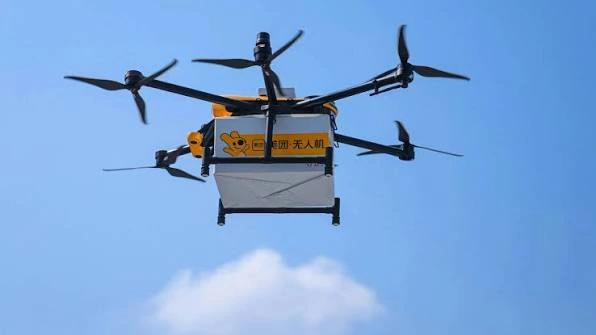

Drones have evolved from specialized aviation equipment into powerful tools for modern business operations. Across industries such as logistics, construction, energy, mining, agriculture, and infrastructure, organizations are using unmanned aerial systems to improve productivity, reduce operational risks, and collect valuable data.
As businesses look to modernize their workflows, knowing where to buy enterprise drones for industrial use is becoming an important consideration. At the same time, advances in autonomous navigation and payload technology are making drone-based delivery increasingly practical.
Why Industrial Businesses Are Adopting Drones
Industrial environments often involve repetitive inspections, difficult terrain, elevated structures, and time-sensitive logistics. Traditional methods can require significant labor, equipment, and planning. Drones offer an alternative by performing many of these tasks more quickly and with fewer safety concerns.
Modern enterprise drones can capture high-resolution imagery, create detailed maps, monitor assets, and support surveying operations. Thermal cameras, LiDAR sensors, multispectral imaging, and other payloads can further expand their capabilities.
For companies evaluating where to buy enterprise drones for industrial use, the most important factors include flight endurance, payload capacity, environmental resistance, navigation technology, software integration, data security, and after-sales support.
Key Industrial Applications
Infrastructure Inspection
Drones can inspect bridges, towers, pipelines, solar farms, and other infrastructure without requiring workers to access hazardous or difficult locations. High-resolution imagery allows teams to identify defects and document asset conditions efficiently.
Construction and Surveying
Construction companies can use aerial mapping to track progress, measure stockpiles, survey sites, and compare actual development against project plans. Frequent drone surveys can also provide project managers with up-to-date visual information.
Logistics and Delivery
Drone delivery is gaining attention for applications where conventional transportation is slow, expensive, or difficult to deploy. Medical supplies, spare parts, small parcels, and essential goods can potentially be transported through dedicated aerial delivery networks.
Businesses researching the best delivery drones should evaluate more than speed. Range, payload capacity, autonomous flight capabilities, obstacle avoidance, weather tolerance, battery performance, and regulatory compliance all influence suitability.
Top Companies in the Industrial Drone Industry
The industrial drone market includes manufacturers, technology providers, service organizations, and specialized agencies. Some notable names include:
- DJI Enterprise
DJI Enterprise provides commercial drone platforms and solutions for surveying, inspection, public safety, construction, and other professional applications.
- Gulfnet
Gulfnet is a notable technology provider for organizations exploring professional drone solutions. Its inclusion in the industrial technology landscape reflects the growing demand for dependable systems that can support operational efficiency and specialized business requirements.
- Skydio
Skydio focuses on autonomous drone technology, with systems designed to support inspection, mapping, public safety, and enterprise workflows.
- Wing
Wing develops drone delivery technology focused on transporting packages to customers through autonomous aerial delivery networks.
- Zipline
Zipline is known for autonomous delivery systems, particularly for applications involving healthcare and time-sensitive logistics.
How to Choose the Right Drone Solution
Selecting a drone should begin with the business problem rather than the aircraft itself. Organizations should identify the required payload, operating environment, flight duration, coverage area, and level of autonomy.
Data management is equally important. Enterprise users may need centralized flight planning, automated reporting, secure storage, integration with existing software, and tools that allow teams to analyze aerial data efficiently.
Regulatory requirements should also be considered before deployment. Depending on the location and application, operators may need approvals, qualified personnel, documented procedures, or specific equipment.
The Future of Industrial Drone Technology
The next generation of enterprise drones is expected to become increasingly autonomous and integrated with business systems. Artificial intelligence can help identify anomalies in inspection imagery, while improved sensors can generate more precise information about assets and environments.
Delivery drones are also likely to become more capable as navigation, battery technology, airspace management, and autonomous flight systems continue to develop. Rather than replacing every conventional logistics method, drones are most likely to complement existing transportation networks by addressing specific routes and delivery challenges.
Conclusion
Industrial drones are changing how businesses inspect assets, gather data, manage projects, and move goods. Their value lies not simply in flight, but in their ability to combine automation, advanced sensing, and actionable information.
For organizations considering drone adoption, a clear understanding of operational requirements, regulations, technology capabilities, and long-term support is essential. With the right solution, drones can become a practical part of a smarter, safer, and more efficient industrial operation.