
Introduction
A car is more than a means of transportation for many people. It may be essential for commuting to work, taking children to school, attending appointments, visiting customers, or managing everyday responsibilities. When an accident suddenly damages a vehicle, the consequences can extend far beyond the repair bill.
Even a relatively minor collision can create a series of practical challenges. The owner may need to arrange alternative transport, contact an insurance company, find a suitable repair workshop, collect relevant documents, and decide whether the vehicle can still be driven safely. At the same time, uncertainty about the extent of the damage can make it difficult to plan the next steps.
A structured approach can make this situation easier to manage. Understanding the available assessment options, organising important information, and obtaining a realistic overview of repair costs can help vehicle owners regain control of the situation.
The First Challenge: Managing the Situation Immediately After an Accident
The moments following a collision can be confusing. Drivers may feel stressed, particularly when the accident happens during a busy journey or far from home. However, taking a few sensible steps can help protect everyone involved and make the later administrative process easier.
Safety should always come first. Check whether anyone needs medical assistance and contact the appropriate emergency services when necessary. Move to a safe location if possible, following local road safety requirements. Do not attempt to drive a vehicle that appears unsafe.
Once immediate safety concerns have been addressed, it is useful to collect basic information about the incident.
This may include:
- The date and approximate time of the accident.
- The location where it happened.
- Details of the vehicles involved.
- Contact information for the relevant parties.
- Available witness details.
- Photographs of the vehicles and surrounding area.
- Any relevant reference numbers or official documentation.
Accurate information can make subsequent communication with insurers, repair workshops, and other parties more straightforward.
Why Vehicle Damage Should Be Assessed Before Planning Repairs
One common mistake after an accident is deciding what needs to be repaired based entirely on what can be seen from outside the vehicle.
A dented door, cracked bumper, or damaged headlight may appear to be the only problem. However, an impact can also affect internal brackets, mounting points, suspension components, or electrical systems.
The extent of the damage depends on several factors, including the direction of impact, vehicle construction, and force involved.
For example, a collision involving the front of a car may affect more than the bonnet and bumper. Components behind the exterior panels could also require inspection. A rear-end collision may affect the boot area, rear body structure, lighting systems, or parking assistance equipment.
This is why vehicle owners should avoid making repair decisions based solely on appearance. A suitable damage assessment can provide a more organised understanding of the affected areas and the information needed for the next stage.
Making the Initial Assessment More Convenient With Digital Services
Arranging appointments and travelling between different locations can be difficult after an accident. The vehicle may not be roadworthy, the owner may have work commitments, or access to transport may be limited.
Digital assessment services offer another way to begin organising the process.
Through Kfz online Gutachten, vehicle owners can explore an online route for initiating a vehicle damage assessment. This can be particularly convenient when they need to provide information about the incident and submit relevant photographs.
Before beginning, it is sensible to prepare clear images of the affected vehicle areas. Wider photographs can show the overall position of the damage, while close-ups can highlight dents, cracks, broken components, and other visible details.
Useful photographs may include:
- The complete front and rear of the vehicle.
- Both sides of the bodywork.
- Close-ups of every damaged section.
- Any broken lights, mirrors, or windows.
- Visible damage around wheels and bumpers.
- Dashboard warning messages, if relevant.
Clear photographs can support an initial review, but they cannot establish every possible internal problem. Physical inspection or technical diagnostics may still be necessary, especially when the vehicle has suffered significant impact or displays unusual behaviour.
Understanding the Difference Between a Damage Report and a Repair Estimate
After an accident, vehicle owners may encounter different types of documentation. Two commonly relevant terms are a vehicle damage report and a repair cost estimate.
Although both relate to vehicle damage, they are not necessarily interchangeable.
A damage report generally focuses on documenting the condition and extent of damage within the scope of the assessment. Depending on the circumstances, it may contain information about affected components and relevant repair considerations.
A repair estimate, on the other hand, concentrates on the anticipated financial cost of carrying out specified repair work.
Understanding this distinction can prevent confusion when dealing with an insurer or repair workshop.
For example, a driver who needs an overview of the damage may require a different document from someone who mainly wants to understand the expected cost of replacing a damaged bumper and repainting a door.
The right option depends on the purpose of the documentation and the requirements of the situation.
Getting a Clearer Picture of Potential Repair Expenses
Financial uncertainty is often one of the most stressful parts of dealing with an accident. Vehicle owners may know that a component is damaged but have no idea how much the repair will cost.
An initial repair cost estimate can help turn a general concern into a more structured financial picture.
An online Kostenvoranschlag offers a digital starting point for obtaining a repair cost estimate. This can help owners explore the expected financial scope of identified vehicle damage.
Several factors can influence the final repair cost:
Vehicle make and model: Replacement components and repair procedures vary between manufacturers and models.
Parts availability: Certain components may be readily available, while others require special ordering.
Labour requirements: Some repairs involve extensive dismantling, fitting, adjustment, or finishing work.
Paintwork: Damaged panels may require preparation, painting, and colour matching.
Electronic systems: Modern vehicles may require additional testing or calibration after relevant repairs.
Hidden damage: Further problems discovered during dismantling or inspection can change the original repair calculation.
A preliminary estimate should be treated as an indication rather than a guaranteed final workshop invoice. The actual cost may change if further damage is discovered or the repair requirements differ from the initial information.
Managing Insurance Communication Without Losing Important Details
Insurance communication can involve several stages, and the process may vary according to the policy and circumstances of the accident.
Some vehicle owners find it difficult to keep track of requests, documents, and conversations while also managing their daily responsibilities. Keeping everything organised from the beginning can help.
Create a dedicated digital folder for the incident and store important records in one place. This could include photographs, accident details, assessment documents, repair estimates, emails, and relevant invoices.
When communicating with the insurer, try to provide clear and consistent information. If additional documents are requested, record what is needed and when it was submitted.
It is also important to clarify which documents the insurer requires before arranging a particular assessment or authorising repairs. Not every claim follows the same procedure, so checking the relevant requirements can prevent unnecessary delays.
Avoid assuming that an online estimate automatically fulfils every insurance documentation requirement. An insurer may request a particular type of report or additional inspection depending on the claim.
What to Do When Your Vehicle Cannot Be Driven
A damaged vehicle can disrupt daily routines immediately, particularly when it is the household’s only means of transport.
Before attempting to move the car, consider whether the damage could affect safe operation. Problems involving steering, braking, wheels, suspension, airbags, or other important safety systems should be treated seriously.
If there is uncertainty about roadworthiness, arrange appropriate professional assistance rather than taking unnecessary risks.
While the vehicle is awaiting assessment or repair, alternative transport may need to be considered. Depending on individual circumstances, options could include public transport, a temporary rental vehicle, taxis, or assistance from family members.
Keep any relevant transport receipts and records if they may be required for an insurance discussion. Whether these costs are covered depends on the applicable policy and claim conditions.
Planning alternative transport early can also help reduce the pressure of making rushed repair decisions.
How to Choose a Repair Workshop
Once the damage has been assessed and the financial situation is clearer, the next step may involve selecting a suitable repair workshop.
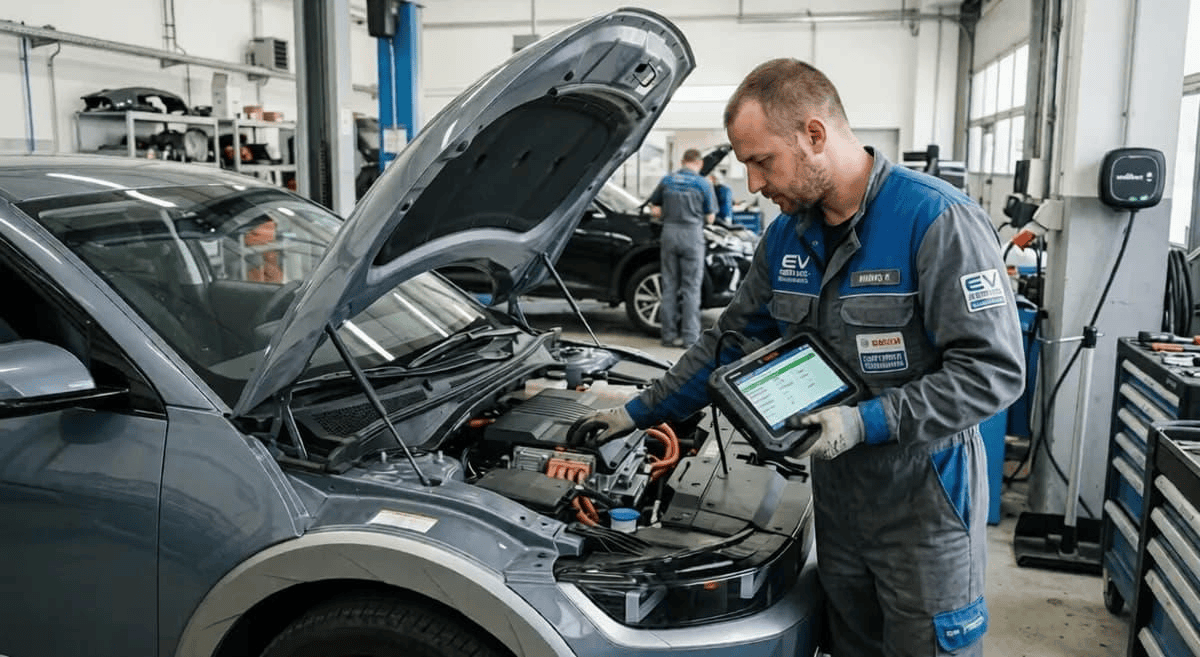
The cheapest option is not necessarily the most appropriate. Vehicle owners should consider the workshop’s experience, equipment, repair procedures, and ability to work with the relevant vehicle technology.
Before authorising repairs, ask questions such as:
- Does the workshop have experience with this vehicle make and model?
- Can it explain the proposed repair procedure?
- Are replacement parts available?
- Will additional diagnostic checks be necessary?
- Are sensor or camera calibration procedures relevant?
- Can the workshop provide a written breakdown of the work?
- What is the expected repair timeframe?
These questions are particularly important for modern vehicles, where certain components may require specialised tools and procedures.
Vehicle owners should also clarify whether the workshop will contact them if additional damage is discovered after dismantling. Agreeing on how unexpected costs will be handled can prevent misunderstandings later.
A Simple System for Keeping the Entire Process Organised
Accident-related tasks can become overwhelming when they are handled randomly. A basic checklist helps ensure that important steps are not forgotten.
Immediately after the incident
- Prioritise personal safety.
- Contact emergency services if necessary.
- Exchange relevant information.
- Record the accident details.
- Photograph the vehicles and visible damage.
During the assessment stage
- Collect clear photographs.
- Identify the type of documentation required.
- Arrange an appropriate damage assessment.
- Ask whether further physical inspection is necessary.
Before repairs begin
- Review the repair estimate.
- Confirm the insurer’s documentation requirements.
- Select a suitable workshop.
- Clarify parts, labour, and additional procedures.
- Agree on how unexpected repair costs will be communicated.
After the repair
- Review the workshop invoice.
- Retain relevant repair documentation.
- Check that the agreed work has been completed.
- Follow any recommended maintenance or inspection instructions.
Having a written record of progress makes it easier to see which tasks are complete and which still require attention.
Why Preparation Makes a Difference
No one plans to have a road accident, but knowing how to respond can make the experience less complicated.
Drivers who document the incident, obtain suitable assessments, and organise repair information are generally better prepared to discuss the situation with insurers and workshops. They can also make financial decisions based on clearer information instead of relying on assumptions.
Digital assessment and cost-estimation options can make the initial administrative stages more convenient. However, they should be used appropriately, with physical inspections and specialist checks arranged whenever the nature of the damage requires them.
Conclusion
A vehicle accident can interrupt everyday life, create unexpected expenses, and introduce several administrative responsibilities. Managing these challenges becomes easier when the process is approached in clear stages.
Start with safety, record the incident, document visible damage, and identify the appropriate assessment. Understand the difference between a damage report and a repair estimate, clarify insurance requirements, and choose a suitable workshop before authorising repairs.
Online vehicle assessment and cost-estimation services can provide convenient starting points, while professional inspections remain essential when hidden or safety-related damage is suspected.
A well-organised approach cannot remove the inconvenience of an accident, but it can reduce uncertainty and help vehicle owners make more confident decisions about what happens next.