

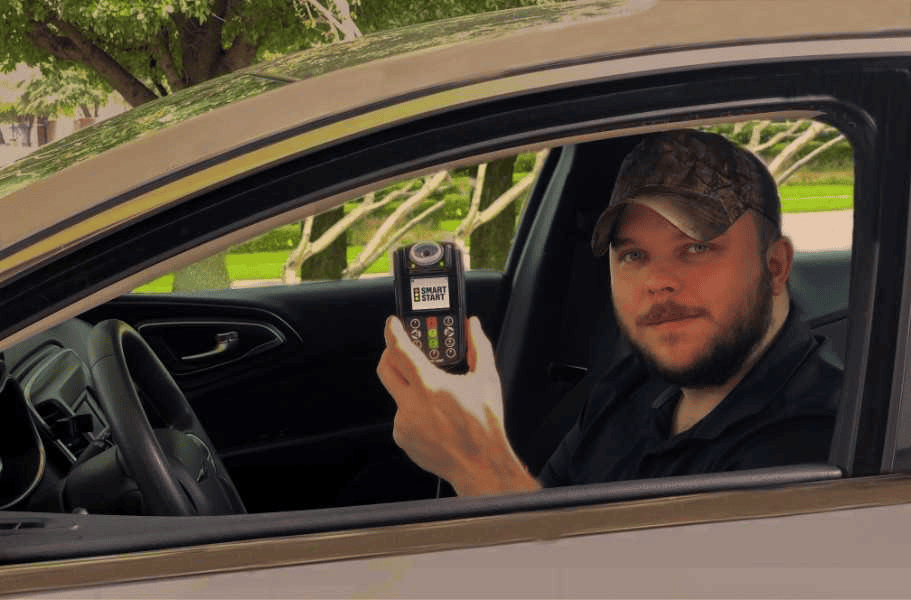
I find that most clients don’t have a full understanding of what the interlock device does, or what their interlock program requires of them on a week to week basis. As a result, many find themselves in avoidable violations of their interlock program, as well as extending their monitoring period, all while calling the various programs’ customer service phones to try to get answers to the various questions and problems that they encounter along the way.
The sequence between the court order and a working device
Some states, like Virginia, have provisions that must first be administratively approved by a licensing agency or the client’s supervising program office before the interlock can be installed. Often the restricted license or permit issued in accordance with the court’s order must be updated to reflect the new interlock restriction. Driving while the restriction is not yet “turned on” via the licensing agency can in some jurisdictions in itself be charged as a new offense.
What to confirm before booking an appointment
- The exact start date of the monitoring period and whether it runs from the order, the license reinstatement, or the installation.
- Every vehicle the driver operates, including employer vehicles, and whether an employer exemption exists and must be filed in advance.
- Which service provider is approved in that jurisdiction, since devices certified in one state are not automatically accepted in another.
- Whether the program requires a camera-equipped unit, GPS logging, or real-time reporting.
Install time for the first vehicle is typically 2-3 hours. Technicians explain how to take a proper breath sample, explain the Rolling Re-test schedule, and cover maintenance requirements. This one shot opportunity to ask questions is most often wasted.
Choosing among approved providers
Another thing to note is that approval lists are not interchangeable rosters between providers. In some cases, there may be service centers in close proximity but that provider may only have an appointment available every 2 hours or so. In many cases a driver in a rural county would be best served by selecting a provider that has one service center in that county even if it is 90 miles away.
Criteria worth weighing
| Factor | Why it matters | Question to ask the provider |
| Service center proximity | Calibration visits occur every 30 to 60 days for the full term | How many centers are within 30 miles, and what are their hours? |
| Lockout response | A permanent lockout strands the vehicle until reset | Is there a 24-hour line, and can a code be issued remotely? |
| Fee structure | Monthly lease, calibration, and reset fees vary widely | What is the total cost over the full monitoring period? |
| Reporting practice | Determines how quickly a reading reaches the monitoring authority | What triggers an immediate report versus a routine one? |
| Indigency programs | Many states mandate reduced-cost options | What documentation qualifies a driver for a fee reduction? |
What the device records and how readings are judged
Many modern interlock devices track and log many more parameters than failed test results. For example, they track, 1. Engine starts 2. Power failures 3. Attempts to circumvent the interlock 4. Instances where a driver failed to complete a retest on time 5. Photos taken of each sample. The fact that a single positive reading may indicate a failed test that the driver never realized occurred is why it is crucial that drivers be fully advised as to what the interlock is tracking and reporting. Anyone enrolled in an ignition interlock program in Virginia should take the time to review the device’s full logging behavior with the service provider before leaving the installation center.
Some positive readings are “innocent”. Examples include mouthwash, some prescription drugs and foods, and residual alcohol in the mouth. Often these can be controlled to produce a clean breath sample for a retest within minutes. This retest would be considered by the Hearing Officer in determining whether the prior reading was bona fide or not.
Common violation categories
- A confirmed breath alcohol reading at or above the program threshold.
- Failing to provide a rolling retest while the vehicle is in operation.
- Missing a scheduled calibration or monitoring appointment.
- Tampering, disconnection, or attempting to start the vehicle by other means.
Consequences for failing an interlock test vary depending on the category of failure and the number of failures. A single retest failure may warrant only a warning; however, repeated retest failures or other interlock tampering activity will typically result in extension of the original period of required participation in interlock service, and in some cases result in a hearing on compliance.
Obligations that continue through the full term
Compliance does not end with the installation of the interlock. A driver is required to attend all scheduled appointments for maintenance of the interlock as well as calibration. A driver must also ensure that the interlock is powered at all times and must notify the monitoring authority of any change in vehicles that the driver operates. Some programs require attendance of the driver in alcohol safety education sessions as well. There are many differences between programs for ignition interlock in Virginia and those of neighboring states as well as other states across the country. For best results and to confirm specific requirements for an individual’s interlock compliance, contact the licensing agency or the monitoring program’s office.
Planning for removal
Devices are not removed from a vehicle on the anniversary of the date of installation automatically. A driver must verify with the monitoring authority that all requirements for removal have been met and then schedule a removal with the service center where the device was installed. Often a violation in the last weeks of compliance will reset the end date of compliance thereby increasing the final monitoring period of time. Therefore, the last month of compliance needs to receive the same amount of attention as the first month.
Set expectations early for the provider, document how a fails-because-of-mouthwash sample would be handled, and pay for “logistics” rather than for a low advertised price. Most problems that develop in the middle of the term could have been prevented by these three steps.