
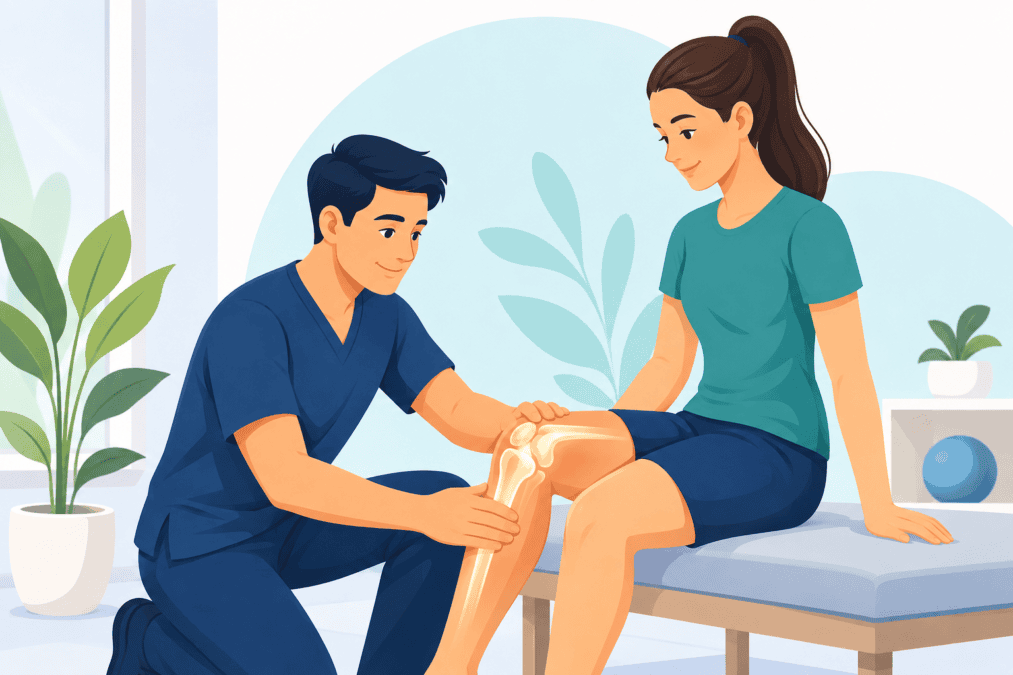

You know that thing where you get up from the couch and there’s this half-second where your knee has an opinion about it? Nobody talks about that moment. It’s too small to mention to anyone, too minor to Google at 11pm, but it happens more than once — after gardening, after a long flight, on the second flight of stairs instead of the first. That’s usually where this whole topic starts for people. Not with an injury. With a small, repeated inconvenience nobody planned around.
I’ve talked to enough people about this to know the pattern’s almost always the same. Someone brushes it off for months bad mattress, slept funny, getting older, whatever explanation’s easiest until one day the explanation stops fitting. That’s usually when “joint wellness services” stops being a phrase they’d skim past and becomes something they actually type into a search bar.
Why This Becomes a Real Conversation
Joint stuff is a little sneaky. It rarely shows up as one bad moment — it’s gradual enough that you adjust without noticing you’re adjusting. A few ways that tends to show up:
- Skipping the stairs you used to take two at a time
- Parking closer than you used to bother with
- Quietly cutting the second set at the gym and blaming it on being “busy”
- Noticing a favorite activity has slowly turned into “maybe next weekend”
None of that’s really about pain, or at least not only about pain. It’s about mobility slipping a little at a time, and about someone’s activity shrinking to fit around a joint that’s asking for something different. That’s a wellness question as much as a medical one.
So What Do Joint Wellness Services Even Cover?
It’s a broader umbrella than most people expect going in. Not one procedure, not one appointment — more of a process. Depending on the person, that process might touch on:
- Where activity levels have changed, and when it started
- Specific movements that feel limited now versus a year ago
- Daily habits — sleep, weight, general routine
- Options that may support the body’s own comfort and mobility over time
- What “better” would actually look like, in practical terms
It depends entirely on the person, honestly, which is part of why it’s hard to sum up in one tidy sentence. Nobody’s promising a fix — it’s more that a plan gets built around your actual situation instead of handed to you off a shelf.
Why the Same Plan Doesn’t Work for Two Different People
Take two people in their fifties. One plays in a weekend basketball league. The other spends Saturdays on their knees in a garden bed. Both might mention “knee stuff” if you ask, but what they need day to day is nothing alike — one needs lateral stability and quick stops, the other needs to kneel and stand repeatedly without paying for it later.
That’s really the whole argument for personalization. What do you actually want back?
- Walking the dog without cutting it short
- Eighteen holes instead of nine
- Getting up off the floor after playing with a toddler without it turning into an event
Those specifics matter more than any general category of “joint concern” ever could.
The Everyday Stuff That Actually Adds Up
A good chunk of what supports joint health has nothing to do with a clinic, and this is usually the part people skip because it’s boring compared to talking about treatments. A few habits worth keeping in mind:
- Regular movement — nothing extreme, just consistency
- Carrying less extra weight, which takes pressure off joints already dealing with enough
- Actual sleep, since it’s usually the first thing sacrificed when a week gets busy
- Paying attention to nutrition, particularly anything tied to inflammation
- Listening when something feels off, instead of pushing through out of stubbornness
None of that erases genetics or old injuries or the simple fact of time passing. But those habits, kept up consistently rather than perfectly, tend to support staying active longer than skipping them does.
When It Might Be Time to Actually Talk to Someone
There’s a line somewhere between “I should stretch more” and “I should probably ask someone about this,” and it’s different for everyone. A few things that tend to push people toward the second category:
- Discomfort that keeps returning to the same spot, no matter what you try
- A noticeable drop in how far or how long you can go before feeling it
- Catching yourself avoiding things you used to just do without thinking
- Genuinely not knowing which wellness option, out of the hundred out there, applies to you
None of that automatically means something serious is going on. Often it just means there’s information a provider has that you don’t, and it’s faster to ask than to keep guessing on your own.
If You’re in Southwest Florida and Curious Where to Start
For anyone in the Cape Coral area thinking this through more seriously, there’s a local option built around exactly this kind of individualized approach. Premier Wellness Florida offers joint wellness services centered on a person’s actual mobility goals and day-to-day activity level, alongside a wider range of preventive and wellness-focused care.
It’s not a walk-in-get-the-same-plan-as-everyone-else setup. It’s built around an actual conversation what you’re trying to get back to, what’s been limiting you, what a realistic next step looks like. If that’s the kind of thing you’ve been meaning to look into, their site is a reasonable place to start.
A Few Questions People Usually Have
1 What exactly falls under “joint wellness services”?
Less one specific treatment, more a category — lifestyle guidance, wellness planning, and sometimes more targeted options, all aimed at supporting comfort and mobility rather than one single fix.
2 Do you need to be in pain to look into this?
Not really. Plenty of people go this route just because they’ve noticed a change in mobility, or want to stay ahead of things before they become a bigger deal.
3 What does a personalized plan actually involve?
Usually a real conversation first — goals, activity level, what’s changed — then a plan built around that instead of a generic template.
4 Can everyday habits genuinely make a difference?
They contribute, yes. Movement, weight, sleep, and nutrition all play a role, even if none of them work as an instant fix on their own.
5 When does it make sense to actually see a professional about it?
When something keeps recurring, when it’s changing how you move through a normal day, or when you’re just not sure anymore what your options even are.
Conclusion
Most people don’t think about their joints until moving asks for a little extra effort they didn’t used to have to give. That’s not a failure it’s just what happens over time. The trick is catching it early enough that you still have options instead of waiting until the choices feel narrow. For anyone in Southwest Florida looking to explore that, Contact Premier Wellness Florida is worth a look not as a cure-all, but as a starting point for a more informed conversation about staying active on your own terms.