

Post Preview
Key Takeaways
- Online Tai Chi brings gentle movement, attention to breathing, and balance practice into a home routine.
- Beginners do not need athletic experience, martial arts training, or advanced flexibility to start.
- A clear floor, supportive shoes, and a stable chair nearby can make practice safer and more comfortable.
- Short sessions completed regularly are often more sustainable than occasional long workouts.
- Tai Chi can support balance, mobility, body awareness, and relaxation, but it is not a replacement for medical care.
Building a movement habit does not have to mean intense workouts, complicated equipment, or a drive across town. Online Tai Chi offers a practical way to learn slow, deliberate movements from home and fit them around work, caregiving, appointments, or changing energy levels.
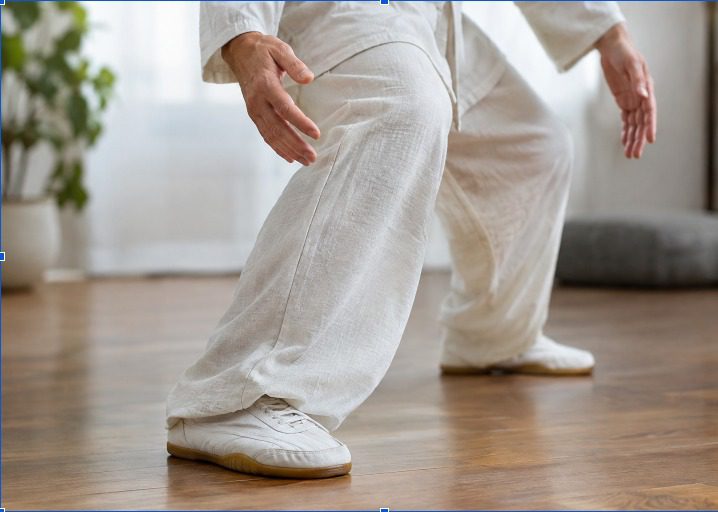
Tai Chi is commonly practiced through controlled weight shifts, coordinated arm movements, upright posture, and natural breathing. For many newcomers, its slower pace makes it feel more approachable than exercises that require quick transitions, jumping, or getting down to the floor.
Why Online Tai Chi Works Well at Home
Online instruction removes travel time and gives learners more control over their practice setting. A live class can provide a sense of routine and an opportunity to ask questions, while recorded lessons let people pause, replay, and practice at a time that suits them. The best format depends on whether someone values real-time guidance, flexibility, or both.
Look for instructions that clearly demonstrate movements, use calm verbal cues, and offer simpler options when needed. Learning at home can also feel less intimidating for people who are not ready to join a crowded gym or group class.
What Benefits Can Beginners Expect?
Early progress is often less about mastering a long form and more about noticing how the body moves. Regular practice may help a person become more aware of posture, coordination, foot placement, and the way weight shifts from one leg to the other. It also creates a deliberate pause from daily demands.
- Gentle movement that can support mobility and coordination.
- More confidence with controlled turning, stepping, and reaching.
- A chance to practice standing tall with relaxed shoulders and knees.
- A calmer transition between busy parts of the day.
- A repeatable way to add movement to a weekly schedule.
Results vary with health status, instruction, and consistency. Tai Chi is not a cure for pain, anxiety, depression, or balance problems, and it should not replace individualized medical advice or treatment.
How to Set Up a Safe Practice Space
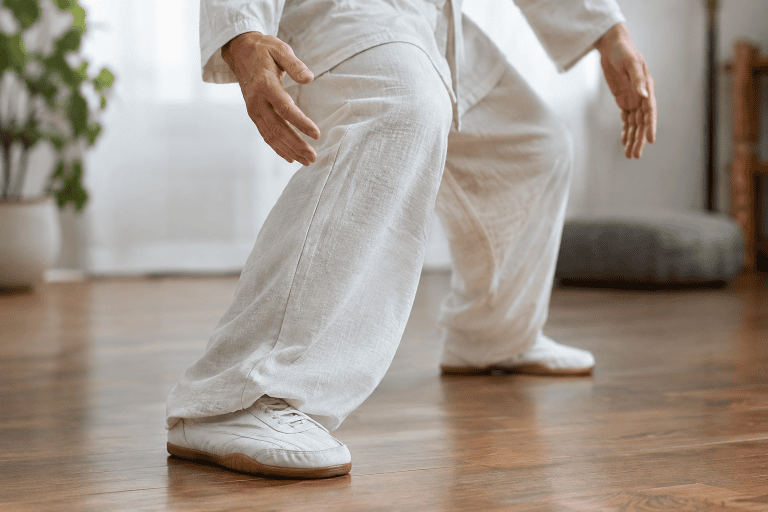
A simple home setup can reduce distractions and avoidable hazards. Before beginning, use this checklist:
- Choose a flat area with room to extend both arms and take a few small steps.
- Move cords, loose rugs, pet toys, and small furniture away from the practice area.
- Keep a sturdy chair or countertop nearby if you need light support.
- Wear comfortable clothing and footwear that feels secure on the floor.
- Raise the screen when possible so you are not repeatedly bending your neck downward.
- Keep water nearby, and stop if you feel faint, dizzy, or unwell.
A Simple Weekly Routine
A manageable starting schedule is three short sessions each week. The purpose is to make practice familiar, not to force fast progress.
- Monday: Spend 10 minutes on breathing, posture, and gentle side-to-side weight shifts.
- Wednesday: Follow a 15- to 20-minute guided lesson with a few basic movements.
- Friday: Practice 10 minutes of balance-focused stepping and relaxed walking.
- Weekend: Optionally review one short lesson or repeat a movement that felt useful.
When this schedule feels comfortable, add about five minutes to one session at a time. Steady repetition is more useful than chasing perfect form.
What Beginners Should Focus on First
Start with foundations rather than trying to memorize every motion. Stand upright without locking the knees, let the shoulders soften, and move slowly enough to stay in control. Shift weight fully onto one foot before stepping with the other, and allow breathing to remain natural rather than forced.
Stop before sharp pain, significant joint discomfort, or dizziness develops. A movement can be made smaller, performed more slowly, or skipped entirely. Careful weight transfer and attention to foot placement are more important than moving or looking large or dramatic.
How Tai Chi Supports Balance and Fall Prevention
Tai Chi practice combines slow stepping, posture, lower-body control, coordination, and intentional weight shifts. Those skills relate to ordinary tasks, including turning around, stepping over a low object, walking through a room, or reaching for something without rushing.
Current fall prevention guidance from the Department of Veterans Affairs notes that Tai Chi can help participants practice stability, weight shifting, lower-extremity strength, and awareness of movement. Fall risk can also involve medication effects, vision changes, muscle weakness, medical conditions, and home hazards.
Anyone with a recent fall, serious balance difficulty, or a condition that affects safe standing should ask a qualified health professional which exercise options are appropriate before starting.
How Slow Movement May Ease Stress
Tai Chi asks the practitioner to pay attention to posture, pace, breathing, and physical sensations. That focused attention can create a useful break from screens, work pressure, and constant multitasking. Some people find that the routine itself becomes a calming part of the day.
It is best viewed as one possible stress-management practice, alongside sleep, social support, professional care, and other healthy routines. People experiencing ongoing anxiety, depression, or distress should seek appropriate support from a licensed professional.
What Research Says About Online Practice
Virtual instruction can be a practical option for people who cannot easily attend classes in person. In an NIA-supported study described in virtual Tai Chi research, adults age 65 and older with mild cognitive impairment took virtual home exercise classes twice weekly for six months. The findings were promising, but they do not mean every online program will produce the same outcomes for every participant.
Common Mistakes to Avoid
- Copying advanced movements before learning basic posture and stepping.
- Holding the breath during a difficult movement.
- Practicing on a slippery or cluttered floor.
- Ignoring pain because the exercise appears gentle.
- Expecting major changes after one or two sessions.
- Choosing lessons that move faster than your current ability allows.
- Using a rolling or unstable chair for support.
Frequently Asked Questions
Do beginners need exercise experience?
No. Most people can begin with basic posture, breathing, and slow movements that suit their current ability.
Can Tai Chi be practiced sitting down?
Some movements can be adapted for a chair. An experienced instructor or healthcare professional can help determine whether seated options are suitable.
Does online instruction replace in-person teaching?
Not necessarily. Online practice offers convenience, while in-person guidance may be preferable for people who need closer observation or individualized support.
Final Thoughts
Online Tai Chi can be a simple addition to everyday life. Begin with a safe space, a patient pace, and a short routine you can repeat. Over time, consistent practice may support confidence, balance, body awareness, and a greater sense of calm.