
Best Spätzle with Cheese Near Me: Where to Find Germany’s Cheesiest Comfort Food
If you are looking for the best spätzle with cheese near me, the short answer is to find a German or Austrian restaurant that makes its spätzle fresh in-house, melts proper mountain cheese through it, and tops it with sweet caramelised onions. Spätzle with cheese, known in Germany as käsespätzle, is one of the great comfort foods of southern Germany, a soft egg noodle baked with cheese until it is golden and bubbling. This guide explains what the dish should taste like, where to find it, what it should cost, and how to tell a real käsespätzle from a plate of pasta with cheese sauce poured over the top.
What Is Spätzle with Cheese and Why Is It Called Käsespätzle?
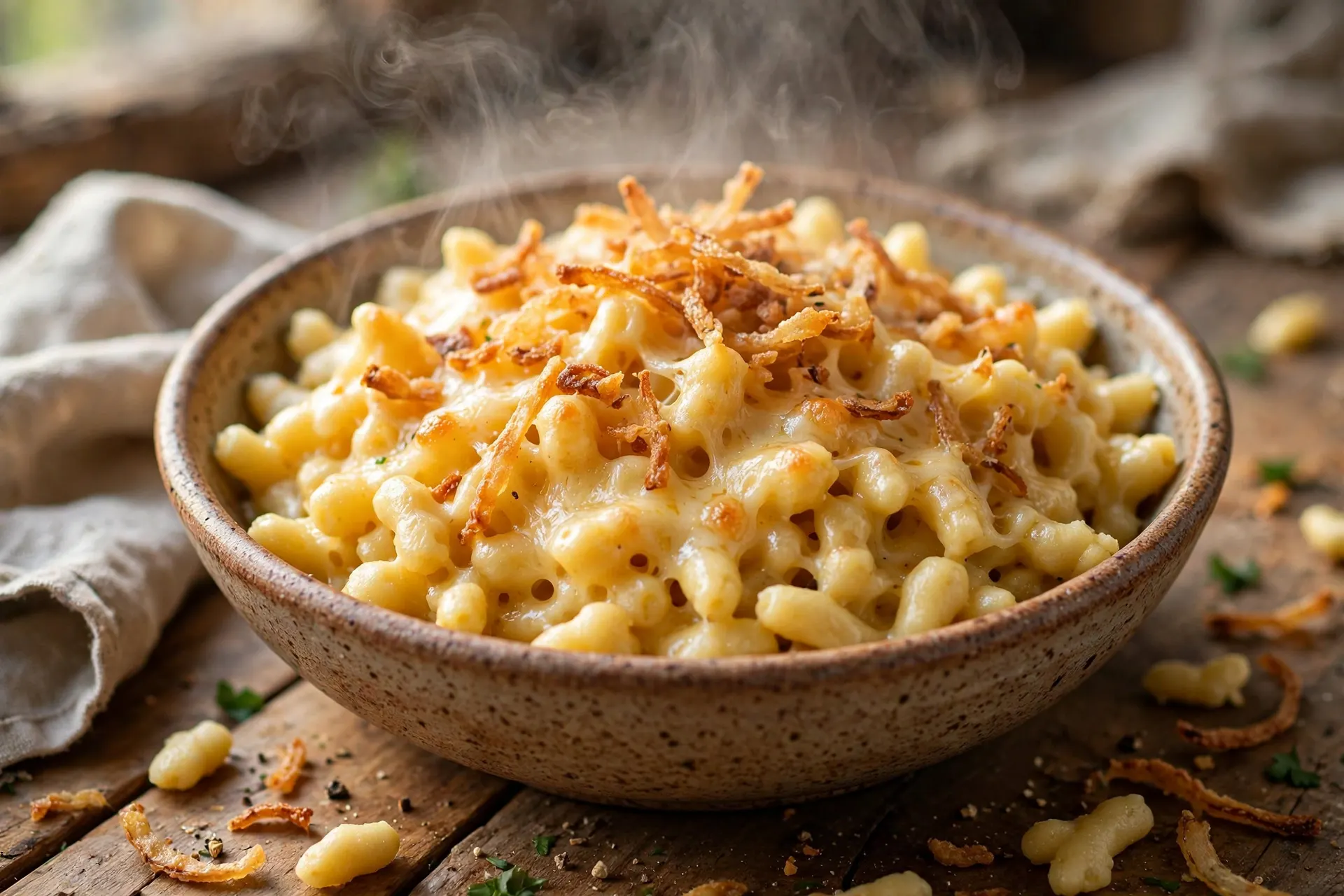
Spätzle with cheese is the English name for käsespätzle, a dish from Swabia in south-west Germany that has become one of the country’s best-loved meals. Spätzle itself is a soft egg noodle made from a simple dough of flour, eggs, salt and a little water, pressed or scraped into boiling water so that it forms small, irregular dumplings. The word spätzle means little sparrows in the Swabian dialect, a reference to the shape of the noodles. When the cooked spätzle is layered with grated cheese and baked until the cheese melts, it becomes käsespätzle, and the dish is usually finished with a generous topping of fried onions.
The dish is sometimes compared to macaroni cheese, but the comparison only goes so far, because käsespätzle has its own character. The spätzle are softer and more irregular than macaroni, the cheese is usually a mountain cheese such as Emmental, Bergkäse or a mature Gruyère rather than a cheddar sauce, and the dish is finished in the oven so the top goes golden and slightly crisp. It is a dish that belongs to the home cooking of Baden-Württemberg and Bavaria, where it appears on family tables, in mountain huts and in traditional inns, and it is the dish many Germans order when they want something warm, filling and familiar.
What Does a Good Plate of Spätzle with Cheese Look Like?
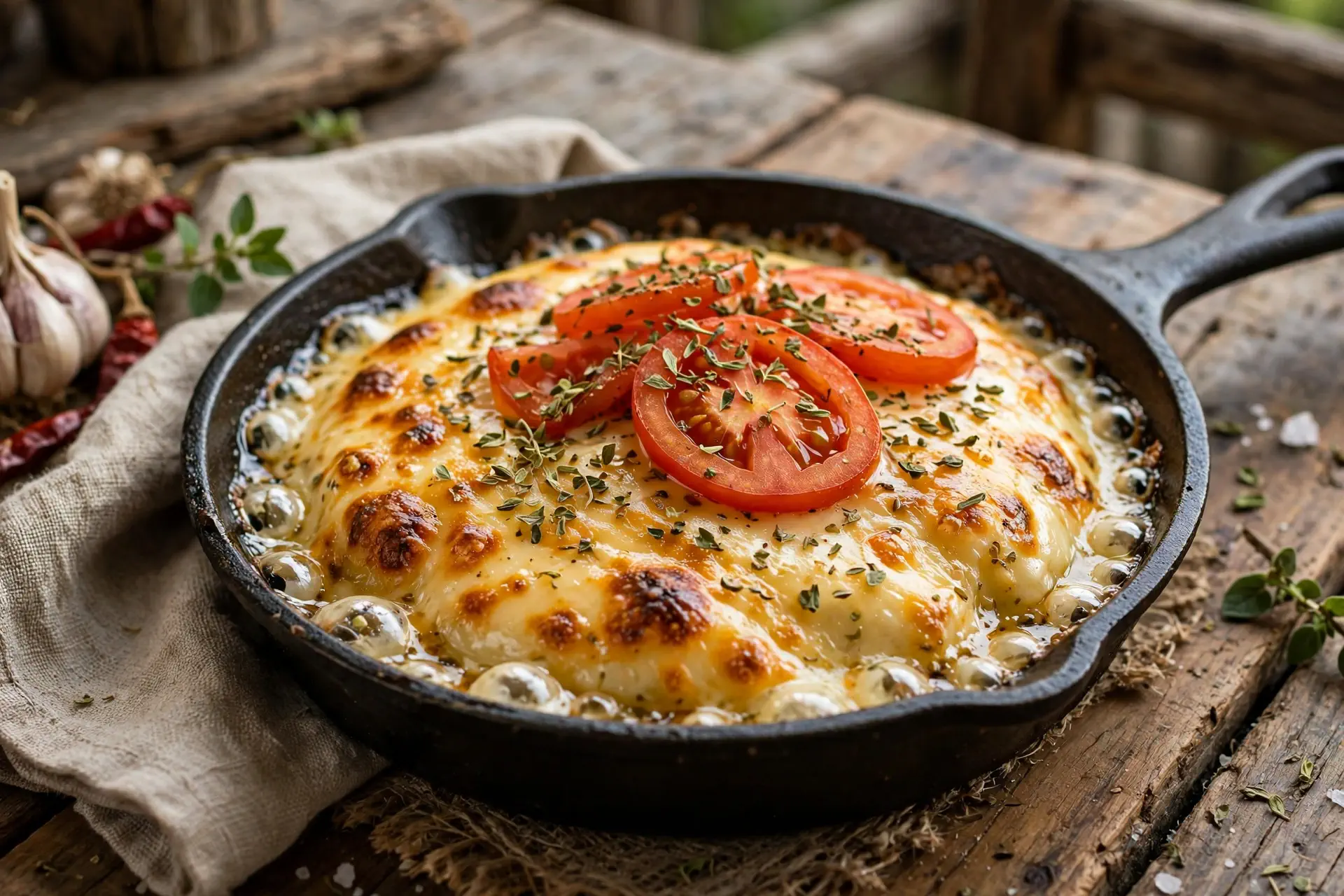
A good plate of spätzle with cheese arrives hot from the oven, with a golden top and a generous layer of caramelised onions that smell sweet and savoury. The spätzle underneath should be soft and tender, coated in melted cheese that stretches when you lift a forkful, and the cheese should be distributed through the whole dish rather than sitting in a single layer on top. The onions should be deep golden brown and sweet, cooked slowly until they soften, and there should be plenty of them, because they are not a garnish but an essential part of the flavour.
Portion size is part of the experience, because käsespätzle is a hearty dish that is meant to fill you up. A restaurant portion should be generous without being overwhelming, and it is usually served in a shallow dish or a small cast-iron pan that keeps it hot at the table. Some restaurants serve it with a small green salad on the side, which is a welcome contrast to the richness of the cheese, and a few offer a fried egg on top as an extra. The dish should taste of the cheese first, with the sweetness of the onions and the softness of the noodles following, and it should never taste of a floury white sauce or a processed cheese flavour.
Where Can I Find the Best Spätzle with Cheese Near Me?
The best spätzle with cheese near me is usually found in a German or Austrian restaurant, and the most reliable way to find one is to search maps and review sites for German restaurants in your area and then look for reviews that mention käsespätzle or spätzle by name. Look for places where reviewers describe the spätzle as homemade, the cheese as properly melted and the onions as caramelised, and pay attention to photographs of the actual dish rather than stock images. A restaurant that is proud of its käsespätzle will usually list it as a main course rather than hiding it among the side dishes, and it will often be available every day rather than only as a weekend special.
German delicatessens and food markets with a hot food counter can also be a good source, because some of the most authentic käsespätzle is cooked in small kitchens that do not look impressive from the outside. Food festivals, Christmas markets and German cultural events often serve the dish too, and these are worth visiting if you want to try it in a festive setting. Austrian restaurants are another good bet, because the dish is just as popular in Austria as it is in southern Germany. If there is no German restaurant near you, some Italian or European restaurants serve their own version, but you should check that the noodles are real spätzle and not simply pasta, because the texture is what makes the dish special.
How Do You Spot Authentic Käsespätzle?
An authentic käsespätzle gives itself away in several ways before you even taste it. The menu should list the dish by its proper name, käsespätzle, and it should describe it as homemade spätzle with cheese and fried onions rather than offering a vague cheesy pasta. The restaurant should also serve other German dishes such as schnitzel, sauerbraten or bratwurst, because a kitchen that cooks the full range of German food is far more likely to make its spätzle properly. If the menu is mostly generic European food with one token German dish, the käsespätzle may be made from dried pasta rather than fresh dough.
The texture of the noodles is the clearest test once the plate arrives, because real spätzle are soft, irregular and slightly chewy, with a shape that no machine-made pasta can copy exactly. The cheese should be melted through the dish, not sitting as a sauce on top, and the top should be golden from the oven rather than pale and steaming from a microwave. The onions should be sweet and deeply browned, cooked slowly rather than quickly fried, and there should be enough of them to taste in every bite. A good sign is a restaurant that makes its spätzle to order and tells you so on the menu, because fresh spätzle takes a little longer to prepare and a kitchen that bothers is a kitchen that cares.
How Much Does Spätzle with Cheese Cost Near Me?
The price of spätzle with cheese depends on where you live and whether you are eating in a restaurant or ordering takeaway, but as a guide, a restaurant portion in the UK typically costs about the same as a standard main course at a casual European restaurant. Prices are higher in London and other large cities, where rents and wages push menu prices up, and lower in smaller towns where a family-run German restaurant can keep costs down. Takeaway portions are often a little cheaper than eating in, although delivery apps add their own fees on top of the menu price, so the total can end up similar.
What matters more than the exact price is whether the dish is made properly, and the best way to judge value is to look at the quality of the cheese and the freshness of the noodles rather than the size of the portion alone. A plate that costs a little more but uses real mountain cheese and homemade spätzle is better value than a cheaper plate made from dried pasta and processed cheese. Some restaurants offer a lunchtime deal or a smaller portion at a lower price, which is a good way to try the dish for the first time. If you are feeding a family, ask whether the restaurant sells a larger sharing portion, because käsespätzle is a dish that works well served family-style from a single baking dish.
Can I Get Spätzle with Cheese as Takeaway or Delivery?
Yes, spätzle with cheese works well as takeaway, and many German restaurants offer it for collection or through delivery apps. The dish travels better than most baked meals because the cheese keeps the noodles moist and the flavours actually deepen as it sits for a few minutes, although the golden top will soften during the journey. If you are ordering for delivery, choose a restaurant that is close enough for the food to arrive hot, and check the reviews for comments about packaging, because a good container keeps the dish warm without making the top soggy.
Collection is often the better option if you live near the restaurant, because you can pick the food up at its best and eat it while the cheese is still stretching. Some restaurants pack the caramelised onions separately on request, which is worth asking for if you are ordering for later in the day, because the onions stay crisper that way. Delivery apps usually show the dish with a photo and a description, so look for a listing that names käsespätzle and shows a real photograph of the food. If the listing is vague or uses a stock photo, the restaurant may not take the dish seriously, and you may be better off ordering from somewhere that presents it properly.
What Should I Order With Spätzle with Cheese?
Spätzle with cheese is a rich and filling dish on its own, but a light side and a cold drink make it even better. A small green salad with a sharp vinaigrette is the classic accompaniment, because its acidity cuts through the richness of the cheese and refreshes the palate between bites. A German wheat beer is the traditional drink pairing, and many German restaurants serve it on draught, while a dry white wine from the Rhine or a sparkling water with lemon also works well. If you prefer something non-alcoholic, a traditional apple juice spritzer, known as apfelschorle, is a refreshing choice that is popular in Germany.
For food, a small portion of sauerkraut or a pickled cucumber salad can add a welcome tang, and a simple soup to start is a good idea if you are very hungry. If you are sharing, order a plate of käsespätzle alongside a schnitzel so that everyone at the table can try both dishes. For dessert, a slice of Black Forest gateau or a warm apple strudel with vanilla ice cream is a fitting end to a German meal. If you enjoy trying other international comfort foods, you may also like grilled provoleta, and our guide to the Best Provoleta Near Me explains where to find that dish and what to look for in a good version.
How Is Käsespätzle Different From Mac and Cheese?
Käsespätzle is often compared to macaroni cheese, and the two dishes do share the same basic idea of pasta baked with cheese, but they are different in ways that matter. The most important difference is the noodle itself, because spätzle are soft, irregular egg dumplings with a tender and slightly chewy texture, while macaroni are uniform tubes with a firmer bite. The cheese is different too, because käsespätzle uses grated mountain cheese that melts directly onto the noodles, while macaroni cheese is usually made with a roux-based cheese sauce that coats the pasta. The result is a dish that tastes lighter and more delicate than a heavy cheese sauce, even though it is just as filling.
The topping is another clear difference, because käsespätzle is finished with a generous layer of sweet caramelised onions, which add a flavour that macaroni cheese does not have. The dish is also baked differently, with the spätzle and cheese layered together and finished in the oven so the top goes golden, rather than being stirred into a sauce on the stove. Both dishes are comfort food at their best, and there is nothing wrong with enjoying either one, but if you want the German experience, look for the soft noodles, the mountain cheese and the caramelised onions, because those three things are what make käsespätzle its own dish.
Conclusion
Finding the best spätzle with cheese near me comes down to looking for a German or Austrian kitchen that makes its spätzle fresh, uses proper mountain cheese and takes the time to caramelise the onions slowly. The best plates are golden on top, soft underneath and full of flavour, with the cheese stretching through every forkful. Whether you eat in a restaurant, order takeaway or cook it yourself, the dish rewards attention to detail, and once you have tasted a properly made käsespätzle, you will understand why it is one of Germany’s most loved meals. Try a well-reviewed German restaurant near you, order the käsespätzle with a cold wheat beer and a small green salad, and judge it by the softness of the noodles, the quality of the cheese and the sweetness of the onions.
What Cheese Is Used in Spätzle with Cheese?
The traditional cheese for käsespätzle is a mountain cheese such as Emmental, Bergkäse or Gruyère, because these cheeses melt smoothly and have a nutty flavour that suits the soft noodles. Some restaurants in Swabia use a local Bergkäse, while others mix Emmental with a sharper cheese to add depth. Cheddar is not traditional, although some restaurants outside Germany use it, and processed cheese should be avoided because it melts into a greasy layer rather than coating the noodles evenly. If the menu names the cheese, that is a good sign that the kitchen takes the dish seriously.
Is Spätzle with Cheese Vegetarian?
Yes, spätzle with cheese is vegetarian in its classic form, because it contains no meat. The dish is made from flour, eggs, cheese, onions and butter, and it is one of the most popular vegetarian main courses in German restaurants. However, you should always ask the restaurant about their ingredients, because some kitchens cook the onions in a meat stock or add bacon to the dish, and some cheeses are made with animal rennet. If you are vegetarian, tell the restaurant when you order so they can confirm that their version is suitable for you.
Can You Make Spätzle Without a Spätzle Maker?
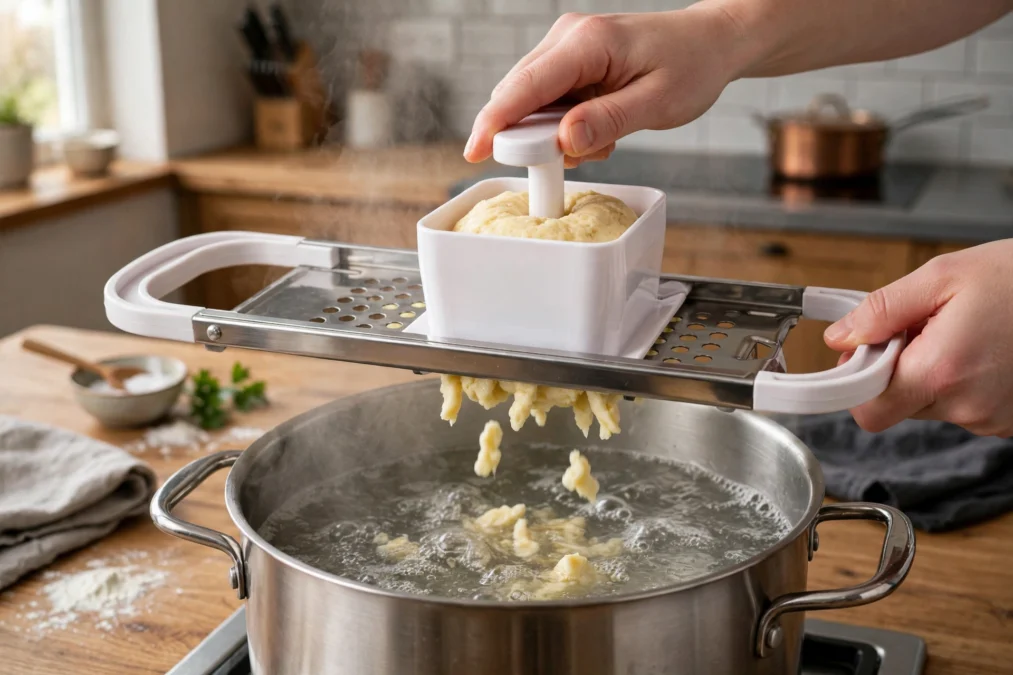
Yes, you can make spätzle without a special spätzle maker, and home cooks have been doing it for generations. The traditional method is to spread the dough on a wooden board and scrape small pieces into boiling water with a knife, which takes practice but produces excellent results. A colander with large holes or a flat grater can also work, with the dough pressed through the holes into the water. The key is to keep the dough soft and sticky, and to work quickly so the noodles cook evenly. A spätzle maker is convenient, but it is not essential, and the hand-scraped method is the one many German grandmothers still use.
How Long Does Spätzle with Cheese Take to Make?
Homemade spätzle with cheese takes about 45 minutes to an hour from start to finish, including making the dough, cooking the noodles, caramelising the onions and baking the dish. The dough itself takes only a few minutes to mix, and the noodles cook in two to three minutes once they hit the water. The onions take the longest, because they need 15 to 20 minutes over a low heat to caramelise properly, and the final baking takes another 10 to 15 minutes. In a restaurant, the dish is often prepared to order, so you may wait a little longer than you would for a simpler main course, but the result is worth the wait.
Is Spätzle with Cheese the Same as Käsespätzle?
Yes, spätzle with cheese and käsespätzle are the same dish, because käsespätzle is simply the German name for it. Käse means cheese in German, and spätzle are the soft egg noodles, so käsespätzle literally means cheese spätzle. The dish comes from Swabia in south-west Germany, and it is also popular in Austria and parts of Switzerland. When you see käsespätzle on a menu, you are looking at the authentic German version of spätzle with cheese, and it should be made with fresh noodles, mountain cheese and caramelised onions.