
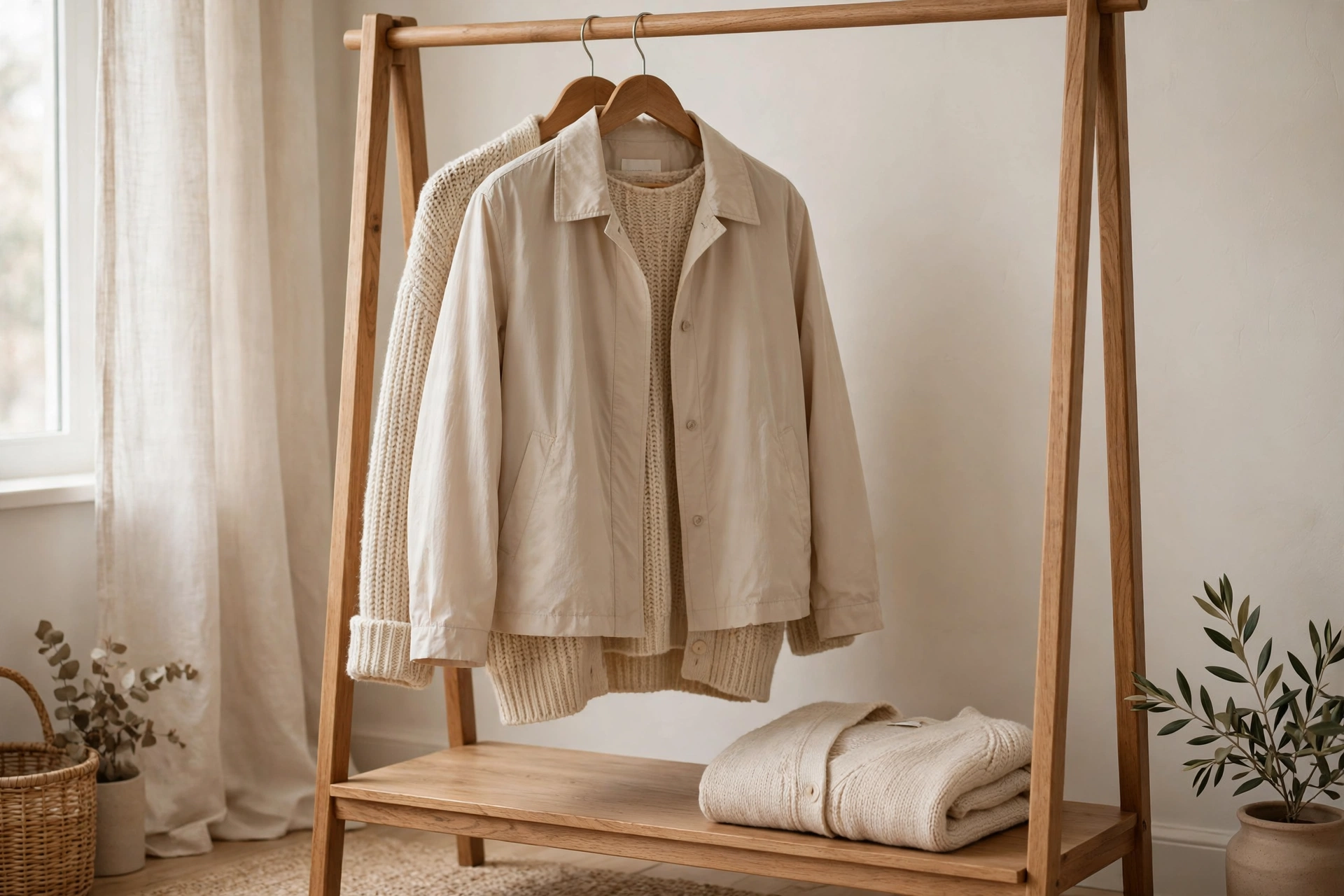
Some of the hardest days to dress for are not the coldest or the hottest. They are the days in between. The morning is cool enough to see your breath, the afternoon turns mild, and by evening the air has a bite again. Wear too much and you are carrying a coat around at lunchtime. Wear too little and you spend the commute regretting it. The answer is layering, and two garments handle it particularly well: the lightweight jacket and the cardigan. Neither is heavy. Neither takes much space. Together, they let you adjust to the day as it changes. This guide explains what each piece does, how they work together, and how to choose and care for them.
Why Layering Beats One Heavy Coat
A single thick coat is a blunt tool. It is either on or off, and when you take it off, you are left in whatever thin thing you wore underneath. Layers give you more control.
The Logic of Thin Layers
Warmth comes from trapped air. Several thin layers trap air between them, which can keep you comfortable without bulk. They also let you remove one layer at a time as conditions change, so you can fine-tune your comfort throughout the day.
What Transitional Weather Demands
Spring and autumn bring unpredictable swings, including wind, light rain, and sudden temperature drops after sunset. Clothing for these seasons needs to be light, easy to carry, and quick to put on or take off. That is exactly where a lightweight jacket and a cardigan earn their place.
The Lightweight Jacket: Your Outer Shield
The lightweight jacket sits on the outside of an outfit and deals with the elements. It is not meant to provide heavy insulation. Its job is to cut wind, resist a little moisture, and add a modest amount of warmth.
What to Look For
A good lightweight jacket feels smooth and flexible, with a fabric that blocks wind without feeling stiff. Check the zipper, the cuffs, and the collar, since these areas affect how well the jacket keeps cool air out. A packable design that folds small is useful if you expect to take it off during the day. Fit matters too. It should be roomy enough to wear over a sweater or cardigan without tightness across the shoulders, yet not so loose that wind blows through.
Sourcing for Groups
Businesses, schools, and organizations that outfit teams often look at wholesale Lightweight Jackets because the pieces suit several seasons and work for roles that involve moving between indoor and outdoor spaces. Buying together also helps keep colors and sizing consistent across the group. When planning a group order, think about how the jackets will be worn. Roles that involve a lot of movement need freedom in the arms and shoulders, while roles that involve standing outdoors may benefit from a slightly longer cut.
The Cardigan: Your Adjustable Middle Layer
If the jacket protects you from the outside, the cardigan manages warmth on the inside. Its open front makes it easy to put on or take off without disturbing the rest of an outfit, and it moves between casual and polished settings.
Knit, Weight, and Texture
Cardigans vary widely. A fine-gauge knit is slim and works well under a jacket without adding bulk. A chunkier knit is warmer and can serve as a standalone outer layer on mild days. Fabrics such as cotton blends feel breathable, while wool blends hold more heat. Consider how you will use it before choosing. Pay attention to the buttons or zipper, the ribbing at the cuffs and hem, and how the fabric recovers after stretching. A cardigan that loses its shape quickly will look tired well before its time.
Choosing in Quantity
Organizations that need staff to stay warm in cooler indoor spaces, such as offices, shops, or schools, often explore a wholesale Cardigan as an easy, professional-looking layer. It keeps a team looking coordinated while giving people a simple way to adjust to their own comfort. Neutral colors such as navy, gray, and black tend to work across the widest range of outfits. They also coordinate easily with a lightweight jacket worn on top.
Putting the Layers Together
Once you have both pieces, the question becomes how to combine them without looking bulky or mismatched.
Order Matters
The cardigan goes closer to the body, over a shirt or tee. The jacket goes over the cardigan. This order keeps the thicker knit protected from wind and rain while letting you remove the jacket indoors and still look put together in the cardigan alone.
Mind the Proportions
Keep the lower layers shorter than the outer ones. A cardigan that hangs well below the jacket hem creates an awkward line. If your cardigan is long, choose a longer jacket, or wear the cardigan open so the length reads as intentional.
Reliable Color Pairings
A few combinations work almost anywhere:
- Black cardigan with a navy jacket: low-contrast and polished.
- Gray cardigan with a black jacket: neutral and easy to wear day to day.
- Cream cardigan with an olive jacket: softer and a little more relaxed.
- Navy cardigan with a tan jacket: classic and slightly warmer in tone.
Gray cardigan with a black jacket: neutral and easy to wear day to day. Cream cardigan with an olive jacket: softer and a little more relaxed. Navy cardigan with a tan jacket: classic and slightly warmer in tone. Stick to two or three shades per outfit, and let one of the layers be the quiet one.
A Sample Day of Layering
To see how this works, picture a typical spring day.
Morning
You leave home in a tee, a cardigan, and a lightweight jacket zipped to the chin. The air is cool, and the jacket blocks the breeze.
Midday
The sun is out, so you open the jacket and later fold it into your bag. The cardigan alone is enough, and it still looks tidy if you step into a meeting or a cafe.
Evening
The temperature drops. Back on goes the jacket, and you are comfortable for the walk home. You have changed nothing except one layer, yet you have been comfortable throughout.
Care Tips for Both Pieces
Looking after these layers keeps them useful for many seasons.
Caring for Lightweight Jackets
Check the label before washing, since some shell fabrics have finishes that fade with harsh treatment. Zip the jacket before it goes in the machine, wash on a gentle cycle, and dry on low heat or hang to dry.
Caring for Cardigans
Knits generally prefer gentle handling. Wash on a delicate cycle or by hand, reshape while damp, and dry flat instead of hanging, which can stretch the shoulders. Fold cardigans rather than hanging them for storage.
Conclusion: Small Layers, Big Comfort
You do not need a large wardrobe to handle unpredictable weather. Two well-chosen layers can cover a surprising range of conditions. A lightweight jacket blocks wind and light rain on the outside. A cardigan adds adjustable warmth underneath and keeps you presentable when the jacket comes off. Choose pieces in neutral colors that mix easily, check the fit across the shoulders, and pay attention to fabric and finishing. Do that, and the next time the forecast swings from cool to mild to cold, you will be ready for all three.