
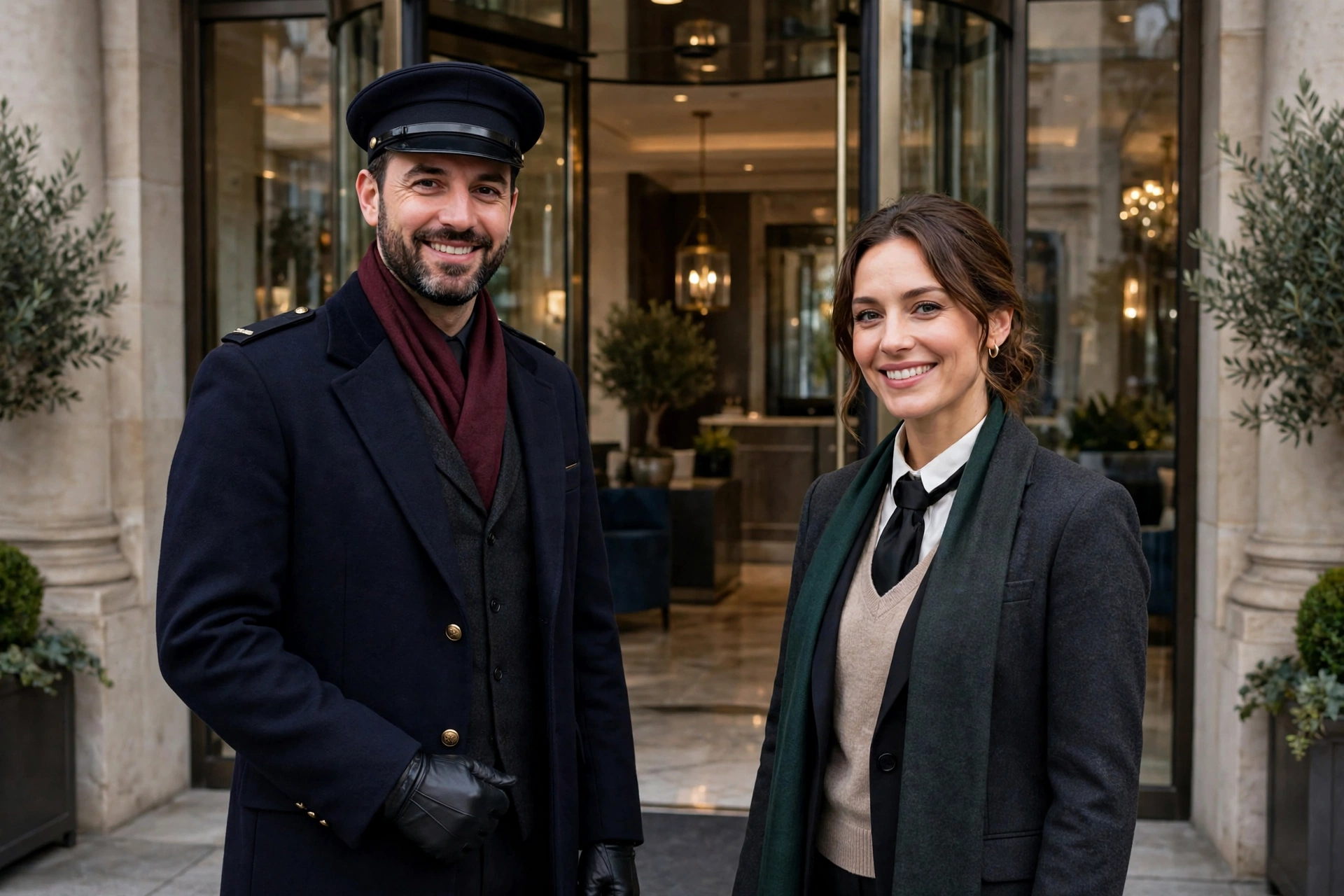
Hospitality work happens at the boundary between inside and outside. A hotel doorman greets guests on the pavement, then steps into a warm lobby. A restaurant host moves between a heated dining room and an outdoor terrace. A museum attendant stands near an entrance where cold air rushes in every time the doors open. A wedding venue coordinator walks guests across gardens, courtyards and marquees.
These front-of-house roles share a challenge: staff must look polished and welcoming at all times while coping with constant changes in temperature. A heavy coat would be too warm indoors and too informal for a lobby. A uniform shirt alone may leave staff shivering at the door.
Layering offers the solution, and two garments do much of the work: light outer jackets for doors, terraces and short outdoor tasks, and knitwear for drafty indoor spaces. This article explores how hospitality businesses use these layers, how guests and staff experience them and what makes front-of-house clothing successful.
Understanding Front-of-House Environments
The Threshold Problem
Entrances are among the most uncomfortable places in any building. Doors open constantly, letting in cold air in winter and warm air in summer. Staff stationed nearby feel these changes more than anyone.
Indoor-Outdoor Movement
Many hospitality roles involve moving outdoors briefly: greeting guests, parking cars, carrying luggage, seating diners on terraces or guiding tours.
Image and Atmosphere
Hospitality businesses sell experiences. Staff appearance contributes directly to the atmosphere guests encounter.
Long Shifts
Front-of-house staff often work long shifts, sometimes split across busy morning and evening periods.
How Guests Experience Front-of-House Clothing
First Impressions
The first staff member a guest meets often shapes their impression of the entire business. Smart, coordinated clothing signals quality and care.
Recognizing Staff
Guests need to identify who works there, particularly in busy lobbies, event spaces and restaurants.
Comfort Signals
Staff who look comfortable appear more relaxed and welcoming. Staff who are visibly cold or overheated may seem less approachable.
How Staff Experience Front-of-House Clothing
Constant Temperature Changes
Staff appreciate layers that let them adjust quickly without leaving their post.
Looking the Part
Staff want to look professional. Personal coats or mismatched cardigans can make them feel less confident.
Practicality
Pockets for notepads, pens, keys and phones are useful. Garments should be easy to put on and remove.
The Role of Light Jackets
Short Outdoor Tasks
For doormen, valets, porters and terrace hosts, a light outer layer provides protection from wind and light rain during brief periods outside.
Smart Appearance
Light jackets in tailored cuts and neutral colors look polished over uniform shirts and match the image of many hospitality businesses.
Easy to Remove
Unlike heavy coats, light jackets can be removed quickly when staff return indoors.
Supplying Teams
Hotel groups, restaurant chains and venues outfitting several departments often purchase wholesale Lightweight Jackets in their brand colors, giving all outdoor-facing staff a consistent, smart layer that works throughout spring, autumn and milder winter days.
The Role of Knitwear
Warmth Indoors
Knitwear provides warmth in drafty lobbies, reception areas and dining rooms without the formality of outerwear.
A Welcoming Look
Knitwear has a soft, approachable appearance that suits hospitality settings, from boutique hotels to cafés.
Cardigans for Flexibility
Cardigans open fully, so staff can wear them buttoned for warmth or open for a lighter feel. They layer neatly over uniform shirts and are easy to remove. Many hotel reception teams, museum attendants and restaurant hosts wear a Cardigans sweater style in cooler months, often with a small embroidered logo or name badge, combining warmth with a polished, friendly image.
Front-of-House Settings and Their Needs
Hotels
Doormen, concierge, reception and porters each experience different conditions. A combination of light outer jackets for outdoor roles and knitwear for indoor roles keeps the whole team comfortable and coordinated.
Restaurants and Cafés
Hosts and servers may move between heated dining rooms and outdoor terraces. Light layers or knitwear help them adapt, especially during cooler evenings.
Museums and Galleries
Attendants often stand for long periods in large, sometimes cool spaces. Knitwear provides comfortable warmth while maintaining a professional look.
Wedding and Event Venues
Coordinators guide guests across indoor and outdoor areas. Smart layers suit the formal atmosphere of special occasions.
Visitor Attractions
Guides and ticket staff at gardens, historic houses and attractions often spend time outdoors. Light jackets and knitwear help them stay comfortable in changing weather.
Seasonal Patterns in Hospitality
Spring
As terraces reopen and outdoor dining begins, staff often face cool evenings. Light outer layers become useful for hosts and servers working outside, while knitwear keeps indoor staff comfortable near opening doors.
Summer
Summer brings warm days but also air-conditioned interiors that can feel chilly. Front-of-house staff may need a light knit indoors and nothing extra outdoors. Breathable fabrics matter most.
Autumn
Autumn evenings cool quickly. Outdoor seating may continue with heaters, and staff moving between inside and outside benefit from easy-to-remove layers.
Winter
Winter is the most demanding season at entrances. Doormen and valets may need warmer outerwear for long spells outside, while reception and lobby teams rely heavily on knitwear.
Training and Presentation Standards
Clothing standards work best when they are clearly communicated. Many hospitality businesses include guidance on layers in their grooming and presentation standards, covering which garments are approved, how they should be worn, whether cardigans should be buttoned at the desk and when outer layers may be worn indoors. Showing staff photos of the expected look removes ambiguity and helps new team members fit in quickly.
Caring for Front-of-House Layers
Knitwear lasts longer when washed gently and dried flat, while light jackets usually tolerate machine washing on a cool cycle. Some hotels launder uniform items centrally, which keeps them consistent but requires fabrics suited to commercial washing. Others ask staff to care for their own layers and provide simple care instructions. Either way, regular checks for pilling, fading and loose buttons help keep the team looking polished.
Important Elements to Consider
Coordinated Colors
Light jackets and knitwear should complement uniform shirts and each other.
Discreet Branding
Small embroidered logos or name badges suit hospitality settings better than large graphics.
Fit and Sizing
Offer men's and women's fits and a full size range so all staff look their best.
Fabric Comfort
Soft, breathable fabrics are important for long shifts.
Care Requirements
Garments should be easy to clean and maintain, especially if staff launder them at home.
Seasonal Planning
Order layers before temperatures change so staff are ready.
Practical Ways to Introduce Front-of-House Layers
Map Staff Positions
Identify which roles spend time outdoors or near entrances and which remain indoors.
Trial Garments
Ask staff to try samples during real shifts and share feedback.
Set Clear Guidelines
Explain which layers are approved and when they should be worn.
Provide Spares
Keep spare layers for new staff, seasonal workers and replacements.
Review Seasonally
Adjust choices based on staff feedback and guest impressions.
Supporting Staff Wellbeing
Comfortable clothing is part of looking after front-of-house teams. Staff who stand at entrances or work outdoors for long periods benefit from planned rotations, warm break areas and access to hot drinks in winter. Listening to their feedback about drafts, cold spots and uncomfortable garments helps managers make practical improvements. When staff feel comfortable and cared for, it shows in the warmth of their welcome to guests.
Common Mistakes
Allowing Personal Coats
Mismatched personal outerwear undermines a polished image.
Choosing Overly Heavy Garments
Heavy coats are too warm indoors and slow to remove.
Ignoring Entrance Drafts
Staff stationed near doors often need more warmth than colleagues elsewhere.
Inconsistent Knitwear
Different colors or styles across staff look untidy.
Overlooking Fit
Poorly fitting layers look unprofessional and feel uncomfortable.
Coordinating With the Wider Uniform
Front-of-house layers should feel like part of the whole uniform rather than an afterthought. Matching them to shirt colors, name badges, aprons and trousers creates a cohesive look. When a hotel or restaurant refreshes its uniform, reviewing layers at the same time avoids mismatched colors and ensures the full outfit works in every season.
Why Front-of-House Layers Matter
Front-of-house staff shape guests' first and lasting impressions. Comfortable, coordinated layers help them stay focused on welcoming guests rather than battling drafts and temperature changes. For hospitality businesses, thoughtful layering supports a polished image, staff satisfaction and a consistent guest experience.
Conclusion
Hospitality teams work at the meeting point of indoors and outdoors, warmth and cold, comfort and presentation. Light jackets protect staff during short outdoor tasks while maintaining a smart look. Knitwear provides warmth and approachability in drafty lobbies, dining rooms and galleries.
By mapping staff positions, coordinating colors, choosing comfortable fabrics, setting clear guidelines and planning ahead of seasonal changes, hospitality businesses can keep their front-of-house teams comfortable, confident and ready to welcome every guest.
FAQs:
Q1:What should hotel doormen wear in cool weather?
A smart light outer jacket over the uniform provides protection during outdoor greeting while remaining easy to remove indoors.
Q2:Why are cardigans popular in hospitality?
Cardigans provide warmth with a soft, welcoming appearance and can be worn buttoned or open as conditions change.
Q3:How can venues keep front-of-house layers consistent?
Choose approved colors and styles, use discreet branding and provide layers to all relevant staff.
Q4:Should staff stationed near entrances have extra layers?
Yes. Entrances are often the coldest spots, so staff there may need additional warmth.