
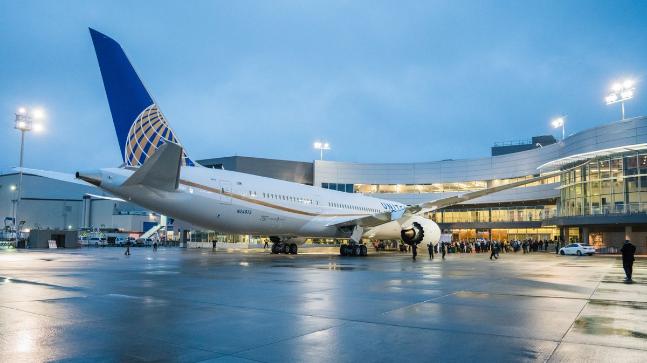

An unexpected technical distraction disrupted international travel when a united airlines flight ua82 emergency forced a Boeing 787-9 Dreamliner to execute an immediate turnback over the Atlantic corridor. Departing from Newark Liberty International Airport with a planned nonstop destination of Indira Gandhi International Airport in New Delhi, the wide-body aircraft was approximately two hours into its transoceanic voyage on July 7, 2025, when automated flight deck diagnostics flagged a vital mechanical fault. Rather than proceeding across vast, remote oceanic airspace toward Europe and Asia without full system redundancies intact, the highly experienced flight crew initiated standard precautionary safety protocols and directed the aircraft back toward New Jersey.
The united airlines flight ua82 emergency resolution highlights modern commercial aviation’s uncompromising bias toward conservative risk management and preventative action. Carrying over one hundred passengers along with a dedicated international flight crew, the aircraft completed a smooth, controlled descent and landed without any injuries or secondary mechanical complications. Ground emergency operations immediately deployed along the runways at Newark Liberty International Airport as a standard precautionary measure, ensuring every traveler received comprehensive care while airline technicians evaluated the hardware. This event stands as an exemplary case study of precautionary safety procedures operating precisely as designed within modern air transit networks.
The Flight Timeline: From EWR Departure to Safe Turnback
The journey began as a routine long-haul service when the state-of-the-art Boeing 787-9 Dreamliner departed Newark Liberty International Airport bound for New Delhi. As the aircraft reached its assigned cruising altitude of 33,000 feet near the Gulf of Maine, automated cockpit monitoring equipment detected an unexpected environmental anomaly. Recognizing the serious operational implications of continuing across extended oceanic pathways without primary cooling redundancies active, the pilots declared a united airlines flight ua82 emergency by broadcasting the universal aviation transponder code Squawk 7700 directly to regional air traffic control centers.
Upon declaring the united airlines flight ua82 emergency, air traffic controllers granted the flight crew immediate priority airspace clearances to perform a controlled descent and turnaround. The aviators calculated fuel burn rates and safely maneuvered the wide-body aircraft along the eastern coastline back toward New Jersey while maintaining continuous communication with ground controllers. Local emergency response teams stood on standby along the landing strips as a standard safety precaution, but the touchdown at Newark was completely uneventful. The Dreamliner taxied to the gate under its own power, bringing a swift, highly professional end to the mid-air event.
Technical Analysis: The Avionics Cooling System Fault
At the core of the united airlines flight ua82 emergency was an automated warning regarding the primary avionics and electronics cooling system loop. Modern commercial airliners like the Boeing 787 Dreamliner rely heavily on sophisticated computer architectures to manage flight instruments, satellite navigation, communication equipment, and environmental cabin systems. Because these dense electronic arrays generate substantial thermal energy during continuous long-haul operations, a dedicated cooling system runs constantly to maintain safe internal operating temperatures and prevent critical hardware from experiencing thermal degradation or unprompted system shutdowns.
When cockpit sensors signaled a thermal control fault in the main cooling system, the flight crew immediately followed strict procedural flight checklists designed for equipment longevity. While secondary backup cooling systems remained operational, proceeding on an international flight across remote bodies of water without primary cooling creates unnecessary operational risk. Diverting the aircraft back to Newark prevented potential electronic failures later in the long flight journey. By prioritizing preventative safety over schedule adherence, the pilots ensured that all vital navigation and communication instruments remained fully functional throughout the return descent.
Passenger Support, Rebooking, and Airline Protocols
Following the safe touchdown back in New Jersey, United Airlines ground customer service teams immediately implemented comprehensive passenger support protocols at Newark Liberty International Airport. Travelers stepped off the Dreamliner directly into the gate area, where dedicated airline representatives provided immediate updates, verified travel itineraries, and offered clear status reports regarding replacement aircraft. Because the long-haul journey to India required extensive schedule realignments, the airline arranged complimentary hotel accommodations, ground transportation passes, and meal vouchers for all impacted passengers requiring overnight stays before their rescheduled departure time.
Logistical personnel worked behind the scenes to minimize downstream travel disruptions for everyone on board the impacted flight. Replacement aircraft were brought into service and fresh flight crews were reassigned to shuttle passengers safely onward to New Delhi with minimal overall delay. United Airlines emphasized that while unexpected technical diversions create frustrating schedule friction, preserving passenger safety remains the carrier’s absolute priority. The seamless ground response demonstrated how established corporate safety protocols and duty-of-care guidelines effectively cushion the logistical impact when unexpected mechanical diversions alter travel plans.
United Airlines Emergency Procedures and Safety Context
The transparent management of the united airlines flight ua82 emergency offers valuable insight into how modern commercial air carriers handle unexpected flight disruptions. The general public frequently associates the term “emergency” with immediate physical peril, but in professional aviation, declaring an emergency is primarily a proactive operational tool. Transmitting Squawk 7700 grants pilots immediate priority routing from air traffic control, cleared altitude layers, and dedicated ground emergency services, enabling them to address mechanical issues with maximum safety margins and complete operational authority.
Modern commercial aviation maintains an extraordinary safety record precisely because flight crews never gamble with minor mechanical anomalies over remote geography. When automated system warnings occur hours away from suitable diversion airports, returning to the origin airport is consistently the safest choice available. The swift, controlled resolution of this incident reinforces public confidence in international air travel, proving that early diagnostic sensors, rigorous pilot training, and conservative maintenance standards work together seamlessly to safeguard passengers around the world every day.
Conclusion
The successful resolution of the united airlines flight ua82 emergency highlights the incredible resilience of modern aviation safety systems and flight crew training protocols. When an electronic cooling alert interrupted a routine transoceanic journey from Newark to New Delhi, the flight crew chose proactive caution over convenience, executing an orderly turnback that placed human life and system integrity above all else. Supported by well-organized airport ground teams, passengers were safely cared for and efficiently rebooked on alternative flights to their final destination. Ultimately, this event serves as a reassuring reminder that commercial aviation protocols are deliberately engineered to resolve unexpected complications smoothly, safely, and professionally.
Frequently Asked Questions (FAQs)
What caused the united airlines flight ua82 emergency?
The united airlines flight ua82 emergency was caused by an automated cockpit alert indicating a mechanical fault in the aircraft’s primary avionics and electronics cooling system while cruising at 33,000 feet over the Gulf of Maine.
Did United Airlines Flight UA82 land safely after declaring an emergency?
Yes. The flight crew executed a controlled descent, turned the Boeing 787-9 Dreamliner around, and landed smoothly at Newark Liberty International Airport without any reported injuries to passengers or crew.
What does declaring a “Squawk 7700” mean for an airline flight?
Squawk 7700 is an international transponder code that signals an emergency situation to Air Traffic Control. It grants the flight crew immediate priority routing, dedicated airspace clearance, and standby ground support.
How were passengers supported after returning to Newark airport?
Ground operations provided all impacted passengers with complimentary hotel rooms, airport transportation, meal vouchers, and priority rebooking on alternative flights departing for New Delhi.
Is an electronic cooling system fault dangerous during a long flight?
An electronics cooling fault is not immediately catastrophic, but it can cause critical flight computers to overheat over long periods. Returning to Newark ensured all navigation and communication instruments remained fully operational.
You may also read: International Manhunt: Capture in Jamaica