
Key Takeaways
- Measure the entire spa area, including steps, cover clearance, pathways, and equipment access.
- Choose a location that is convenient enough to encourage regular use in every season.
- Confirm the foundation, delivery route, drainage plan, and electrical needs before ordering.
- Budget for site work, installation, safety features, and maintenance, not only the spa itself.
- Choose seating, controls, lighting, and accessories based on how the household will actually use the space.
A backyard spa can make a Salt Lake City home feel more usable through cool evenings, snowy winters, and long stretches of dry summer weather. Whether the goal is quiet relaxation, post-workout recovery, or a gathering place for friends, planning the space before selecting equipment helps prevent expensive changes later. Homeowners considering a custom spa in Salt Lake City should begin with the yard, household routine, and site conditions rather than focusing only on jets, colors, or seating capacity. The Wasatch Front presents distinctive considerations, including sloped lots, winter precipitation, intense sun, fluctuating temperatures, and proximity to neighboring properties. A practical design accounts for easy access from the home, reliable drainage, privacy, safe electrical work, and enough space to service the spa for years to come.
Start With How the Space Will Be Used
Think through a typical week before designing the backyard. A couple looking for a quiet place to unwind may prioritize privacy, comfortable lounge seating, and a short walk from the back door. A family may need more seats, durable steps, clear sightlines, and room for towels and shoes. Frequent entertainers may want a larger patio, nearby seating, and lighting that supports conversation without casting direct light into the water. Seasonal habits matter in Salt Lake City. A spa located across an exposed lawn may seem workable in July but less appealing after a winter storm. Positioning it near a door, a covered patio, or a protected path can make the space easier to enjoy year-round.
Measure the Yard Before Choosing a Model
The listed dimensions of a spa are only the starting point. Measure the proposed location from multiple directions, then mark fences, walls, trees, utility equipment, air-conditioning units, property lines, and grade changes. Include the room needed for steps, handrails, a cover lifter, towels, and people moving safely around the water. Service access deserves the same attention as the visible side of the spa. Equipment panels must remain reachable for inspection and repairs. Also look upward for branches, roof overhangs, privacy structures, and clearance needed during delivery or cover operation.
Choose a Location That Supports Regular Use
A spa should feel like a natural extension of the home. Nearby access is valuable when temperatures drop, but the location should also balance privacy, sunlight, shade, views, wind, and neighborhood noise. Avoid low areas where rainwater or melting snow can collect, and do not place the spa where roof runoff can pour into or around it. Before construction begins, review setback, zoning, structural, and trade-permit questions with local officials. Salt Lake City homeowners can use the city’s building permit information to identify the appropriate permitting path and contacts for project-specific questions.
Compare Spa Installation Styles
The right design depends on the property, budget, desired appearance, and construction timeline. This comparison highlights the main planning differences.
| Design Type | Good Fit For | Key Planning Needs |
|---|---|---|
| Portable spa | Flexible placement and faster installation | Solid base, delivery route, electrical service, visual screening |
| In-ground spa | Permanent pool or patio projects | Excavation, drainage, plumbing, permits, construction coordination |
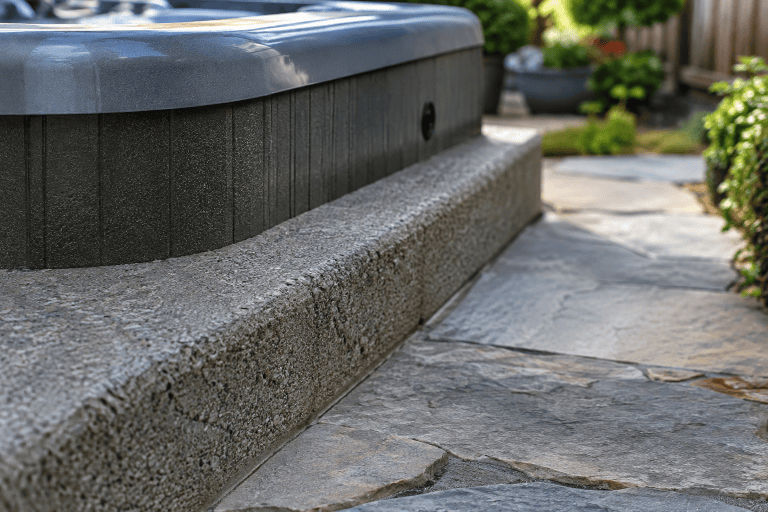
| Raised or recessed spa | Built-in appearance with easier entry | Safe steps, access panels, retaining support, water management |
Prepare a Stable Foundation and Delivery Route
A filled spa is heavy, so the supporting surface must be level, durable, and appropriate for the specific model. Review the manufacturer’s requirements before building a concrete pad, preparing compacted gravel, selecting an engineered pad, or placing a spa on a deck. An existing deck should not be assumed suitable without a qualified structural review. Drainage should direct water away from the spa base and nearby structures. Plan delivery early as well. Measure gates, side yards, walkways, corners, slopes, low branches, utility lines, and roof edges. If the route is tight, ask the installer whether special lifting equipment may be required before installation day arrives.
Build a Complete Project Budget
A realistic budget includes more than the spa itself. List the expected cost of the unit, delivery, placement, foundation work, electrical service, steps, handrails, cover equipment, drainage improvements, paving or decking, privacy screens, lighting, landscaping, permits, inspections, and water-care supplies. It is also wise to reserve funds for practical details that improve everyday use, such as a slip-resistant path, towel hooks, weather-resistant storage, and a protected place to set a cover. Comparing complete project estimates makes it easier to see where a low initial price may exclude important work.
Plan Utilities, Safety, and Local Requirements
Electrical work near water should be handled by qualified professionals and planned before hardscape is finished. The spa may require a dedicated circuit and properly located safety equipment, depending on the installation and applicable requirements. Confirm what permits, inspections, and homeowner association approvals apply before work begins. Safety features should be part of the layout from the start. Use stable, slip-resistant walking surfaces, sturdy steps, secure covers, and lighting that makes evening entry and exit clear—store water-care chemicals in a dry, locked, well-ventilated location away from children and pets.
Choose Features That Fit Real Habits
Prioritize features that will be used often. Consider whether the household needs side-by-side seating, a deeper therapy seat, room for children, or an arrangement that works for guests. Select jet placement based on comfort preferences, and look for straightforward controls that everyone can operate confidently. In Salt Lake City, insulation and a well-fitted cover deserve as much attention as lighting or decorative finishes. Add practical storage for towels, test strips, cleaning tools, and outdoor accessories. Privacy screens and planting can create a more comfortable setting without blocking needed airflow or service access.
Create a Simple Maintenance Routine
Maintenance is easier when it becomes part of a regular schedule. After use, replace the cover and remove visible debris. Weekly, test the water, inspect the cover, and wipe exposed surfaces. Monthly, check filters, fittings, steps, and drainage around the spa. Seasonally, inspect weather protection, insulation, equipment access, and whether the water should be replaced according to the manufacturer’s guidance.
Common Planning Mistakes to Avoid
- Buying a spa before measuring the complete delivery route.
- Forgetting clearance for service panels and a cover lifter.
- Assuming an existing deck can support a filled spa.
- Waiting until the end of the project to address drainage or electrical work.
- Choosing a remote location that becomes inconvenient in winter weather.
- Prioritizing extra features over insulation, cover quality, and safe access.
Final Backyard Spa Planning Checklist
- Define the main reason for adding a spa.
- Measure the site and the entire delivery path.
- Select a location with convenient access, privacy, and reliable drainage.
- Verify that the base or deck can support the installation.
- Confirm electrical, permitting, and property requirements.
- Budget for site work, accessories, maintenance, and safety features.
- Choose features that match the household’s everyday routine.
- Plan lighting, storage, cover handling, and weather protection.
A well-planned backyard spa should be comfortable, safe, and simple to use. By addressing access, foundation strength, drainage, utilities, budget, and maintenance before construction begins, Salt Lake City homeowners can create an outdoor retreat that works beautifully in every season.