

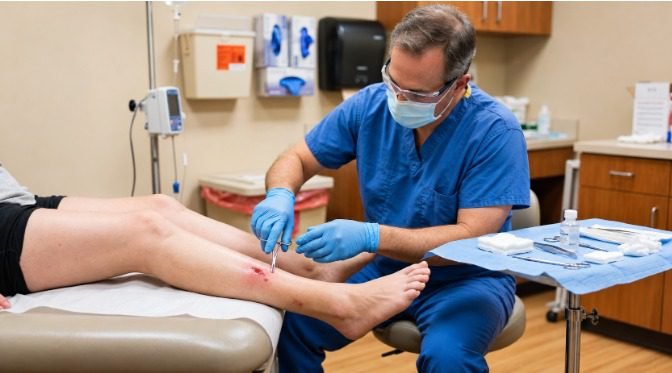
Wound debridement involves clearing away unhealthy or nonviable tissue to support healing and improve the condition of the wound. While the procedure helps support wound healing, selecting the correct CPT code is essential for accurate billing and reimbursement.
CPT 11042 and CPT 11043 are two commonly used surgical wound debridement codes. Although both involve removing damaged tissue, they differ based on the depth of tissue actually removed during treatment.
Incorrect coding can result in claim denials, payment delays, and compliance concerns. Healthcare providers and billing professionals must understand the differences between these codes, their documentation requirements, and the rules for reporting additional wound areas.
What Is CPT Code 11042?
CPT 11042 is used for surgical debridement of subcutaneous tissue, including the epidermis and dermis when performed, for the first 20 square centimeters or less.
Subcutaneous tissue lies just below the skin and is made up mainly of fat and connective tissue. When this tissue becomes damaged or nonviable, surgical debridement may be necessary.
When should CPT 11042 be used?
CPT 11042 may be appropriate when:
- The provider surgically removes damaged subcutaneous tissue.
- The documented procedure reaches the subcutaneous tissue layer.
- The debrided wound area is 20 square centimeters or less.
- The medical record supports the clinical need for debridement.
Example: A patient has a diabetic foot ulcer with nonviable subcutaneous tissue. The physician removes the damaged tissue using a curette. If the debrided area measures 12 square centimeters, CPT 11042 may be appropriate.
What Is CPT Code 11043?
CPT 11043 describes surgical debridement of muscle and/or fascia, including the epidermis, dermis, and subcutaneous tissue when performed, for the first 20 square centimeters or less.
The main difference is the tissue depth. CPT 11043 applies when the provider actually removes muscle or fascia during debridement.
When should CPT 11043 be used?
CPT 11043 may be reported when:
- The procedure involves surgical removal of muscle or fascia.
- The provider documents the deepest tissue removed.
- The debrided area is 20 square centimeters or less.
- The procedure is medically necessary and supported by clinical findings.
Example: A patient develops a deep pressure injury involving damaged fascial tissue. During treatment, the physician removes the nonviable fascia. If the treated area measures 15 square centimeters, CPT 11043 may be appropriate.
The CPT code 11043 description requires actual debridement of muscle or fascia. A wound extending to muscle does not automatically qualify for this code.
CPT 11042 vs. 11043: Key Differences
The primary difference between these codes is the deepest tissue layer removed during the procedure.
| Coding factor | CPT 11042 | CPT 11043 |
| Procedure | Surgical debridement | Surgical debridement |
| Tissue removed | Subcutaneous tissue | Muscle and/or fascia |
| Initial wound area | Up to 20 sq. cm | Up to 20 sq. cm |
| Additional area code | CPT 11045 | CPT 11046 |
| Coding requirement | Subcutaneous tissue removed | Muscle or fascia removed |
| Documentation | Tissue depth and area | Muscle/fascia removal and area |
Both codes are selected according to the tissue actually debrided, not simply the overall depth of the wound.
How to Choose the Correct Wound Debridement CPT Code
Selecting the appropriate wound debridement CPT code requires reviewing the procedure report and confirming the treatment details.
1. Identify the deepest tissue removed
The first step is determining which tissue layer was actually removed.
- Skin only: Select the appropriate debridement CPT code based on the type of procedure performed and the skin tissue removed.
- Subcutaneous tissue: CPT 11042.
- Muscle or fascia: CPT 11043.
- Bone: CPT 11044.
For example, if a wound extends into muscle but only subcutaneous tissue is removed, CPT 11042 is generally appropriate.
2. Measure the debrided wound area
Both CPT 11042 and 11043 cover the first 20 square centimeters or less.
Additional codes apply when the treated surface area exceeds this amount.
- CPT 11045: An add-on code used when subcutaneous tissue debridement exceeds the initial 20 square centimeters, with one additional unit reported for every extra 20 square centimeters or remaining portion.
- CPT 11046: Each additional 20 square centimeters, or part thereof, of muscle or fascia debridement.
For example, if 30 square centimeters of muscle tissue are debrided, CPT 11043 and one unit of CPT 11046 may be appropriate.
3. Review multiple wound procedures
When multiple wounds are treated during the same encounter, coding depends on the tissue depth and total debrided area.
- Combine the surface areas of wounds debrided at the same depth.
- Calculate wounds debrided at different depths separately.
- Do not separately code multiple tissue layers removed from the same wound.
- Confirm that the documentation supports each reported procedure.
Documentation Requirements for CPT 11042 and 11043
Complete documentation is necessary to support medical necessity and correct code selection.
Essential documentation checklist
The procedure report should include:
- Wound location: Identify the anatomical site.
- Wound measurements: Record the relevant dimensions and actual surface area debrided.
- Tissue depth: Specify the deepest tissue removed.
- Wound condition: Describe necrotic tissue or other findings requiring treatment.
- Procedure details: Identify the debridement method and instruments used.
- Medical necessity: Explain why the procedure was required.
- Treatment outcome: Document relevant findings and patient response.
For 11043 CPT billing, the medical record must clearly establish that muscle or fascia was removed.
General statements such as “deep wound cleaned” or “damaged tissue removed” may not provide enough information to support the code.
Common CPT 11042 and 11043 Billing Mistakes
Several coding mistakes can affect wound debridement reimbursement.
1. Selecting codes based on wound depth
A wound reaching muscle does not automatically support CPT 11043.
The code must reflect the deepest tissue actually removed during the procedure.
2. Reporting incorrect wound measurements
Using the total wound area instead of the actual debrided area can lead to incorrect billing units.
Providers should document the treated surface area clearly.
3. Confusing selective and surgical debridement
Selective debridement codes, including CPT 97597 and 97598, have different reporting requirements.
The provider’s documentation must support the specific procedure and tissue depth associated with the selected code.
4. Missing medical necessity
Claims may be denied when the documentation does not explain why debridement was required.
The medical record should connect the patient’s wound condition with the treatment performed.
5. Incorrect use of add-on codes
CPT 11045 and 11046 are used for additional debrided surface areas at their respective tissue depths.
Incorrect unit calculations can result in claim rejections or overbilling.
How Woundcare Billing Services Help Improve Claim Accuracy
Wound debridement billing involves tissue-depth verification, surface-area calculations, and payer-specific coding requirements.
Experienced Woundcare billing services can help healthcare practices identify documentation gaps and review claims before submission.
Common billing support activities include:
- Reviewing CPT code selection against procedure notes.
- Verifying wound measurements and additional billing units.
- Checking diagnosis codes and medical necessity documentation.
- Reviewing payer coverage policies and coding edits.
- Identifying recurring denial patterns.
Regular billing audits can also help practices detect unsupported coding and reduce avoidable reimbursement delays.
FAQs
1. What is the difference between CPT 11042 and CPT 11043?
CPT 11042 applies to surgical debridement of subcutaneous tissue. CPT 11043 applies when muscle or fascia is debrided. The correct code depends on the deepest tissue actually removed.
2. What is the CPT code 11043 description?
CPT 11043 describes surgical debridement of muscle and/or fascia, including superficial tissue when performed, for the first 20 square centimeters or less.
3. Can CPT 11042 and 11043 be billed together?
Yes, when separate wounds are debrided at different tissue depths and documentation supports both procedures, subject to applicable coding edits. They should not be billed together for different layers of the same wound.
4. What is the add-on code for CPT 11043?
CPT 11046 is used for each additional 20 square centimeters, or part thereof, of muscle or fascia debridement beyond the initial area.
5. Does CPT 11043 require prior authorization?
Prior authorization requirements depend on the insurance payer, patient plan, and treatment setting. Providers should verify applicable coverage requirements before treatment.
Conclusion
Understanding the difference between CPT 11042 and CPT 11043 is essential for accurate wound debridement coding and billing.
CPT 11042 applies to subcutaneous tissue debridement, while CPT 11043 applies to muscle or fascia debridement. The correct code must reflect the deepest tissue actually removed, the documented treatment area, and the medical necessity of the procedure.
Accurate measurements, complete procedure notes, and regular coding reviews can help wound care providers reduce billing errors, prevent unnecessary denials, and maintain compliance with payer requirements.