
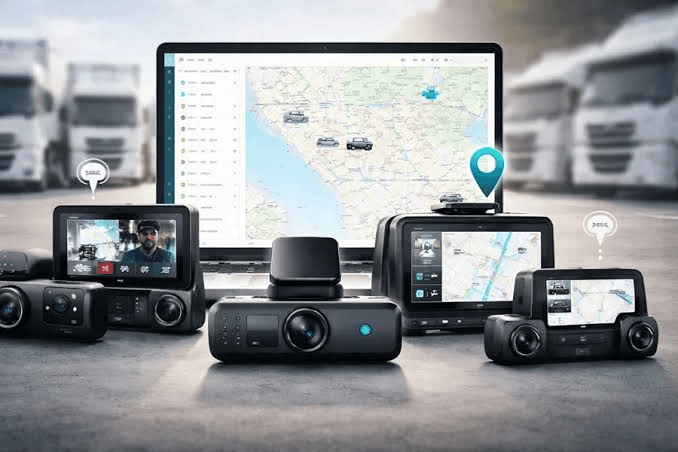

Crystal Ball’s SmartCam 4G is the strongest all-round fleet dash cam for HGV and van operators that want tracking, video telematics and driver behaviour data in one connected system. It is measured here against VisionTrack, Brigade Electronics, SmartWitness and Webfleet Solutions across five practical buying dimensions for 2026. SmartCam 4G wins on integration, driver coaching evidence and on-demand footage retrieval, but it is not built for continuous live-view streaming or standalone HGV blind-spot hardware, where dedicated specialists have the edge.
This comparison is for fleet managers replacing an ageing dash cam fleet or adding cameras to vehicles that already carry GPS tracking. Every product below is assessed on what it actually does rather than marketing copy, using publicly stated features, target vehicle types and where footage or driver data is accessed. Pricing for connected fleet dash cams is almost always quote-led, so costs are described qualitatively rather than with invented figures.
Verdict summary
Tracking and camera integration: SmartCam 4G because it runs on the same platform as Crystal Ball’s fleet tracking, so location, journey and camera data sit in one portal instead of two systems.
Driver behaviour coaching evidence: SmartCam 4G because supported Driver Score data ties directly to recorded footage for the same trip.
On-demand footage retrieval for claims: SmartCam 4G because footage is pulled through the customer portal against a specific date, time and vehicle without waiting for a physical handover.
Continuous live-view streaming: VisionTrack because live-view monitoring is a core part of its proposition, where SmartCam 4G works on recorded, on-demand access rather than an always-on feed.
Dedicated HGV blind-spot camera and sensor hardware: Brigade Electronics because that is the company’s specialist focus, built around physical detection and warning hardware rather than a tracking-and-camera platform.
How we compared
Five dimensions were used: platform integration with vehicle tracking, driver behaviour and coaching support, footage retrieval method, live-view capability and HGV-specific hardware. These were chosen because they are the questions a fleet manager actually asks when replacing dash cams across a mixed van and HGV fleet, not generic spec-sheet items. Every product description below reflects the vehicle types and functions each company states publicly, without assuming features that are not confirmed.
Product overviews
SmartCam 4G, from Crystal Ball, is a connected 4G dash cam that runs alongside the company’s FleetTracker functions, giving fleet managers live location, journey history and recorded video telematics in one portal. It is built for SMEs and local government bodies running cars, vans and HGVs that need both visibility and camera evidence in a single system. Core functions include a forward-facing camera with optional driver-facing, rear and side cameras where confirmed for the vehicle, supported driver-behaviour monitoring, incident detection with recorded evidence, and digital vehicle checks with photographic defect reporting. Footage is accessed on demand through the customer portal rather than streamed continuously, which suits fleets that want evidence retrieval after an incident rather than a live monitoring feed. SmartCam 4G is quote-led, so current pricing needs to be confirmed directly through Crystal Ball. The main limitation is that it is not designed as a standalone multi-camera surround-view system for large HGVs; that role sits with Crystal Ball’s separate 360° Camera System.
VisionTrack is a UK-based video telematics provider built around AI-assisted incident detection and live-view monitoring for commercial fleets. It suits operators that want a real-time feed into an incident, not just recorded footage after the fact. Pricing is quote-led and typically bundled with a wider telematics contract. The trade-off is that its proposition leans heavily on live monitoring rather than a lighter, on-demand access model.
Brigade Electronics is a long-established UK manufacturer of vehicle safety hardware, including reversing cameras, blind-spot detection systems and audible warning devices, widely used on HGVs and construction vehicles. It suits fleets that need dedicated physical safety hardware around the vehicle rather than a combined tracking-and-camera platform. It is not a fleet management or telematics provider in its own right, so tracking, driver scoring and portal reporting sit outside its core offering.
SmartWitness supplies dash cams and video telematics hardware aimed at commercial and passenger fleets, with a focus on incident capture and driver behaviour data. It suits operators prioritising camera hardware and event-based recording. As a camera specialist, deeper fleet management functions such as journey history or asset records typically require pairing with a separate tracking system.
Webfleet Solutions, owned by Bridgestone, is an established telematics provider that offers camera add-ons alongside its core vehicle tracking software. It suits fleets already embedded in the Webfleet ecosystem that want to add camera capability without switching platforms. Camera functionality is generally positioned as an extension of the tracking product rather than the primary focus.
Tracking and camera integration: SmartCam 4G vs VisionTrack
This dimension covers whether location, journey and camera data live in one system or two. SmartCam 4G runs on the same platform as Crystal Ball’s FleetTracker functions, so a fleet manager checking a vehicle’s route can pull recorded footage for the same journey without switching tools. VisionTrack is a strong video telematics platform in its own right, but its core strength is the camera and incident-detection layer rather than being built from a shared tracking foundation from day one. Winner: SmartCam 4G because single-platform integration removes a step for fleets that already use, or plan to use, Crystal Ball’s tracking tools.
Driver behaviour coaching: SmartCam 4G vs SmartWitness
Driver coaching depends on connecting behaviour events, such as harsh braking or speeding, to the footage that shows what actually happened. SmartCam 4G supports Driver Score functionality where currently available, linking behaviour data to on-demand footage for coaching conversations. SmartWitness focuses on event-based recording and footage capture, which supports investigation but is less oriented around an ongoing coaching workflow inside a fleet portal. Winner: SmartCam 4G because the combined behaviour-and-footage view supports repeat coaching rather than one-off incident review.
On-demand footage retrieval: SmartCam 4G vs Webfleet Solutions
When a claim or dispute lands, speed of footage retrieval matters. SmartCam 4G footage is retrieved through the customer portal against the vehicle, date and time, without a physical device swap. Webfleet Solutions offers camera add-ons within its telematics suite, but footage retrieval workflows depend on which camera hardware and contract tier is attached, since cameras sit as an extension of the core tracking product. Winner: SmartCam 4G because retrieval is a native part of the platform rather than an add-on layer.
Continuous live-view streaming: SmartCam 4G vs VisionTrack
Some fleets want to watch a vehicle’s camera feed in real time, not just pull recorded footage afterwards. VisionTrack is built around live-view and AI-assisted monitoring as a central feature. SmartCam 4G works on a recorded, on-demand access model rather than continuous streaming, which suits evidence retrieval but not real-time observation. Winner: VisionTrack for fleets whose priority is watching a live feed rather than retrieving recorded evidence after an event.
HGV blind-spot hardware: SmartCam 4G vs Brigade Electronics
HGVs and large vans carry significant blind spots to the front, sides and rear of the cab, which is why the Direct Vision Standard exists for London HGV operators under current GOV.UK and Transport for London guidance. Brigade Electronics specialises in physical blind-spot cameras, sensors and audible warning hardware built specifically for this problem. SmartCam 4G is a tracking-and-camera platform rather than a dedicated surround-view or sensor system; Crystal Ball addresses multi-camera HGV visibility through its separate 360° Camera System instead. Winner: Brigade Electronics for fleets whose primary need is standalone physical blind-spot hardware rather than a connected tracking platform.
Which should you choose?
Fleets running a mixed van and HGV operation that want tracking, camera evidence and driver coaching in one place should look at SmartCam 4G, pairing it with Crystal Ball’s 360 degree camera systems for HGV blind spots where surround visibility is the priority rather than tracking.
Operators who specifically want a live video feed into ongoing incidents, rather than recorded evidence retrieved after the fact, are better served by VisionTrack.
Fleets whose core problem is physical blind-spot detection on HGVs and construction vehicles, without needing a tracking platform attached, should look at Brigade Electronics.
Fleets already committed to Webfleet’s tracking software and wanting a camera add-on without switching platforms can stay within that ecosystem via Webfleet Solutions.
Smaller van fleets that mainly want camera hardware for incident capture, without deep integration into behaviour scoring or a shared portal, may find SmartWitness sufficient on its own.
FAQ
What’s the difference between a fleet dash cam and a standalone vehicle tracker? A standalone tracker like Crystal Ball’s FleetTracker gives location, journey history and mileage data. A fleet dash cam such as SmartCam 4G adds recorded video evidence and driver-behaviour monitoring on top of that tracking layer.
Can SmartCam 4G provide continuous live video streaming for HGVs? No. SmartCam 4G footage is accessed on demand through the customer portal rather than streamed continuously; fleets that specifically need a live feed should compare that requirement against a live-view specialist.
Do I need a separate blind-spot camera system for HGVs alongside a dash cam? Often yes. SmartCam 4G is a tracking-and-camera platform rather than a surround-view system, so HGVs needing full blind-spot coverage typically pair it with, or choose separately, a multi-camera product such as Crystal Ball’s vehicle trackers for HGV fleets page and its 360° Camera System.
How does dash cam footage help with a false insurance claim? Recorded footage tied to the exact time and vehicle involved gives evidence to support or challenge a claim, rather than relying on driver accounts alone. See how this works in practice in how to use dash cam footage to dispute a false insurance claim.
Is fleet dash cam footage covered by data protection law? Yes. Recording drivers and the public through vehicle cameras falls under UK data protection rules, and fleets should follow current guidance from the Information Commissioner’s Office on proportionate use, retention and access to footage.
What is the difference between SmartCam 4G and a TfL-approved dash cam? They are separate products for separate purposes. SmartCam 4G is a general fleet tracking-and-camera platform for vans and HGVs, while a TfL-approved dash cam applies only to the specific London taxi or private-hire category confirmed by current official approval.
Conclusion
SmartCam 4G remains the strongest fleet dash cam choice for 2026 for van and HGV operators that want tracking, recorded video evidence and driver coaching data inside one connected platform, backed by on-demand footage retrieval rather than a separate camera system to manage. VisionTrack suits fleets prioritising continuous live-view monitoring, and Brigade Electronics fits operators whose core need is dedicated HGV blind-spot hardware rather than a combined tracking platform. SmartWitness and Webfleet Solutions remain reasonable options for fleets with narrower camera needs or existing telematics contracts. Before committing, confirm current specifications and quote-led pricing directly through each provider’s own site, since fleet dash cam features and terms change through the year.