

Introduction
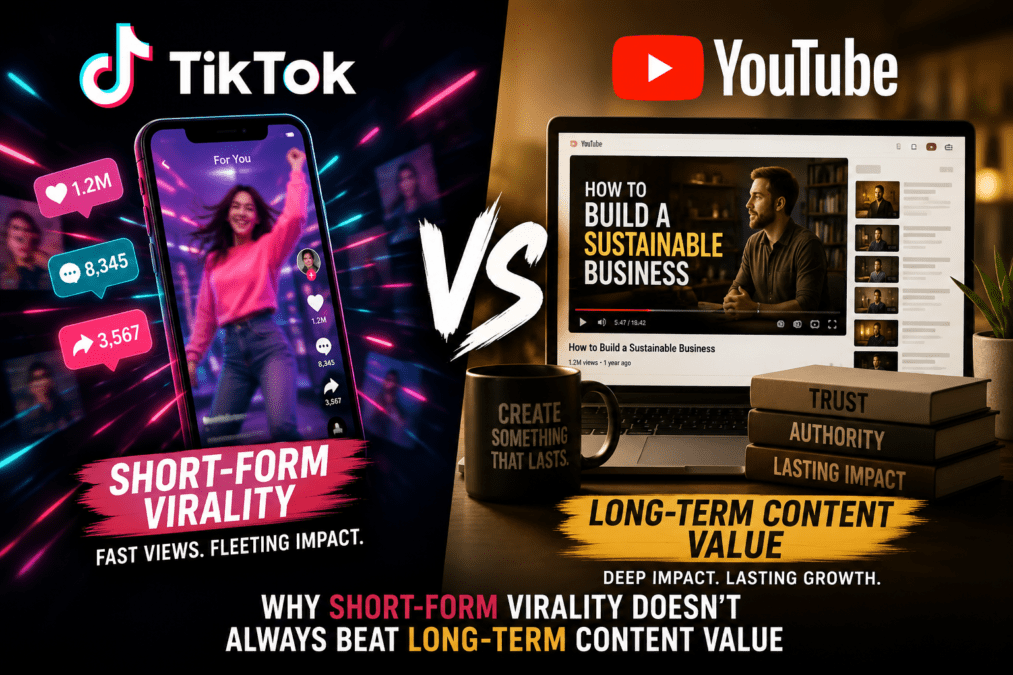
The tiktok vs youtube debate has become one of the most important discussions in digital media. Both platforms have transformed how people consume entertainment, education, marketing, and online communities. While TikTok dominates short-form, algorithm-driven discovery, YouTube remains the world’s largest video platform with unmatched long-form content and search visibility.
Comparing tiktok vs youtube requires more than measuring user numbers. Content lifespan, monetization, audience behavior, creator tools, search performance, and brand trust all contribute to each platform’s strengths. Understanding these differences helps creators, businesses, and viewers choose the platform that best matches their goals.
TikTok is a short-form video platform focused on rapid content discovery through personalized recommendations. YouTube is a video-sharing platform that combines search, recommendations, and long-form content to create lasting educational and entertainment value.
TikTok vs YouTube Comparison Table
| Feature | TikTok | YouTube |
|---|---|---|
| Primary Content | Short-form videos | Short-form and long-form videos |
| Content Length | Typically seconds to a few minutes | Shorts plus videos ranging from minutes to several hours |
| Discovery Method | Algorithm-driven “For You” feed | Search, recommendations, subscriptions, and homepage |
| Content Lifespan | Usually short-lived and trend-based | Can remain relevant and generate views for years |
| Monetization Options | Creator rewards, live gifts, brand partnerships | Advertising, memberships, Super Chat, shopping, sponsorships |
| Educational Content | Quick tips and bite-sized learning | Comprehensive tutorials, courses, and in-depth guides |
| SEO Potential | Limited search visibility | Excellent search engine and platform SEO |
| Audience Growth | Rapid viral exposure | Steady, long-term audience building |
| User Engagement | High engagement through trends and challenges | Strong engagement through comments, communities, and subscriptions |
| Best For | Virality, entertainment, and trend participation | Evergreen content, education, branding, and business growth |
Structural Differences
In the tiktok vs youtube comparison, the biggest distinction is content format. TikTok encourages quick engagement through an endless personalized feed where trends spread rapidly. Videos are designed to capture attention within seconds.
YouTube supports both short-form and long-form content. Its search engine allows videos to remain discoverable for months or even years, making it an excellent platform for tutorials, product reviews, documentaries, and educational content.
Audience Behavior
Audience behavior also separates tiktok vs youtube. TikTok users generally seek quick entertainment, trending challenges, humor, and fast-paced storytelling. Sessions are often driven by continuous scrolling.
YouTube users frequently search with specific intent, whether learning a new skill, researching products, watching podcasts, or following favorite creators. This intent often results in longer viewing sessions and higher audience loyalty.
While TikTok excels at rapid discovery, YouTube provides stronger long-term visibility and deeper audience engagement.
Strengths of TikTok
- Exceptional organic reach
- High viral potential
- Easy content creation
- Strong trend participation
- Excellent for younger audiences
- Fast follower growth
The greatest advantage in tiktok vs youtube for TikTok is its recommendation algorithm, which can expose new creators to millions of viewers without an existing audience.
Strengths of YouTube
- Powerful search engine
- Long-lasting content
- Multiple monetization options
- Higher earning potential
- Better educational content
- Strong creator ecosystem
For businesses and professionals, YouTube often delivers greater long-term return because quality videos continue attracting viewers long after publication.
Real-World Applications
Choosing between tiktok vs youtube depends on your objective.
- Build brand awareness quickly → TikTok
- Publish educational videos → YouTube
- Create viral entertainment → TikTok
- Generate evergreen traffic → YouTube
- Develop a long-term content business → YouTube
- Reach trend-focused audiences → TikTok
Scientific and Industry Consensus (2026)
Marketing professionals generally agree that neither platform replaces the other. TikTok is highly effective for visibility and audience discovery, while YouTube remains the stronger platform for sustained engagement, searchable content, and diversified creator income.
Successful creators increasingly use both platforms together—TikTok to attract attention and YouTube to build lasting communities and revenue.
Final Verdict
The answer to tiktok vs youtube depends on what success means for you. If your goal is rapid exposure and participation in viral trends, TikTok is difficult to beat. If you value searchable content, educational depth, reliable monetization, and long-term growth, YouTube remains the stronger overall platform.
For most creators and brands, the smartest strategy is not choosing one over the other. Using TikTok for discovery while directing audiences toward YouTube creates a balanced content ecosystem that maximizes both reach and long-term value.
Frequently Asked Questions
Which platform is better for beginners?
TikTok often gives beginners faster exposure, while YouTube rewards consistency and quality over time.
Is TikTok better than YouTube for earning money?
Not necessarily. YouTube generally provides more stable monetization opportunities through advertising, memberships, and other creator programs.
Which platform has better SEO?
YouTube offers significantly stronger search engine optimization because videos appear in both YouTube Search and major search engines.
Can creators use both platforms?
Yes. Many successful creators publish short clips on TikTok to gain attention and direct viewers to longer, more detailed YouTube videos.